
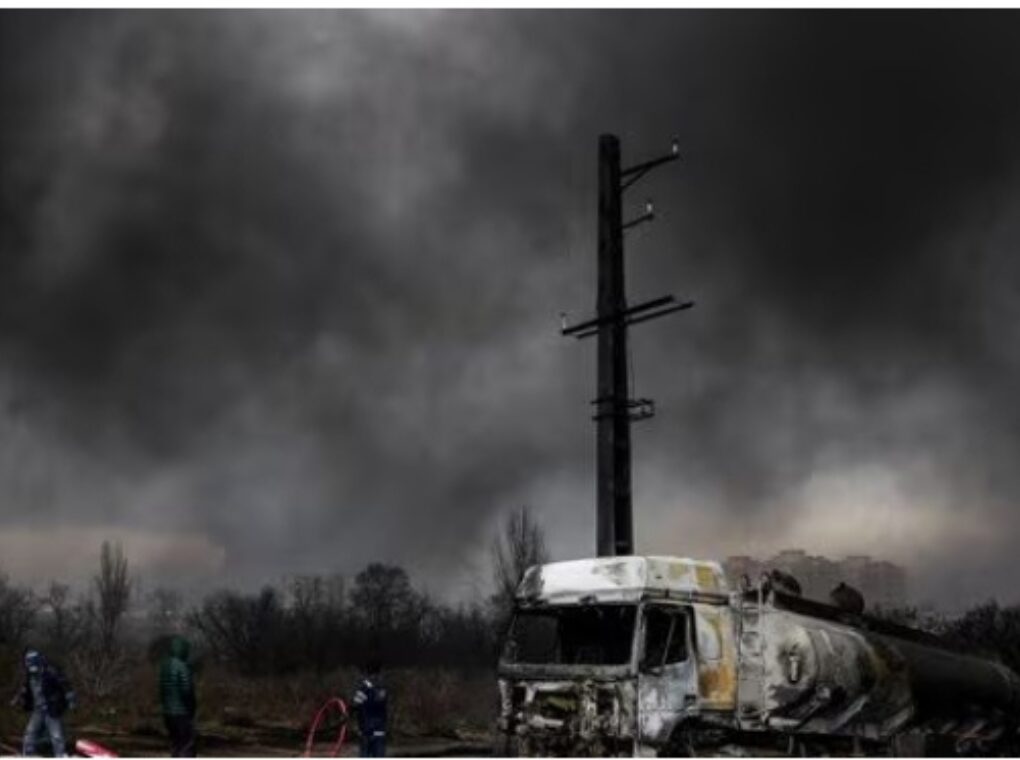
The ongoing war between the United States, Israel, and Iran has taken a dangerous environmental turn after Iranian authorities warned that toxic “acid rain” could fall over Tehran following Israeli airstrikes on major oil storage facilities. As the conflict enters its ninth day, residents in the Iranian capital have reported darkened skies, oily rainfall, and the strong smell of burning fuel lingering in the air.
According to the Iranian Red Crescent Society, the explosions triggered by Israeli strikes released large quantities of toxic chemicals into the atmosphere, raising fears of chemical exposure and respiratory health risks for millions of people living in Tehran.
Israeli Airstrikes Hit Oil Depots in Tehran
Late Saturday night, the Israel Defense Forces launched strikes targeting four oil storage facilities and a petroleum transport center located in Tehran and nearby Alborz province.
Iranian officials confirmed that the attacks caused massive fires and explosions that sent huge plumes of smoke into the sky, visible across the capital. Videos circulating on social media showed bright flames lighting up the skyline while thick black smoke covered large parts of the city.
The strikes reportedly killed four workers, including two oil tanker drivers, according to Iranian state media.
Israeli officials justified the operation by claiming that the targeted fuel facilities were used to supply Iran’s military infrastructure, including logistics networks that support military bases and strategic operations.
Tehran Residents Report Oily Rain and Dark Skies
Hours after the explosions, residents in Tehran began reporting strange weather conditions, including black clouds and oily raindrops falling across parts of the city.
Witnesses said the sky remained unusually dark even after sunrise, forcing drivers to switch on headlights while navigating major roads like Valiasr Street.
Many residents also complained about a strong smell of burning fuel and chemicals lingering across the city as smoke from the burning oil facilities continued to spread.
Environmental experts warn that such conditions can occur when combustion of petroleum products releases sulfur compounds, hydrocarbons, and nitrogen oxides into the air, which can mix with moisture in the atmosphere and form highly acidic precipitation.
Red Crescent Issues Toxic Rain Warning
The Iranian Red Crescent Society issued an urgent warning on Sunday, advising residents to remain indoors even after rainfall stops.
The organization warned that the explosions released “significant quantities of toxic hydrocarbon compounds, sulfur, and nitrogen oxides”, which could lead to acidic rainfall capable of causing skin burns and lung damage.
Authorities also warned that once the rain stops, the danger may not disappear.
According to the Red Crescent statement, acidic droplets evaporating from heated surfaces could increase airborne toxin levels, potentially making the air even more hazardous for residents.
Health Risks and Safety Advisories
Iranian emergency authorities issued several precautionary guidelines to reduce exposure to toxic particles.
Residents have been advised to:
Stay indoors and avoid unnecessary outdoor travel
Use protective masks when stepping outside
Wash the exterior of packaged food before opening it
Replace or check household water filtration systems
Avoid direct contact with rainwater
Officials also warned that contaminated rainwater could damage older water filtration systems, potentially allowing harmful substances to enter drinking water supplies.
Medical experts say exposure to acid rain and airborne hydrocarbons could lead to respiratory irritation, skin burns, eye damage, and long-term lung disease if exposure continues for extended periods.
War Escalates Across the Middle East
The environmental crisis in Tehran comes amid a rapidly escalating regional conflict.
On February 28, the United States and Israel launched a large-scale military operation against Iran, targeting its military infrastructure and naval assets. The strikes reportedly killed several senior Iranian leaders, including Supreme Leader Ali Khamenei.
The operation, named “Epic Fury” by the United States and “Lion’s Roar” by Israel, marked one of the most aggressive joint military campaigns against Iran in decades.
Iran responded with retaliatory missile and drone attacks targeting US and Israeli military positions across the Middle East.
Explosions and missile interceptions have been reported in cities including Dubai, Abu Dhabi, Manama, Doha, and Riyadh as the conflict spread across the Gulf region.
Trump Demands Iran’s “Unconditional Surrender”
Meanwhile, US President Donald Trump has demanded the “unconditional surrender” of Iran, signaling a dramatic escalation in Washington’s war objectives.
Iranian President Masoud Pezeshkian has rejected the demand, declaring that Tehran “will not surrender under pressure or threats.”
With no signs of de-escalation and environmental hazards now affecting civilians in Tehran, the conflict continues to raise fears of a wider regional war and humanitarian crisis.