
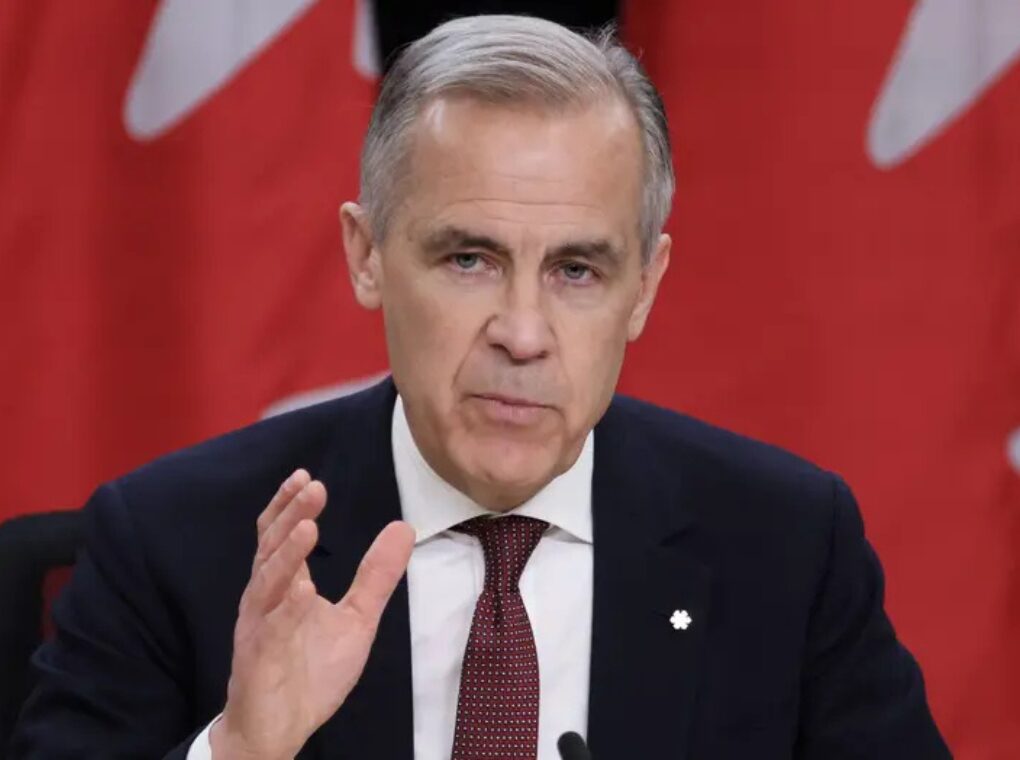
Canada has unveiled a massive multibillion-dollar strategy to strengthen its military presence in the Arctic, signaling a significant shift in the geopolitical landscape of the far north. Prime Minister Mark Carney announced that the government will invest approximately C$35 billion ($25.7 billion) to develop new military infrastructure and reinforce existing facilities across the Arctic.
The move comes as Arctic security has become a growing priority for NATO nations amid increasing tensions with Russia. The region is rapidly emerging as a strategic hotspot due to its vast natural resources, new shipping routes opened by melting ice, and its military significance.
Key Locations for New Arctic Military Infrastructure
Under the new plan, Canada will establish and upgrade forward operating locations in several northern communities, including Yellowknife, Inuvik, and Iqaluit. These sites will undergo major upgrades to enhance Canada’s ability to deploy troops and equipment quickly across the Arctic.
The project includes:
Expansion and modernization of military airfields
Construction of new aircraft hangars
Development of fuel storage and ammunition facilities
Infrastructure to support year-round military operations
According to Carney, the expanded infrastructure will allow the Canadian Armed Forces to respond rapidly to security challenges in the Arctic while maintaining a consistent presence in the region throughout the year.
He emphasized that the initiative would reduce Canada’s dependence on other NATO allies for military logistics in the remote northern territories.
NATO’s Growing Strategic Focus on the Arctic
Canada’s announcement aligns with broader military developments among NATO countries. The alliance has been increasing its operational footprint in the Arctic in response to what it describes as a growing Russian military presence.
NATO Secretary-General Mark Rutte recently stated that alliance members are “working together” to defend Arctic territory belonging to NATO states. Military exercises, surveillance operations, and infrastructure development have intensified across northern Europe and North America.
The Arctic has become strategically important not only for defense but also for economic reasons. As climate change reduces sea ice, new shipping routes such as the Northern Sea Route are becoming more accessible, potentially reshaping global trade.
Russia Warns Against NATO Military Build-Up
Russia, which controls more than half of the Arctic coastline, has strongly criticized NATO’s increased military activity in the region. Russian officials argue that the alliance is militarizing the Arctic and raising the risk of confrontation.
President Vladimir Putin has warned that Moscow will respond to any attempts by NATO to challenge its interests in the region. While stressing that Russia has “never threatened anyone in the Arctic,” Putin stated that the country will firmly protect its sovereignty and national interests.
Russian diplomats have also accused NATO of considering extreme measures such as naval blockades in Arctic waters—claims Western officials have not confirmed.
Earlier this month, Russia’s ambassador to Norway, Nikolay Korchunov, warned that NATO’s actions reflected what he described as a “confrontational frenzy” that could destabilize the region.
The Arctic’s Strategic and Economic Importance
The Arctic holds enormous geopolitical significance. Experts estimate that the region contains around 13% of the world’s undiscovered oil and 30% of its undiscovered natural gas reserves. In addition, the melting polar ice is opening new maritime routes that could dramatically shorten shipping times between Asia, Europe, and North America.
These developments have intensified competition among Arctic nations, including Canada, Russia, the United States, and several Nordic countries.
Security analysts believe that as climate change accelerates access to these resources, the Arctic could become one of the most strategically contested regions in the world.
Canada’s Strategy for Arctic Sovereignty
Canadian officials argue that the new military investments are primarily aimed at protecting national sovereignty and improving emergency response capabilities in the remote region.
The government also says the infrastructure will support operations such as search-and-rescue missions, disaster response, and monitoring illegal activities in Arctic waters.
However, analysts note that the scale of the investment signals Canada’s determination to play a larger role in Arctic security alongside its NATO allies.
A New Strategic Frontier
As global powers increasingly look northward, the Arctic is transforming from a remote frontier into a critical arena of geopolitical competition. Canada’s $35 billion military expansion highlights how seriously NATO members view the evolving strategic landscape.
With Russia promising to defend its interests and NATO nations expanding their presence, the Arctic may soon become one of the most closely watched security theaters in global politics.