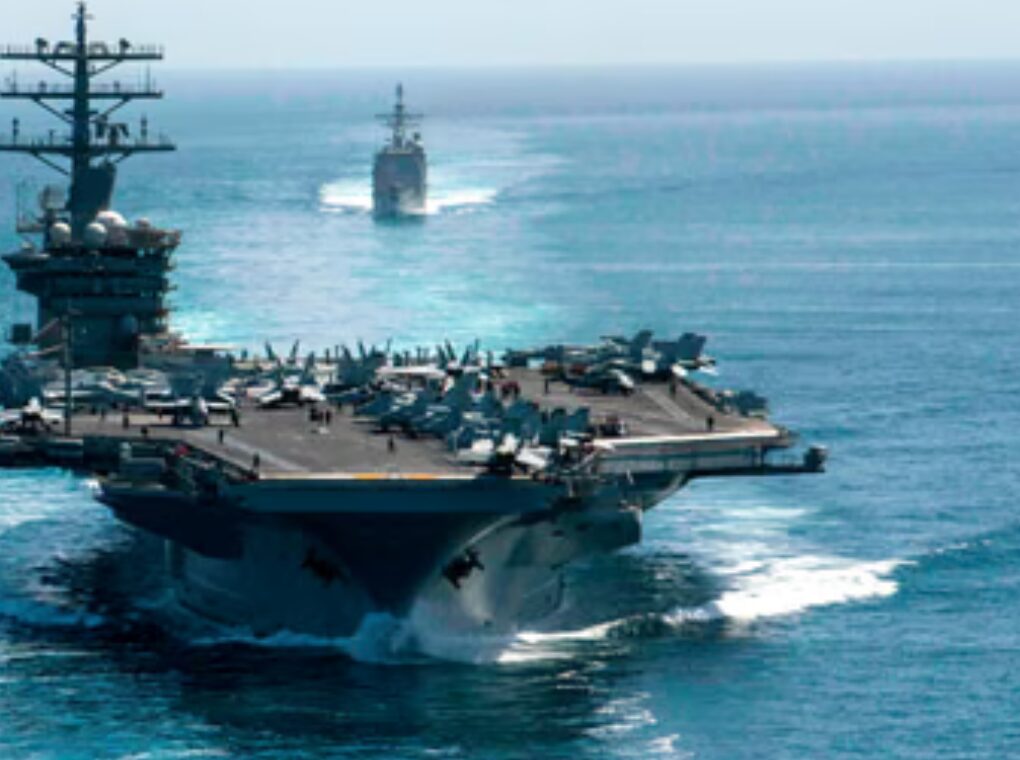
The United States Navy has launched a high-stakes investigation into a fire aboard the aircraft carrier USS Gerald R. Ford, with officials now examining the possibility that the blaze may have been deliberately set by members of its own crew. The development has triggered intense debate over morale within the U.S. military, the strain of prolonged deployments, and the broader implications of Washington’s ongoing military operations linked to tensions with Iran.
The fire, which broke out on March 12, caused significant damage to sections of the vessel and disrupted onboard living conditions. Reports indicate that more than 600 sailors were left without proper sleeping quarters following the incident. The carrier, widely regarded as the most advanced and expensive warship ever built with a price tag of approximately $13 billion, is now expected to divert to Souda Naval Base for repairs, refueling, and a formal inquiry.
Greek media outlet Kathimerini reported that the investigation explicitly includes the possibility of sabotage, citing sources familiar with the situation. If confirmed, such an act would represent one of the most serious internal discipline breaches in modern U.S. naval history.
Extended Deployment and Mounting Pressure
The USS Gerald R. Ford has been deployed since June 2025, with its mission repeatedly extended amid escalating geopolitical tensions. Originally expected to return earlier, the carrier’s deployment has now stretched toward an estimated 11-month timeline, with a return to Norfolk not anticipated until at least May.
During this period, the vessel has been redirected into a major U.S. military buildup in the Middle East, widely described as the largest since the early 2000s. The extended deployment, coupled with the absence of a rotation or relief force, has placed considerable strain on the crew.
Military analysts note that prolonged deployments without adequate rest cycles can significantly impact morale and operational effectiveness. While official statements have not confirmed any link between crew fatigue and the fire, the inclusion of sabotage in the investigation has intensified scrutiny over conditions aboard the carrier.
Strategic Implications in a Volatile Region
The temporary diversion of the USS Gerald R. Ford to Crete carries significant strategic consequences. As the only U.S. aircraft carrier currently positioned in the Gulf theater, its absence—even for a limited period—creates a gap in American naval presence in one of the world’s most sensitive maritime regions.
The carrier plays a critical role in ensuring maritime security, supporting air operations, and deterring potential threats in key chokepoints such as the Strait of Hormuz. Any disruption to its operations could alter the balance of power, particularly at a time when regional tensions involving Iran remain high.
Defense observers emphasize that even short-term maintenance or investigative delays could impact mission readiness, especially given the absence of an immediate replacement carrier in the region.
Reports of Internal Strain and Systemic Issues
Adding to the controversy are reports highlighting basic infrastructure issues aboard the ship, including claims of plumbing failures and other logistical challenges. While such issues are not uncommon in extended naval deployments, critics argue that their presence on a state-of-the-art warship underscores deeper systemic concerns.
The combination of operational pressure, extended deployment, and reported onboard challenges has fueled speculation that the incident may reflect broader issues within the U.S. military’s current posture.
However, officials have urged caution, emphasizing that the investigation is ongoing and that no conclusions have been reached regarding the cause of the fire.
Political Fallout and Public Sentiment
The incident comes amid growing political debate in the United States over its involvement in escalating tensions with Iran. Reports suggest declining public support for military engagement, with opinion polls indicating significant opposition to a prolonged conflict.
Further intensifying the debate was the recent resignation of Joe Kent, a senior counterterrorism official, who cited his inability to support the ongoing war effort. In his resignation statement, Kent questioned the justification for military action, arguing that Iran did not pose an “imminent threat” to the United States—a key legal standard often invoked in defense policy decisions.
His departure has been interpreted by some analysts as a sign of internal disagreement within the administration, although officials have not publicly linked his resignation to the USS Gerald R. Ford incident.
A Test of Military Resilience
As the investigation unfolds, the USS Gerald R. Ford case is rapidly becoming a focal point in discussions about military readiness, personnel welfare, and the sustainability of extended global deployments.
If sabotage is confirmed, it would not only raise serious disciplinary concerns but also prompt deeper questions about morale and the human cost of prolonged military operations. Conversely, if the fire is determined to be accidental, the episode will still likely lead to renewed scrutiny of maintenance protocols and living conditions aboard deployed vessels.
For now, the focus remains on Souda Naval Base, where repairs and investigations are set to begin. The outcome of this inquiry could have far-reaching implications—not just for the U.S. Navy, but for broader debates surrounding modern warfare and the limits of sustained military engagement.