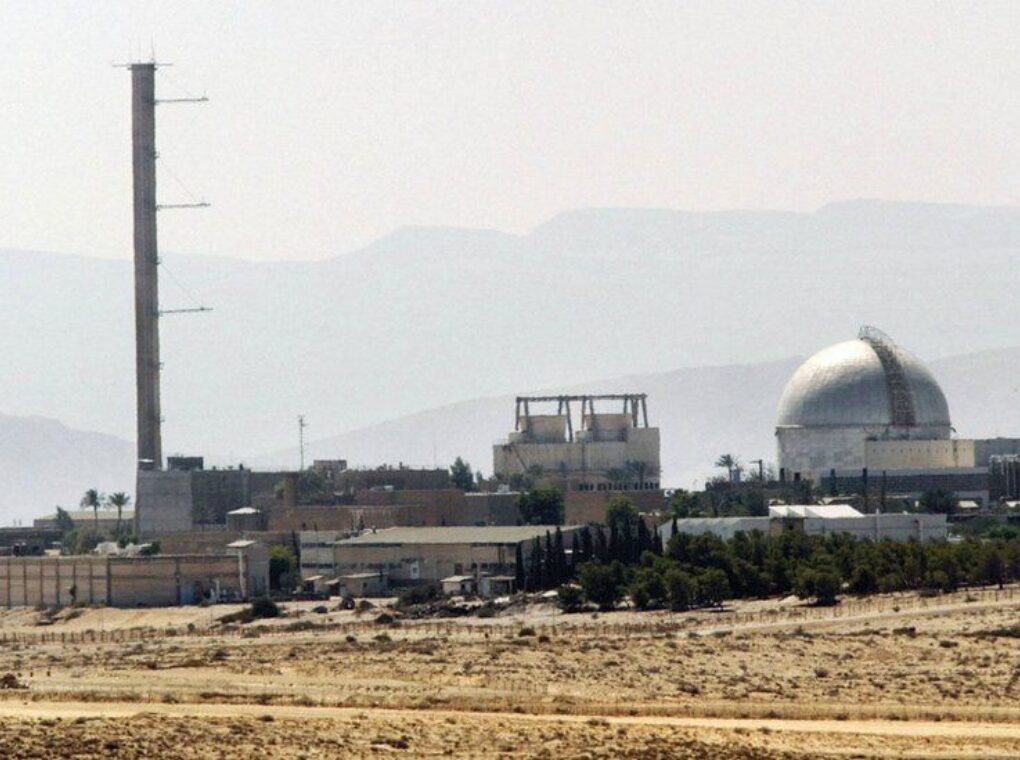
The Middle East conflict has entered a dangerous new phase after Iran launched one of its most intense missile barrages targeting southern Israel, including areas near the highly sensitive Dimona Nuclear Facility. The attack has raised global concerns over nuclear security, regional stability, and the possibility of a broader war involving multiple actors.
According to Iran’s Islamic Revolutionary Guard Corps (IRGC), the strikes were part of the 73rd wave of “Operation True Promise 4”, signaling a sustained and coordinated military campaign rather than an isolated escalation. Iranian officials claimed the use of advanced missile systems, including hypersonic and long-range ballistic weapons, which they described as difficult to intercept.
Advanced Missile Systems and Breach of Defenses
Iran stated that it deployed a combination of Fattah hypersonic missiles, Ghadr, and Emad ballistic missiles, alongside drones. These weapons reportedly targeted key cities such as Be’er Sheva, Eilat, Arad, and Dimona.
While Israel’s advanced air defense systems—including Iron Dome, Arrow, and David’s Sling—successfully intercepted many incoming threats, several missiles reportedly penetrated defenses in southern regions. This has raised serious questions about whether saturation tactics or newer missile technologies are challenging even the world’s most sophisticated defense systems.
Iranian officials have described this as a “strategic breakthrough,” claiming their missiles successfully bypassed Israeli defenses and marked a turning point in modern warfare.
Casualties and Ground Impact
Israeli emergency services confirmed that over 180 people were injured in the strikes across southern Israel. Residential buildings in Dimona and nearby areas sustained heavy damage, with several structures destroyed or left on the verge of collapse.
Hospitals, including facilities in Be’er Sheva, were overwhelmed as casualties—including children—were rushed in with shrapnel wounds and blast injuries. The हमला has intensified fear among civilians living near strategic and high-risk zones.
Despite the proximity of strikes to the nuclear research center, there has been no confirmed damage to the facility itself. The International Atomic Energy Agency (IAEA) has not reported any radiation leaks or structural compromise, offering some reassurance amid rising panic.
Why Dimona Matters?
The town of Dimona is located close to Israel’s most sensitive nuclear installation, widely believed to be central to its undeclared nuclear program. While Israel maintains official ambiguity regarding its nuclear capabilities, the facility remains one of the most closely guarded and strategically important sites in the region.
Any attack in its vicinity carries enormous risks—not only for Israel but for the entire region—due to the potential for catastrophic consequences if nuclear infrastructure were to be compromised.
Hezbollah Factor and Risk of Wider War
The situation has become even more volatile with reports suggesting that Iran may have shared intelligence related to Israeli strategic locations with allied groups. This has raised alarms about possible involvement by Hezbollah, the Iran-backed militant organization based in Lebanon.
While Hezbollah has so far limited its actions to cross-border skirmishes and rocket fire in northern Israel, analysts warn that a coordinated attack targeting sensitive sites like Dimona could significantly escalate the conflict.
Israel has already intensified airstrikes in southern Lebanon, indicating preparations for a potential multi-front confrontation.
Broader Geopolitical Context
This escalation is part of a wider conflict involving repeated exchanges between Iran, Israel, and their allies. Earlier in 2026, U.S. and Israeli forces conducted strikes on Iranian nuclear infrastructure, including the Natanz Nuclear Facility, prompting retaliatory actions from Tehran.
The conflict has also raised concerns over global energy security, particularly with tensions affecting critical maritime routes like the Strait of Hormuz. Any disruption in this region could have significant implications for global oil markets and economic stability.
Uncertain Path Ahead
Despite the масштаб of the latest strikes, the full extent of the damage remains unclear due to limited independent verification. Both Iran and Israel continue to project strength, while controlling narratives around the effectiveness and impact of their actions.
What is clear, however, is that the conflict has entered a far more dangerous phase—one that involves advanced missile technology, nuclear-adjacent targets, and the looming threat of wider regional involvement.
As tensions continue to rise, the possibility of a broader war involving multiple actors is no longer remote—it is becoming increasingly real.
The world now watches closely, as any further escalation could have consequences far beyond the Middle East.