
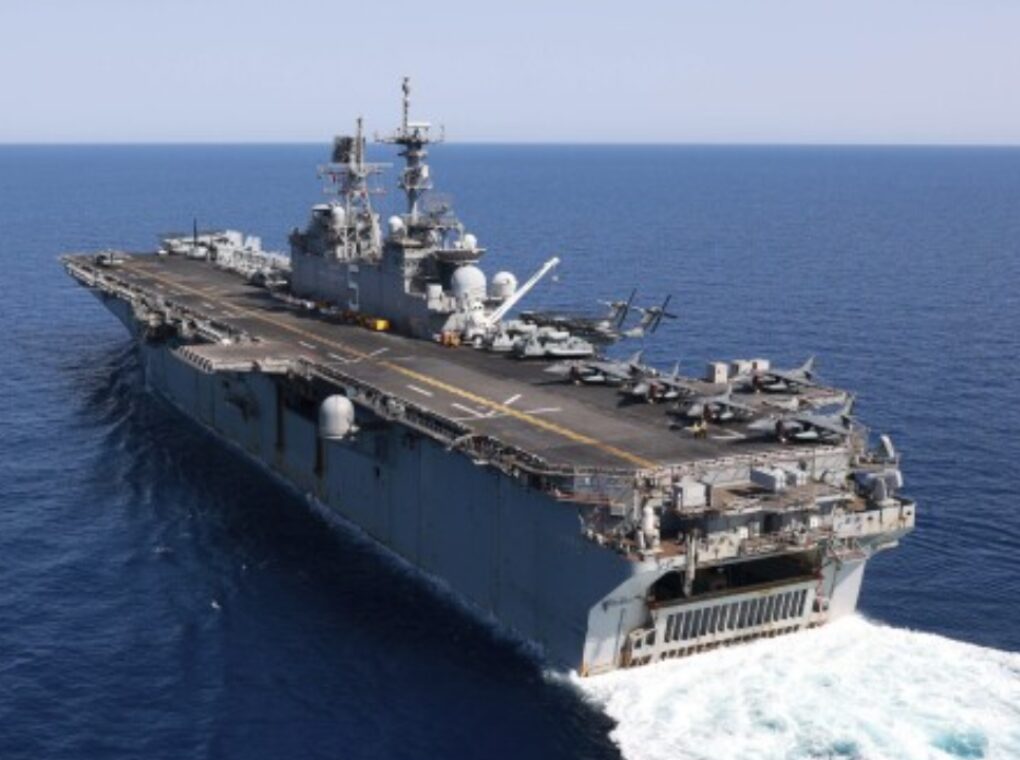
The reported withdrawal of the USS Gerald R. Ford from active operations has sparked fresh concerns over U.S. military readiness at a time of escalating tensions with Iran. The $13 billion aircraft carrier—considered one of the most advanced warships in the world—has reportedly been forced into extended maintenance following months of sustained high-intensity deployment in the region.
While U.S. officials have not confirmed the full extent of the issue, reports of system strain and possible onboard damage have fueled speculation about the operational limits of even the most sophisticated naval assets under prolonged combat pressure.
The development comes amid a rapidly evolving conflict between Iran and the United States, raising questions about long-term military sustainability and the broader strategic implications for Washington.
$800 Million Damage to US Military Infrastructure
Adding to the concerns are reports that Iranian strikes have inflicted over $800 million in damage to critical U.S. military assets across the Middle East in just three weeks. The losses reportedly include high-value systems such as missile defense radars, surveillance drones, and advanced fighter aircraft.
Among the damaged systems are believed to be AN/TPY-2 radar units—key components of America’s missile defense network—along with MQ-9 Reaper drones and F-15 fighter jets. While independent verification remains limited, the scale of reported damage underscores the growing intensity of the conflict.
Military analysts warn that such losses could degrade the U.S.’s ability to monitor and respond to threats in real time, potentially shifting the tactical balance in the region.
Pentagon Eyes $200 Billion Funding Boost
In response to mounting losses and operational strain, the Pentagon is reportedly preparing a massive $200 billion funding request aimed at replenishing equipment, strengthening defenses, and sustaining prolonged military engagement.
If approved, the funding would represent one of the largest emergency defense allocations in recent years, highlighting the scale of the challenge facing U.S. forces. Experts suggest the move signals preparation for a longer conflict rather than a short-term escalation.
Strait of Hormuz Emerges as Global Flashpoint
At the center of the geopolitical crisis lies the Strait of Hormuz, a narrow maritime corridor through which nearly 20% of the world’s oil supply passes.
Iran has imposed restrictions on vessels linked to the U.S. and its allies following recent strikes, disrupting shipping patterns and raising fears of a broader energy crisis. Even partial disruption of this route has historically led to sharp increases in global oil prices and heightened market volatility.
Energy analysts warn that any prolonged instability in the strait could have far-reaching consequences for global supply chains and economic stability.
Trump Claims Talks, Iran Denies
Amid the escalating tensions, Donald Trump has claimed that Iran has reached out to Washington seeking a deal to end hostilities. According to Trump, the proposed agreement would include commitments to halt nuclear ambitions and ensure long-term stability.
In a controversial statement, Trump also suggested the possibility of joint U.S.-Iran control over the Strait of Hormuz, describing it as a pathway to reopening critical shipping lanes.
However, Iranian officials have categorically denied any such talks. Tehran has insisted that there are no ongoing negotiations—direct or indirect—and accused Washington of using such claims to influence global markets and manage political narratives.
Market Reactions Reflect Uncertainty
Global markets have responded sharply to the conflicting signals. Following Trump’s remarks, oil prices briefly dropped by nearly 10%, reflecting investor optimism about potential de-escalation. European stock markets also showed signs of recovery after initial losses tied to the conflict.
However, analysts caution that the situation remains highly volatile. With no confirmed diplomatic progress and continued military activity, market stability could prove short-lived.
Rising Stakes in a Prolonged Conflict
The combination of a sidelined $13 billion aircraft carrier, hundreds of millions in reported military losses, and rising geopolitical tensions points to a critical moment in the conflict.
Beyond immediate battlefield developments, the situation underscores a broader reality: modern warfare is as much about economic endurance and strategic resilience as it is about military strength.
As the conflict enters a new phase, the international community remains on edge. Whether the coming weeks bring diplomatic breakthroughs or further escalation will likely shape not only regional stability but also global economic trends.
For now, uncertainty continues to dominate—both on the battlefield and in the markets.