
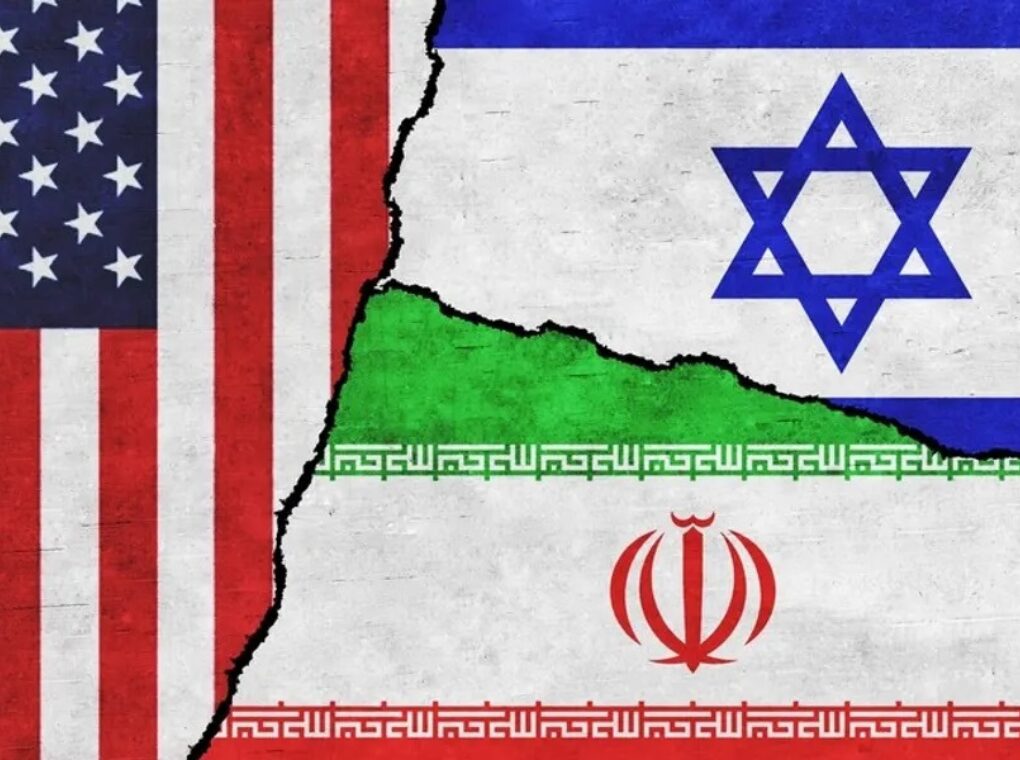
The ongoing shadow conflict between Iran, Israel, and their global allies has taken a dramatic turn, with Tehran alleging that Israel’s intelligence agency, Mossad, is orchestrating a series of “false flag” attacks across the Middle East and beyond. These claims—ranging from strikes in Saudi Arabia to the controversial incident near Diego Garcia—have added a new layer of complexity to an already volatile geopolitical landscape.
Understanding the ‘False Flag’ Narrative
In strategic and military discourse, a false flag operation refers to covert actions designed to deceive by making it appear as though another actor is responsible. Historically, such tactics have been linked to controversial operations like Operation Northwoods and Operation Susannah, both of which are frequently cited in discussions around covert warfare and deception.
Iran now argues that similar tactics are being deployed in the current conflict to isolate Tehran diplomatically and justify broader military escalation.
Saudi Arabia and Gulf Strikes: Who Is Responsible?
One of the most contentious claims involves drone and missile strikes on Saudi energy infrastructure, including facilities linked to Saudi Aramco. While these attacks were initially attributed to Iran, Tehran has categorically denied involvement.
Iranian officials suggest that Mossad operatives may have launched these strikes from within Iranian territory using pre-established covert networks and “secret warehouses” stocked with drones. According to these claims, such operations are designed to provoke Gulf nations into aligning more closely with Israel and the United States.
Similar suspicions have been raised regarding strikes in Oman, further fueling Tehran’s narrative of a coordinated disinformation campaign.
The Turkey Incident: Strategic Miscalculation or Deception?
Tensions escalated when a projectile allegedly originating from Iran entered Turkish airspace and was intercepted by NATO defenses. Given that Turkey maintains relatively stable relations with Iran, the incident raised immediate questions.
Tehran denied responsibility and even proposed a joint investigation with Ankara. Analysts note that targeting Turkey would be strategically counterproductive for Iran, lending some weight—though not conclusive proof—to its false flag claims.
Bahrain Explosion: Patriot Missile or Iranian Drone?
Another flashpoint emerged in Bahrain, where an explosion in a residential area was quickly blamed on an Iranian drone by United States Central Command. However, independent open-source intelligence analysis suggested the blast may have been caused by a misfired Patriot missile system.
This alternative explanation has been widely cited by Iranian officials as evidence of a broader pattern—where incidents are prematurely attributed to Tehran without conclusive proof.
Diego Garcia: A Strategic Puzzle
Perhaps the most controversial claim involves an alleged Iranian missile strike on the remote island of Diego Garcia, a critical joint US-UK military base.
The claim raises serious technical questions. Iran’s most advanced missile, the Khorramshahr-4 missile, reportedly has a range of around 2,000 km—far short of the nearly 4,000 km distance to Diego Garcia.
Tehran has firmly denied any involvement, labeling the accusation as an Israeli “false flag” designed to pressure European powers, particularly the UK, into deeper military engagement. Notably, even Mark Rutte stated that NATO could not verify claims that Iranian missiles were used in the attack.
The Information War: Competing Narratives
The dispute highlights the growing importance of hybrid warfare—where military operations are intertwined with cyber tactics, intelligence activities, and information campaigns.
Iran maintains that Israel is using covert operations and media narratives to shape global opinion. Conversely, critics argue that Tehran has a long history of dismissing allegations by labeling them as conspiracies or “inside jobs.”
For instance, former Iranian President Mahmoud Ahmadinejad repeatedly questioned widely accepted accounts of major global events, including the September 11 attacks, reinforcing skepticism toward Tehran’s current claims.
What next? Truth, Perception, and Strategic Ambiguity
At present, there is no definitive evidence to conclusively support or refute Iran’s allegations of Mossad-led false flag operations. What is clear, however, is that perception has become as critical as reality in modern conflict.
Whether these incidents are genuine attacks, covert operations, or misattributed events, they are shaping alliances, influencing public opinion, and potentially altering the trajectory of the conflict.
As investigations continue and more intelligence emerges, the truth behind these high-stakes claims may take years to fully uncover. Until then, the battle over narrative remains as fierce as the conflict on the ground.