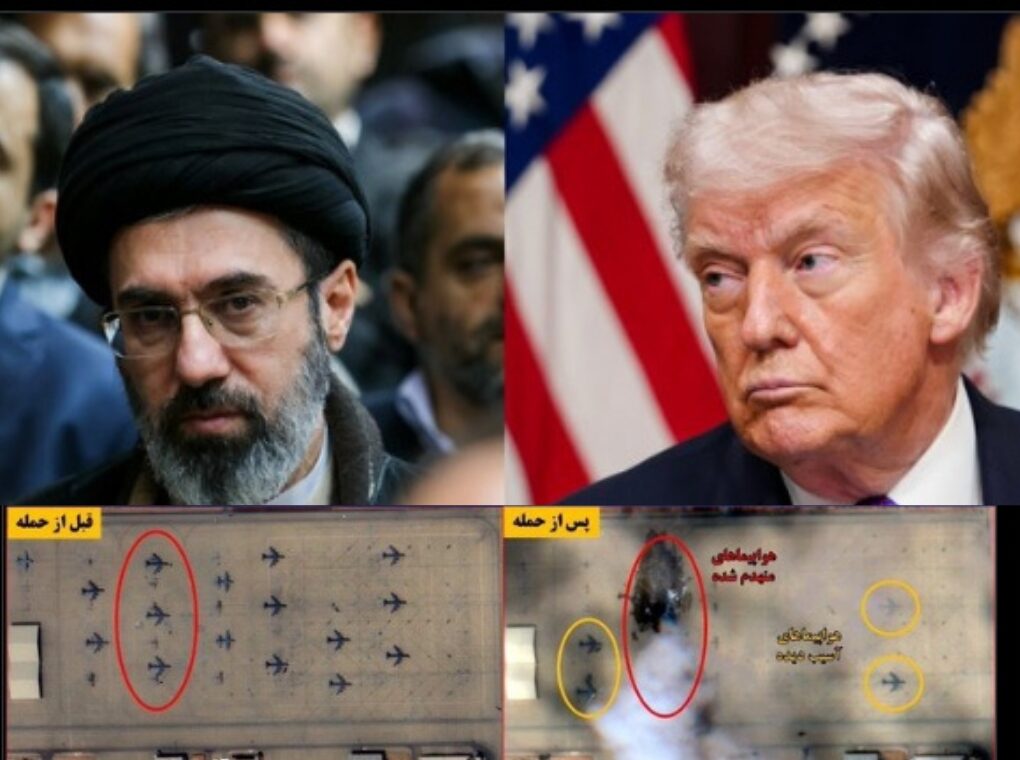
As Operation Epic Fury enters its fourth week, the Iran-US conflict has taken a dramatic turn with direct strikes on critical U.S. assets and a provocative long-range missile test that has alarmed allies from the Middle East to Europe. Iranian media reports claim three U.S. refueling planes were hit in Saudi Arabia, while U.S. officials confirm five KC-135 Stratotankers were damaged at Prince Sultan Air Base. These aircraft are the backbone of sustained air operations, keeping fighters, bombers, and surveillance planes aloft across vast distances. If the strikes prove as impactful as described, they represent a significant blow to U.S. logistical superiority in the region.
The escalation comes amid Iran’s retaliation against U.S.-led strikes under Operation Epic Fury, launched in early March 2026 to dismantle Iran’s nuclear program, ballistic missile capabilities, and support for regional proxies. President Donald Trump has described the operation as a decisive effort to neutralize threats from the Islamic Republic, with U.S. Central Command confirming targeted operations against Iranian military infrastructure.
Iran’s Long-Range Missile Reach Puts Europe on Alert
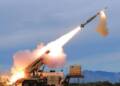
In a major development that extends the conflict beyond the Middle East, Iran fired two long-range ballistic missiles toward the joint U.S.-U.K. military base on Diego Garcia in the Indian Ocean—approximately 4,000 km from Iranian territory. One missile broke apart mid-air, while the other was intercepted by U.S. forces. Though neither reached the target, the attempt demonstrates a range far exceeding Iran’s previously claimed limits.
U.S. Secretary of Defense Pete Hegseth seized on the incident to issue a stark warning. “Surprise. Yet again, Iran lied,” Hegseth stated, highlighting that Tehran had long understated its missile capabilities. He explicitly noted that London lies roughly 4,000 km from Iran—placing it within the same range as Diego Garcia—and urged the U.K. to increase its role in the coalition. Israel echoed the concern, with IDF officials stating that cities like Paris, Berlin, and Rome are now potentially within reach of Iranian missiles. U.K. officials, however, have pushed back, cautioning that there is “no clear proof” Iran can accurately strike targets at such extreme distances yet.
This shift marks a pivotal moment. What began as a regional confrontation now threatens to redraw security calculations for Europe. NATO allies are quietly assessing air defense needs, while energy markets remain volatile amid fears of further disruptions to the Strait of Hormuz.
Casualties Mount as Operation Epic Fury Intensifies
The human cost of the conflict is rising sharply. Since Operation Epic Fury began, Iran has wounded 303 U.S. servicemembers, according to Pentagon updates. Of those, 273 have returned to duty, but 10 remain seriously injured and 13 have been killed. Shockingly, 75% of the injuries are traumatic brain injuries (TBIs) caused by blast effects from missile and drone strikes—highlighting the persistent threat even from “missed” attacks.
These figures underscore the intensity of Iran’s retaliatory campaign, which has targeted U.S. bases across the Gulf, including in Saudi Arabia, the UAE, and beyond. U.S. forces have responded with overwhelming firepower, but the sustained nature of the exchanges has strained logistics and raised questions about long-term basing in the region.
The Deal on the Table: Two Opposing Visions for Peace
Amid the fighting, mediators have floated a potential path to de-escalation—but the proposals from Washington and Tehran could not be further apart.
The U.S. proposal demands sweeping concessions to “defang” Iran’s military and nuclear ambitions:
>Complete dismantlement of the Natanz, Fordow, and Isfahan nuclear facilities.
>Zero uranium enrichment forever, with all stockpiles handed over to the IAEA.
>Caps on ballistic missile range and quantity.
>Full severance of support for Hezbollah, the Houthis, and Hamas.
>Immediate and full reopening of the Strait of Hormuz.
>A 30-day ceasefire to begin negotiations.
In exchange, the U.S. offers sanctions relief and possible cooperation on civilian nuclear technology.
Iran’s counterproposal flips the script entirely, framing the U.S. as the aggressor:
>Immediate halt to all U.S. strikes and assassinations.
>Binding guarantees against future attacks.
>Payment of war reparations.
>U.S. recognition of Iranian sovereignty over the Strait of Hormuz.
>No restrictions on Iran’s nuclear program, missiles, or proxy networks.
>Complete withdrawal of American bases from the region.
>Lifting of all sanctions and cessation of hostilities against Iran and Hezbollah.
As one analyst put it, “These are two sides describing completely different wars. The U.S. wants Iran defanged. Iran wants the U.S. gone and billed for the visit.”
Why This Matters: From Regional Skirmish to Global Flashpoint
The damage to refueling planes at Prince Sultan Air Base is more than a tactical setback—it threatens the airpower projection that has defined U.S. operations in the Gulf for decades. Combined with the Diego Garcia missile test, it signals Iran’s willingness to strike far beyond its borders, even if accuracy remains unproven. European capitals are now quietly reviewing contingency plans, while global oil prices have spiked on fears of Strait of Hormuz closure.
Operation Epic Fury has already reshaped the Middle East security landscape. With 13 U.S. deaths and hundreds wounded, domestic pressure is mounting for a swift resolution. Yet the chasm between the two sides’ demands suggests any ceasefire will be hard-won.
As Hegseth and Israeli officials warn of an Iranian missile threat that now stretches into Europe, the conflict is no longer contained. Diplomats in Geneva and via back-channel talks in Pakistan continue frantic efforts, but the gap remains vast. For now, the skies over the Gulf—and potentially beyond—remain tense, with refueling planes grounded for repairs and long-range missiles reshaping strategic maps from Riyadh to Rome.
The coming days will determine whether this escalates into a broader confrontation or forces both sides back to the negotiating table. One thing is clear: the era of underestimating Iran’s reach is over.