
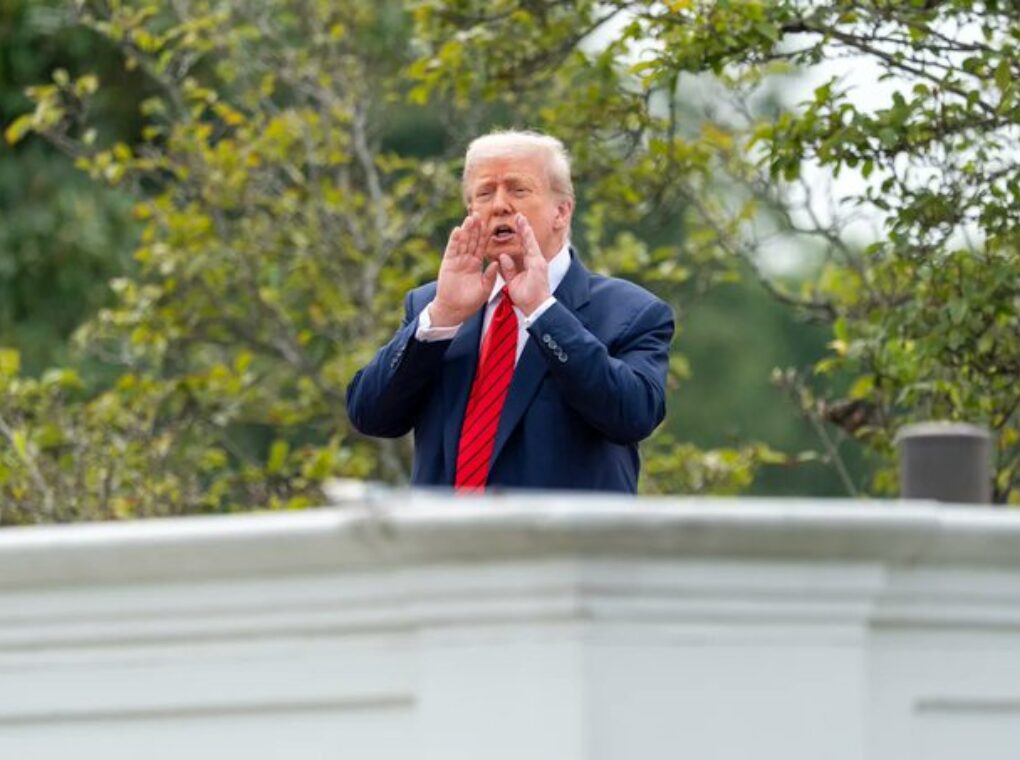
A fresh controversy has erupted in global politics after Donald Trump made a provocative claim about Iran’s newly appointed supreme leader, Mojtaba Khamenei, suggesting that he is “probably gay.” The remark, reportedly based on intelligence allegedly shared by the Central Intelligence Agency, has drawn sharp criticism and raised tensions amid an already volatile geopolitical situation.
Speaking in an interview with Fox News, Trump quipped that such a revelation would put Mojtaba “off to a bad start,” a statement widely viewed as both inflammatory and diplomatically risky. The claim comes at a time when relations between the United States, Israel, and Iran are at a historic low following a series of military escalations and political confrontations.
Context: Leadership Change in Iran
Mojtaba Khamenei assumed power after the assassination of his father, Ali Khamenei, in a recent US-Israeli strike. The killing marked a dramatic escalation in the ongoing conflict and triggered widespread speculation about regime stability in Tehran.
Despite expectations in Washington and Tel Aviv that Iran’s leadership vacuum could spark internal unrest, the transition of power appeared swift and controlled. Mojtaba’s appointment signaled continuity rather than collapse, challenging assumptions held by policymakers in both the US and Israel.
Failed Regime Change Strategy
According to a report by The New York Times, the Trump administration had backed an Israeli plan aimed at triggering a coup in Iran shortly after hostilities began. The strategy reportedly relied on the belief that eliminating top leadership figures would ignite a popular uprising against the Islamic Republic.
Israeli Prime Minister Benjamin Netanyahu and Trump were said to have supported an “optimistic outlook” that Iran’s political system would unravel quickly. However, intelligence agencies reportedly expressed skepticism about the feasibility of such a scenario.
The plan has so far failed to produce the intended outcome. Instead of destabilizing the regime, the developments appear to have strengthened nationalist sentiment within Iran, with many citizens rallying behind the new leadership.
Iran Responds
Iranian officials have strongly rejected the notion that targeted killings or external pressure could dismantle the country’s governance structure. Foreign Minister Abbas Araghchi emphasized the resilience of the system in a recent interview with Al Jazeera.
“The Islamic Republic of Iran has a strong political structure with established institutions,” Araghchi stated. “The presence or absence of a single individual does not affect this structure.”
This sentiment reflects a broader narrative within Iran that external aggression only reinforces internal unity, rather than weakening it.
Intelligence and Credibility Concerns
Trump’s claim about Mojtaba Khamenei’s sexuality has also raised serious questions about the use of intelligence in political rhetoric. The Central Intelligence Agency has not publicly confirmed any such assessment, and experts warn that unverified claims could undermine credibility and escalate tensions unnecessarily.
Critics argue that invoking sensitive personal allegations—particularly in a country where homosexuality is illegal—could have dangerous implications. Such statements may not only inflame diplomatic relations but also endanger individuals within Iran.
Strategic Miscalculation?
Former officials have begun to openly question the broader US-Israel strategy toward Iran. A former member of Mossad, Rami Igra, described the approach as a “miscalculation,” noting that successful revolutions require grassroots movements, local leadership, and control over armed forces—conditions that are currently absent in Iran.
This assessment aligns with the growing view among analysts that external intervention alone is unlikely to bring about regime change in a country with deeply entrenched political and institutional frameworks.
Rising Global Tensions
Trump’s remarks are likely to further complicate an already tense situation in the Middle East. As military actions continue and diplomatic channels remain strained, rhetoric of this nature risks escalating the conflict beyond control.
The controversy also highlights the increasing role of political messaging and media narratives in shaping international relations. With global powers closely watching developments, the stakes remain high, and the margin for error continues to shrink.