Three weeks into a joint military campaign led by the United States and Israel against Iran, the central question dominating global policy circles is no longer about battlefield gains—but about what comes next. While precision strikes have significantly degraded Tehran’s military infrastructure, analysts argue that the war’s outcome will ultimately be decided within Iran itself.
Internal Cracks in the Islamic Republic
According to emerging assessments, the biggest threat to the Islamic Republic may not be foreign intervention, but its own internal contradictions. Years of political unrest, economic decline, and governance crises have eroded the regime’s legitimacy.
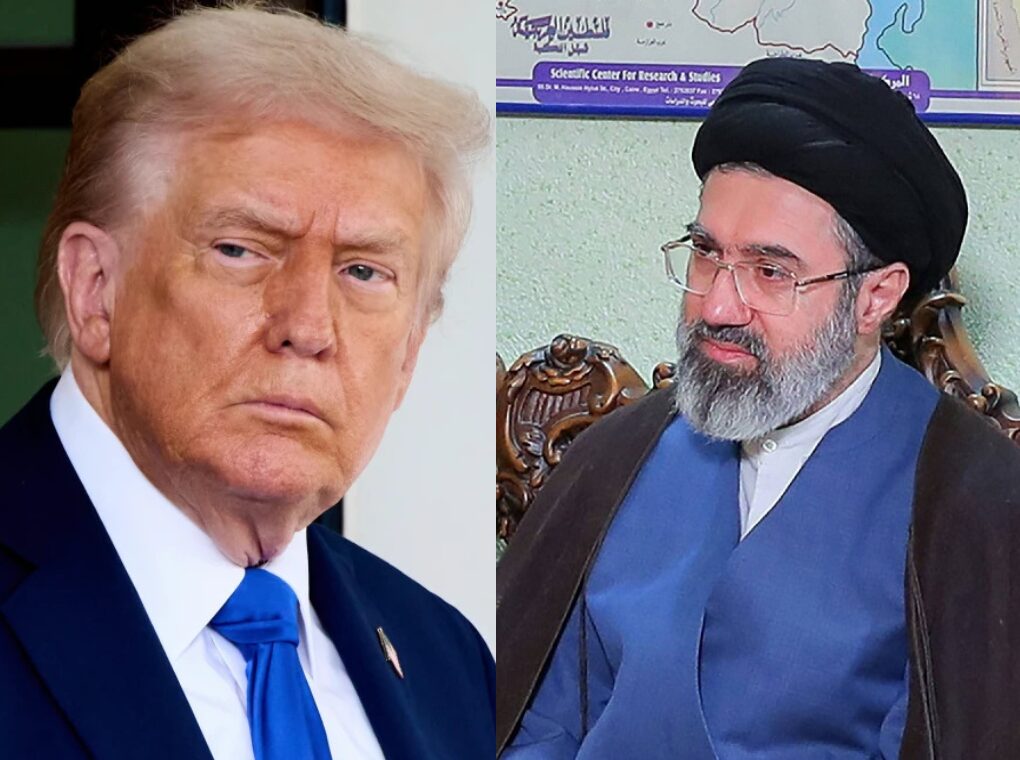
A major turning point came with the controversial succession of Mojtaba Khamenei as Supreme Leader following the death of Ali Khamenei. Critics argue this move contradicts the ideological foundations of the Islamic Republic, which historically rejected hereditary rule.
This shift has triggered discontent not just among reformists, but also within segments of the powerful Islamic Revolutionary Guard Corps (IRGC), whose leadership has already been weakened by targeted strikes.
Military Pressure Without Full-Scale Destruction
Unlike past conflicts in the region, the current campaign has largely focused on dismantling Iran’s military and security apparatus rather than targeting civilian infrastructure. Key missile sites, IRGC commanders, and strategic facilities have been hit.
However, the human and economic toll remains significant. Iran’s vital oil infrastructure—particularly around Kharg Island—and its control over the Strait of Hormuz have become central to the conflict. Tehran’s decision to disrupt global oil shipments has raised international alarm, as nearly 20% of the world’s oil supply passes through this narrow corridor.
Yet, this strategy also backfires. Iran itself depends heavily on the same route for exports, making prolonged disruption unsustainable.
The Role of Public Uprising
Perhaps the most decisive factor in how the war ends lies in the Iranian population. Over the past two decades—from the 2009 Green Movement to the 2022 protests and the unrest of early 2026—Iranians have repeatedly challenged the regime.
Each wave of protests has been met with increasing violence, but with diminishing returns for the government. Analysts suggest that another mass uprising could push the already strained system to collapse.
The key question: will security forces continue to suppress civilians, or refuse orders in the face of growing unrest?
Strategic Miscalculations by Tehran
Experts point to a major strategic miscalculation by Iran’s leadership—its reliance on proxy networks such as Hezbollah and Hamas to pressure Israel without triggering full-scale war.
The turning point came after the October 7 attacks, which fundamentally altered Israel’s security doctrine. What followed was a shift from limited, intelligence-driven operations to aggressive military responses, eventually bringing the conflict directly to Iranian territory.
Regional Isolation and Escalation
Iran’s position in the region has also deteriorated rapidly. Gulf nations that once pursued cautious engagement have distanced themselves after Iranian strikes reportedly targeted countries like Bahrain, Saudi Arabia, and the UAE.
This shift is reflected in changing narratives across Middle Eastern media, where discussions have increasingly moved from managing Iran to preparing for a post-Islamic Republic scenario.
Global Security Concerns Rising
Beyond the Middle East, the conflict is generating ripple effects across Europe and the United States. Intelligence agencies have warned of potential threats linked to Iran-backed networks.
Incidents of violence in American cities, currently under investigation, highlight the risk of radicalization and decentralized attacks inspired by the conflict. While direct links to Tehran remain unconfirmed, the broader security environment is becoming increasingly volatile.
What Comes Next?
Three possible scenarios are emerging:
Negotiated Settlement: Iran agrees to talks under mounting pressure
Prolonged Conflict: A drawn-out war of attrition drains all sides
Regime Collapse: Internal unrest leads to the fall of the Islamic Republic
Many analysts believe the third scenario is becoming increasingly plausible. However, the aftermath could be far more dangerous than the conflict itself.
The “Morning After” Challenge
If the regime collapses, Iran could face internal fragmentation, power struggles within the IRGC, and ethnic tensions across regions such as Kurdistan and Balochistan. Comparisons are already being drawn to post-war instability in Iraq and Syria.
However, Iran also has unique strengths: a politically active population, a strong diaspora, and a historical tradition of constitutional governance dating back to the early 20th century.
The war with Iran may not end with a decisive military victory, but with a political transformation driven by its own people. External strikes may weaken the system, but they cannot determine its future.
Whether Iran transitions toward stability or descends into chaos will depend on both internal dynamics and how the international community prepares for what comes next.
One thing is clear: the endgame is no longer just about war—it is about what replaces it.