
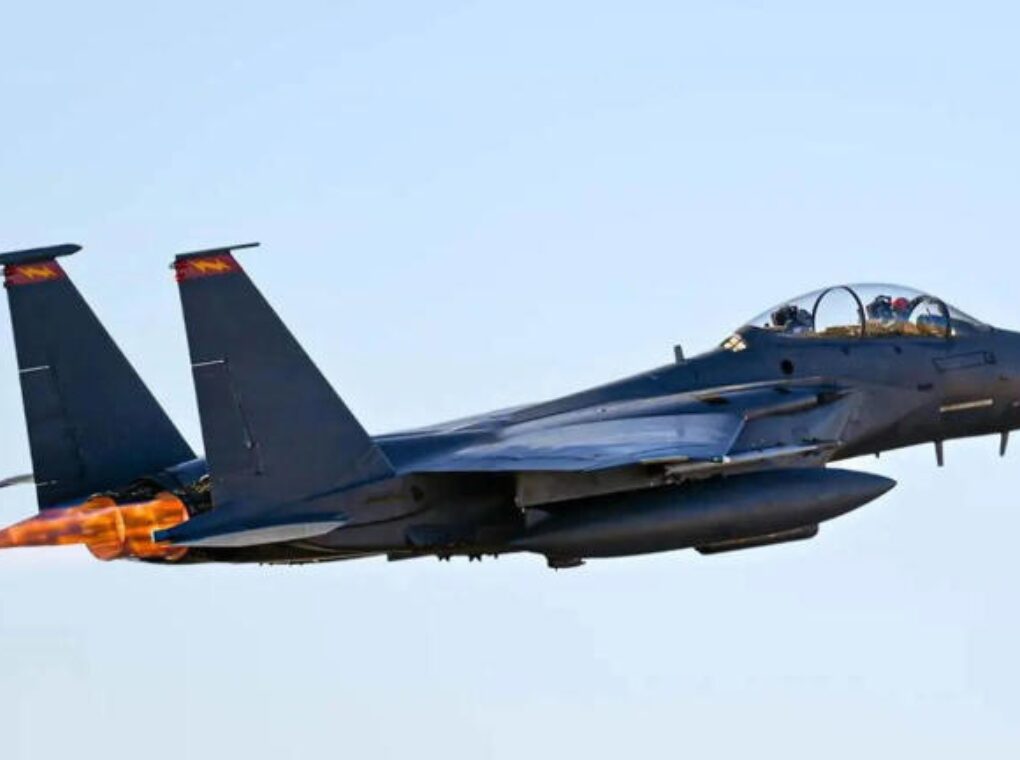
A dramatic escalation in the ongoing US-Iran conflict unfolded on Friday after a United States fighter jet was shot down over Iranian territory, triggering an urgent search-and-rescue operation and a wave of conflicting claims from both sides.
According to reports cited by major American outlets, including The New York Times and CNN, US officials confirmed that at least one fighter jet was downed during operations over Iran. While early Iranian media reports claimed the aircraft was an advanced F-35 stealth fighter, US sources later indicated that the downed aircraft was more likely an F-15E Strike Eagle.
Rescue Operation Underway
The US military swiftly launched a search-and-rescue mission to locate the crew members before Iranian forces could reach them. The F-15E is a two-seat aircraft, meaning both a pilot and a weapons systems officer (WSO) were onboard at the time of the incident.
US officials later confirmed that one crew member had been successfully rescued. However, the status of the second individual remains unclear, raising concerns over possible capture or fatality.
To support the rescue effort, the US deployed multiple aircraft, including helicopters and C-130 Hercules transport planes. The operation reportedly extended into sensitive airspace, increasing the risk of further confrontation.
Iran Claims More Aircraft Downed
Iranian state-affiliated media outlets, including Tasnim and Fars News Agency, claimed that their air defense systems not only shot down the fighter jet but also targeted additional US assets.
Tehran alleged that a UH-60 Black Hawk helicopter—part of the rescue mission—was also brought down in Iraqi airspace. However, these claims have not been independently verified, and US officials have not confirmed any such losses.
Iranian reports further suggested that multiple US aircraft were forced to retreat after coming under heavy air defense fire, signaling the effectiveness of Iran’s defensive capabilities in the region.
The New York Times also reports that another U.S. jet, an A-10, went down in the Persian Gulf at the same time an F-15 E was hit, but the pilot was rescued
Public Call to Capture US Pilots
In a highly unusual move, Iranian state television issued public appeals urging civilians to help locate and capture any surviving US crew members. Authorities even announced financial rewards for anyone who handed over an “enemy pilot” to security forces.
One regional official reportedly offered a reward worth approximately $76,000 for the capture of a US serviceman. The move underscores the intensity of the situation and raises concerns about the safety of any personnel stranded behind enemy lines.
Confusion Over Aircraft Type
Initial Iranian claims that an F-35 stealth fighter had been shot down added to the confusion. The F-35, a fifth-generation aircraft, is considered one of the most advanced jets in the US arsenal and is operated as a single-seat platform.
However, US officials clarified that the downed aircraft was likely an F-15E, which aligns with reports of two crew members onboard. This distinction is significant, as the loss of an F-35 would represent a major technological and strategic setback.
Escalation After US Strikes
The incident comes shortly after US President Donald Trump reportedly praised recent American strikes on Iranian infrastructure, including a key bridge near Karaj. These strikes were part of a broader military campaign targeting strategic and industrial sites.
In response, Iran has vowed a “crushing retaliation,” launching attacks on multiple regional targets, including locations in the Gulf. The conflict has rapidly expanded beyond isolated engagements into a wider regional confrontation.
Growing Regional and Global Tensions
The downing of a US fighter jet marks a significant turning point in the conflict, highlighting the increasing risks of direct military confrontation between the two nations.
Meanwhile, diplomatic efforts appear strained. Mark Rutte is scheduled to meet with US leadership in Washington in the coming days, as tensions within NATO grow over burden-sharing and strategy in the Iran conflict.
More than 40 countries have also reportedly held discussions on securing critical maritime routes, including the Strait of Hormuz, a vital corridor for global oil supply.
Uncertain Path Ahead
With both sides exchanging heavy blows and narratives, the situation remains volatile. The fate of the missing US crew member, the accuracy of Iran’s claims, and the potential for further escalation will likely shape the next phase of this conflict.
As military operations continue and rhetoric intensifies, the risk of a broader regional war looms large, with global implications for security, energy markets, and international diplomacy.