
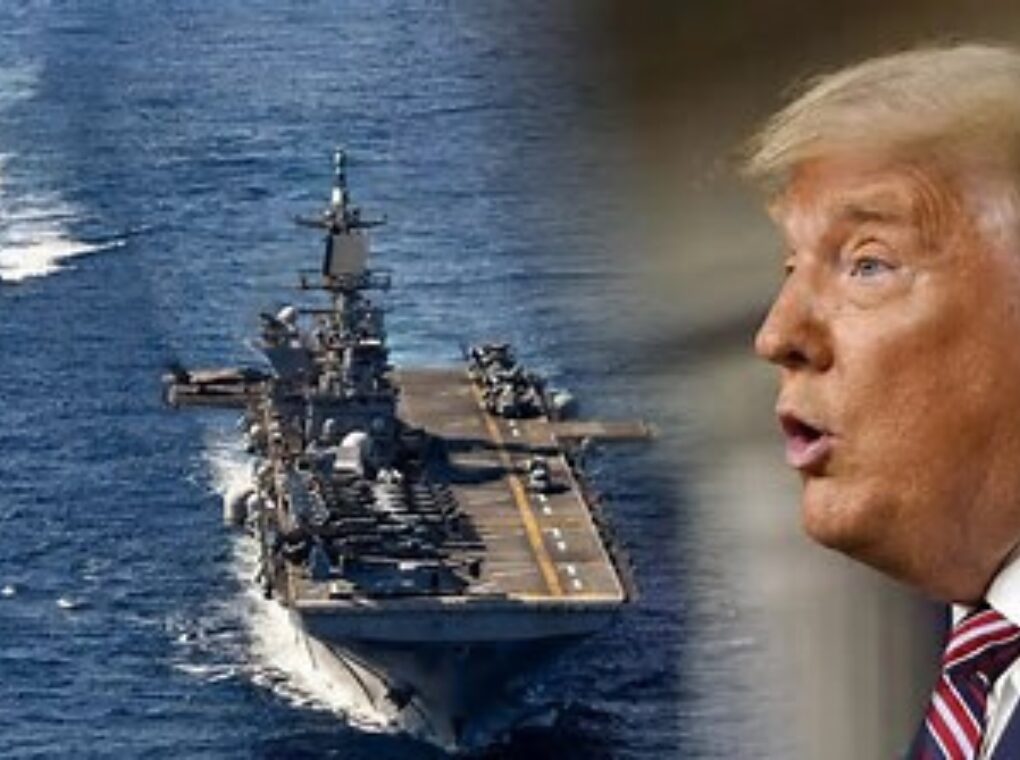
The fragile two-week ceasefire between the United States and Iran is already facing serious strain after Tehran reportedly moved to block the strategically vital Strait of Hormuz in response to intensified Israeli military operations in Lebanon. The development has raised alarm bells globally, particularly over energy security and the risk of a wider regional conflict.
Iran Blocks Key Oil Route
According to Iranian state media, Iran has halted the passage of oil tankers through the Strait of Hormuz — a chokepoint that handles nearly one-fifth of the world’s oil supply. The move came after large-scale airstrikes by Israel targeting positions of Hezbollah across Lebanon.
This escalation directly challenges the ceasefire framework announced by former US President Donald Trump, who had agreed to suspend military operations against Iran for two weeks. A key condition of the deal was the uninterrupted reopening of the Strait of Hormuz, making Iran’s latest action a potential violation.
Israel Intensifies Lebanon Offensive
Despite the ceasefire with Iran, Israel has made it clear that its military operations in Lebanon will continue. Israeli Prime Minister Benjamin Netanyahu stated that the truce does not extend to Hezbollah, which Israel considers a direct security threat.
The Israel Defense Forces launched what it described as one of its largest coordinated attacks in recent months. The operation, reportedly involving dozens of fighter jets and over 100 targets, struck key Hezbollah command centres in Beirut, the Beqaa Valley, and southern Lebanon.
Israeli officials said the strikes were based on “precise intelligence” and aimed at dismantling Hezbollah’s military infrastructure, including missile systems, intelligence hubs, and elite units like the Radwan Force.
Rising Casualties and Humanitarian Concerns
Lebanese authorities have reported heavy casualties following the strikes. According to the country’s health ministry, over 100 people have been killed and hundreds more injured, with residential areas in Beirut among the hardest hit.
Images from the ground show widespread destruction, with entire buildings reduced to rubble and emergency teams struggling to rescue survivors. The escalation has drawn sharp criticism from regional and international actors, with calls for immediate de-escalation.
Ceasefire Scope Dispute
A major point of contention is the scope of the ceasefire itself. While Iran maintains that the agreement should apply to all fronts, including Lebanon, both the United States and Israel have explicitly excluded Hezbollah from the deal.
Donald Trump reiterated that Hezbollah “was not included” in the ceasefire arrangement, calling the Israel-Lebanon conflict a “separate skirmish.” This divergence in interpretation has created a diplomatic grey zone, increasing the risk of further escalation.
Iran has warned that it may withdraw entirely from the ceasefire if Israeli strikes continue in Lebanon, signalling that the current truce could collapse prematurely.
Global Energy and Security Implications
The closure of the Strait of Hormuz has immediate global implications. Any disruption in this narrow waterway can significantly impact oil prices and supply chains, affecting major economies worldwide, including energy-dependent nations in Asia and Europe.
Market analysts warn that even a temporary blockade could trigger volatility in global oil markets, while prolonged disruption may lead to a broader economic shock.
A Region on Edge
The situation highlights the complexity of Middle East geopolitics, where multiple overlapping conflicts make ceasefire agreements difficult to sustain. With Israel continuing its campaign against Hezbollah and Iran linking its compliance to broader regional conditions, the chances of maintaining peace remain slim.
As diplomatic efforts continue, the coming days will be crucial in determining whether the ceasefire can hold or if the region is headed toward a wider and more dangerous confrontation.