
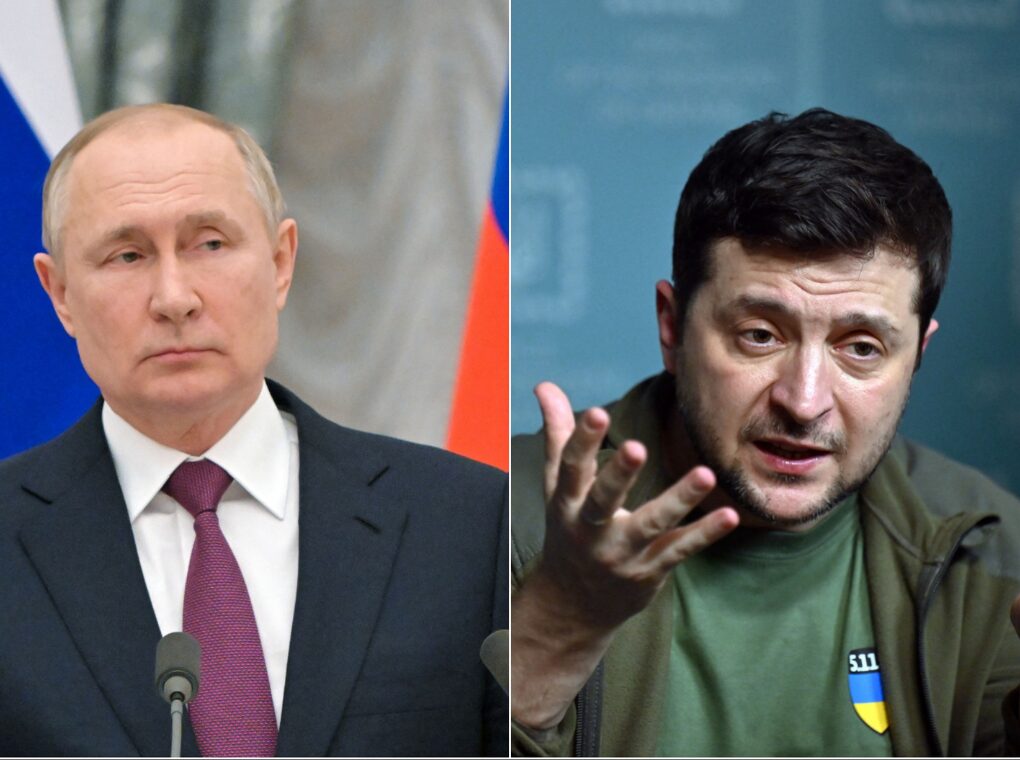
Russian President Vladimir Putin has announced a 32-hour ceasefire in Ukraine during the upcoming Orthodox Easter weekend, signaling a temporary pause in hostilities in a conflict that has now entered its fifth year. The move comes shortly after Ukrainian President Volodymyr Zelenskyy proposed a limited truce, particularly focused on halting attacks on critical energy infrastructure.
According to a decree released by the Kremlin on Thursday, Russian forces have been ordered to cease military operations starting at 4 pm local time on Saturday, with the truce set to last until the end of Sunday. The announcement has sparked cautious optimism but also skepticism, given the history of failed ceasefires between the two sides.
Timing and Strategic Context
The ceasefire coincides with Orthodox Easter, one of the most significant religious observances in Eastern Europe. Temporary halts in fighting during major religious holidays have precedent in the conflict, often framed as humanitarian gestures. However, such pauses have rarely translated into lasting peace.
Zelenskyy’s earlier proposal reportedly suggested that both Russia and Ukraine refrain from targeting each other’s energy infrastructure during the holiday period. This proposal was conveyed through the United States, which has been attempting to mediate indirect talks between Moscow and Kyiv.
While Russia has now formally declared a ceasefire, there has been no immediate official response from Kyiv. Ukrainian authorities have historically approached unilateral Russian announcements with caution, often questioning their intent and implementation on the ground.
A Pattern of Fragile Ceasefires
This is not the first time Moscow has declared a short-term truce during Easter. In 2025, Putin announced a similar 30-hour ceasefire, which quickly unraveled as both sides accused each other of violations. The lack of trust and ongoing military objectives on both sides have repeatedly undermined such efforts.
The Kremlin’s latest statement emphasized that Russian troops are not only expected to observe the ceasefire but also remain prepared to respond to “provocations” or “aggressive actions” from Ukrainian forces. This dual directive reflects the fragile and highly volatile nature of the situation along the frontlines.
Russia has also reiterated its expectation that Ukraine will reciprocate the ceasefire. “We assume that the Ukrainian side will follow the example of the Russian Federation,” the Kremlin said. However, without a formal bilateral agreement or independent monitoring mechanism, the risk of violations remains high.
Diplomatic Stalemate Continues
Despite intermittent ceasefire announcements, broader diplomatic efforts to resolve the conflict have stalled. The United States has played a key role in facilitating indirect communication between the two sides, but no significant breakthroughs have been achieved.
Earlier proposals, including a 30-day unconditional truce backed by Washington and Kyiv, were rejected by Moscow, which instead called for a more comprehensive settlement addressing its strategic concerns. These include issues related to territorial control, NATO expansion, and security guarantees.
Meanwhile, global attention has increasingly shifted toward other geopolitical flashpoints, including tensions in West Asia. This shift has arguably reduced the urgency of international mediation efforts in Ukraine, even as the conflict continues to exact a heavy human and economic toll.
Ground Reality Remains Unchanged
On the battlefield, Russian and Ukrainian forces remain locked in intense combat across a sprawling frontline stretching approximately 800 miles (1,250 kilometers). Despite the announcement of temporary truces, both sides continue to reinforce positions and conduct operations in key regions.
Military analysts note that short-term ceasefires, while symbolically important, have limited impact on the overall trajectory of the war. Without sustained diplomatic engagement and mutual concessions, such pauses are unlikely to alter the strategic calculus of either side.
Cautious Outlook
The 32-hour Easter ceasefire offers a brief window of potential relief for civilians caught in the conflict, particularly in heavily contested areas. However, past experience suggests that expectations should remain tempered.
As the war grinds on with no clear resolution in sight, the latest ceasefire highlights both the enduring hope for peace and the persistent obstacles that stand in its way. Whether this temporary truce will hold—or simply become another missed opportunity—will depend largely on actions taken on the ground in the coming days.