A fresh wave of controversy has emerged in Ukraine after alleged surveillance transcripts involving businessman Timur Mindich, a longtime associate of President Volodymyr Zelenskyy, were published by leading outlet Ukrainska Pravda. While the leaked material does not introduce new criminal charges, it has intensified scrutiny over the Ukrainian leadership’s proximity to a figure at the center of a major anti-corruption investigation.
Who is Timur Mindich?
Mindich, once linked to oligarch Ihor Kolomoisky, rose from relative obscurity to become an influential businessman during Zelenskyy’s presidency. His ascent mirrors the broader trajectory of figures connected to Ukraine’s entertainment-turned-political elite.
Currently, Mindich is the primary suspect in a high-profile investigation led by the National Anti-Corruption Bureau of Ukraine and the Specialized Anti-Corruption Prosecutor’s Office. Authorities allege his involvement in a large-scale extortion scheme tied to the state-owned nuclear energy firm Energoatom, with estimated losses reaching $100 million.
Mindich fled Ukraine in late 2025 and is currently in Israel, where he is contesting extradition. Despite his legal troubles, his reported ties to influential political figures have kept him firmly in the spotlight.
What Do the Leaked Transcripts Reveal?
The controversy stems from a video released by Ukrainska Pravda, featuring purported transcripts of conversations recorded during surveillance operations. Although the original audio has not been made public, the transcripts describe three key interactions involving Mindich.
One conversation reportedly involves Serhiy Shefir, a longtime business partner of Zelenskyy and former presidential aide. The discussion allegedly touches on financial arrangements connected to former minister Oleksiy Chernyshov, including efforts to raise funds for bail amid corruption charges.
Another exchange features Rustem Umerov, Ukraine’s former defense minister. According to the transcripts, Mindich discussed funding for a defense-linked company called Firepoint, which has claimed billion-dollar arms deals involving drones and missile systems. Mindich allegedly pushed for additional financial backing and attempted to influence procurement decisions, including approval of body armor shipments.
A third conversation involves a construction project tied to individuals reportedly close to Zelenskyy’s administration, including presidential chief of staff Andriy Yermak. The transcripts suggest concerns about halting the project due to rising public scrutiny.
No New Crimes, But Growing Concerns
Importantly, Ukrainska Pravda itself acknowledged that the transcripts do not present evidence of new crimes. However, the publication argues that the material reinforces perceptions of close ties between Mindich and Ukraine’s political leadership.
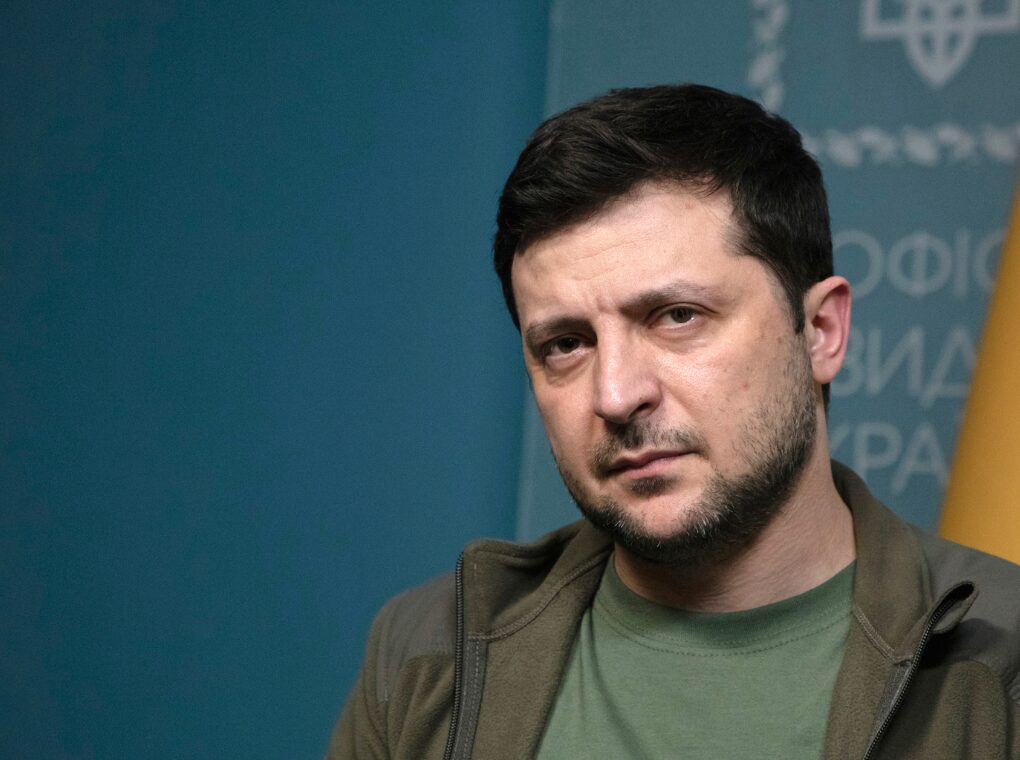
References to a figure named “Vova”—a common diminutive of Volodymyr—have fueled speculation about the depth of Zelenskyy’s personal involvement, though no direct evidence has been presented linking the president to wrongdoing in these recordings.
The lack of clear authentication—combined with the absence of original audio—has also raised questions about the reliability of the leaks. Still, Ukrainska Pravda is widely regarded as a credible outlet with strong investigative credentials, lending weight to the broader narrative.
Political Silence and Mounting Pressure
The Ukrainian government has so far responded cautiously. Officials have largely declined to comment on what they describe as “fragmentary” and “unverified” materials.
Umerov’s office has dismissed the transcripts’ credibility, while Mindich himself has refused to engage publicly. Meanwhile, opposition lawmakers have begun calling for parliamentary hearings, signaling that the issue could evolve into a larger political confrontation.
The scandal comes at a sensitive time for Ukraine, as it continues to rely heavily on Western financial and military support amid ongoing conflict and economic strain.
Timing and Political Implications
Some analysts suggest the timing of the leak may not be coincidental. It follows the European Union’s approval of a massive financial assistance package aimed at stabilizing Ukraine’s economy.
Speculation is growing that the revelations could be part of internal political maneuvering or external pressure campaigns tied to governance reforms—particularly regarding anti-corruption institutions.
Ukraine has faced repeated challenges balancing political control with institutional independence. Previous attempts to restructure anti-corruption bodies triggered widespread protests and backlash from Western allies, forcing the government to reverse course.
A Familiar Pattern in Ukrainian Politics
Leaks and media exposés have long played a role in Ukraine’s political landscape, often reflecting deeper power struggles among elites. Whether the Mindich tapes are part of such dynamics remains unclear.
What is evident, however, is that the episode has reignited debate about transparency, accountability, and the influence of informal networks within Ukraine’s leadership.
While the so-called “Mindich tapes” stop short of proving new criminal activity, they have added fuel to an already volatile political environment. For President Zelenskyy, the challenge lies not only in addressing the allegations but also in maintaining public trust and international confidence.
As investigations continue and more information potentially emerges, the scandal could have lasting implications for Ukraine’s governance, its anti-corruption agenda, and its relationships with global partners.