
India has strongly condemned the attack on an Indian-flagged cargo vessel near the coast of Oman, calling the incident “unacceptable” amid growing instability in West Asia and rising threats to commercial shipping routes near the Strait of Hormuz.
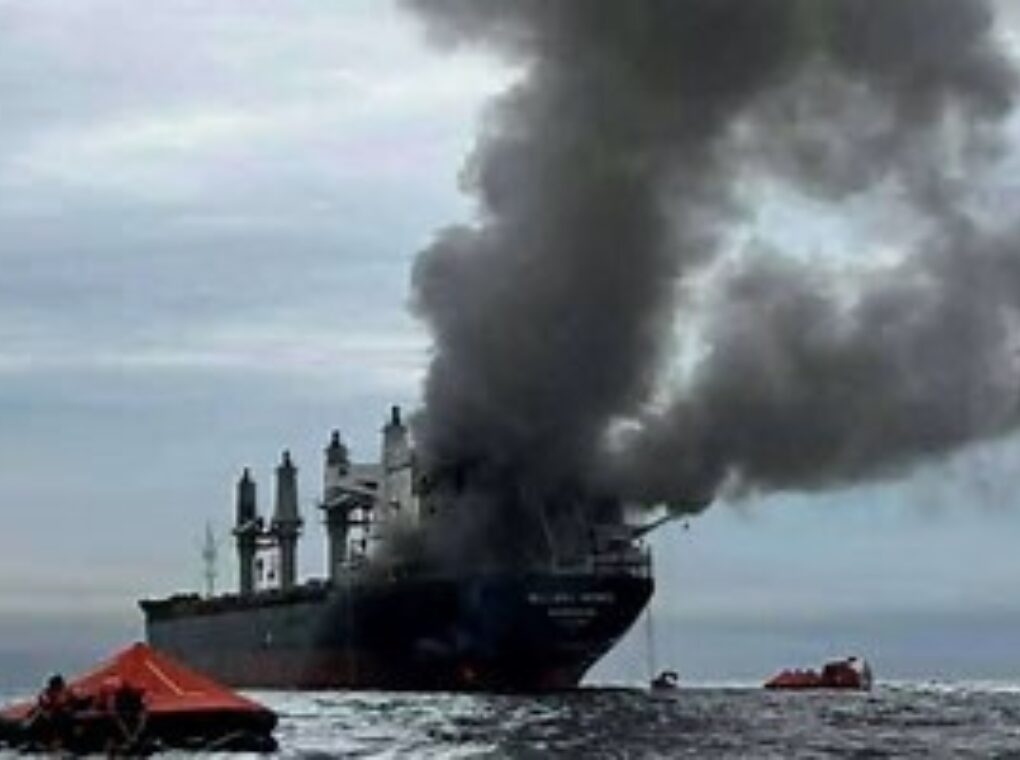
The Ministry of External Affairs (MEA) issued a stern statement after the Indian-flagged cargo vessel MSV Haji Ali reportedly sank following a massive explosion and fire in Omani waters. All 14 Indian crew members aboard the vessel were safely rescued by Omani authorities before the ship went down.
MEA spokesperson Randhir Jaiswal said India deplores the continued targeting of merchant vessels and civilian sailors in the region, stressing that freedom of navigation and global maritime commerce must not be disrupted under any circumstances.
Indian Crew Rescued After Midnight Explosion
According to preliminary reports, the vessel was travelling from Berbera Port in Somalia to Sharjah carrying livestock when it came under attack near Limah off the coast of Oman in the early hours of May 13.
Local media reports suggested that the ship may have been struck by a drone or missile, triggering a huge explosion and fire onboard. The blaze reportedly spread rapidly across the vessel, forcing the crew to abandon ship using emergency lifeboats before the cargo vessel eventually sank.
The ship was reportedly owned by Sultan Ahmed Ansar, a resident of Dwarka district in Gujarat.
Oman’s Coast Guard and Royal Oman Police launched a swift rescue operation after receiving distress signals from the vessel. All 14 Indian sailors, including the captain and crew members, were rescued safely and taken to Dibba Port in Oman.
India thanked the Omani authorities for their quick response and successful evacuation efforts.
“The attack on an Indian-flagged ship off the coast of Oman is unacceptable,” the MEA said in its official statement. “Targeting commercial shipping and endangering innocent civilian crew members, or otherwise impeding freedom of navigation and commerce, should be avoided.”
Rising Tensions Around Strait of Hormuz
The incident comes at a highly sensitive time as tensions continue to escalate across West Asia following the ongoing conflict involving Iran, the United States, and Israel.
The Strait of Hormuz — one of the world’s most strategically important maritime chokepoints — has become increasingly volatile in recent months. Nearly a fifth of the world’s oil and significant volumes of liquefied petroleum gas (LPG) pass through the narrow waterway every day.
Security concerns in the Gulf region have intensified since the widening Iran-US confrontation and disruptions to maritime traffic in and around the Strait of Hormuz. Several merchant ships have reported hostile encounters, surveillance, and attacks in recent months.
Despite the heightened tensions, reports indicated that multiple India-bound LPG tankers continued crossing the Strait of Hormuz over the past 24 hours, highlighting the critical importance of the route for India’s energy security.
India Raises Maritime Security Concerns
India has increasingly voiced concern over the safety of commercial shipping routes in West Asia, especially given the country’s dependence on Gulf energy supplies and its large maritime workforce.
India is one of the world’s largest suppliers of seafarers, with thousands of Indian sailors working on cargo vessels, tankers, and merchant ships across international waters.
The latest attack has renewed fears that civilian merchant vessels are becoming collateral damage in the broader regional conflict.
Last month, India had formally conveyed “deep concern” to Iran after reports emerged that Indian-flagged vessels came under fire during heightened maritime restrictions around the Strait of Hormuz. New Delhi had even summoned the Iranian ambassador following allegations involving Iranian Revolutionary Guard Corps patrol boats.
However, in the latest Oman incident, Indian authorities have not officially blamed any country or group for the attack. Omani authorities have also not publicly confirmed the exact cause of the explosion.
BRICS Meeting Overshadowed by Gulf Crisis
The attack occurred as foreign ministers from the BRICS nations, including Iran, gathered in New Delhi for high-level discussions on regional security, trade disruptions, and maritime stability.
External Affairs Minister S. Jaishankar has repeatedly stressed the importance of “unimpeded maritime commerce” and the need to protect civilian shipping routes from geopolitical conflicts.
The incident involving MSV Haji Ali is likely to further intensify discussions around maritime security and freedom of navigation during the ongoing diplomatic engagements.
For India, the sinking of the cargo vessel is not just a commercial setback but a strategic warning about the growing instability in one of the world’s most vital trade corridors.
As tensions continue to rise in the Gulf region, India faces increasing pressure to safeguard its maritime interests, energy routes, and the safety of Indian sailors operating in conflict-prone waters.