
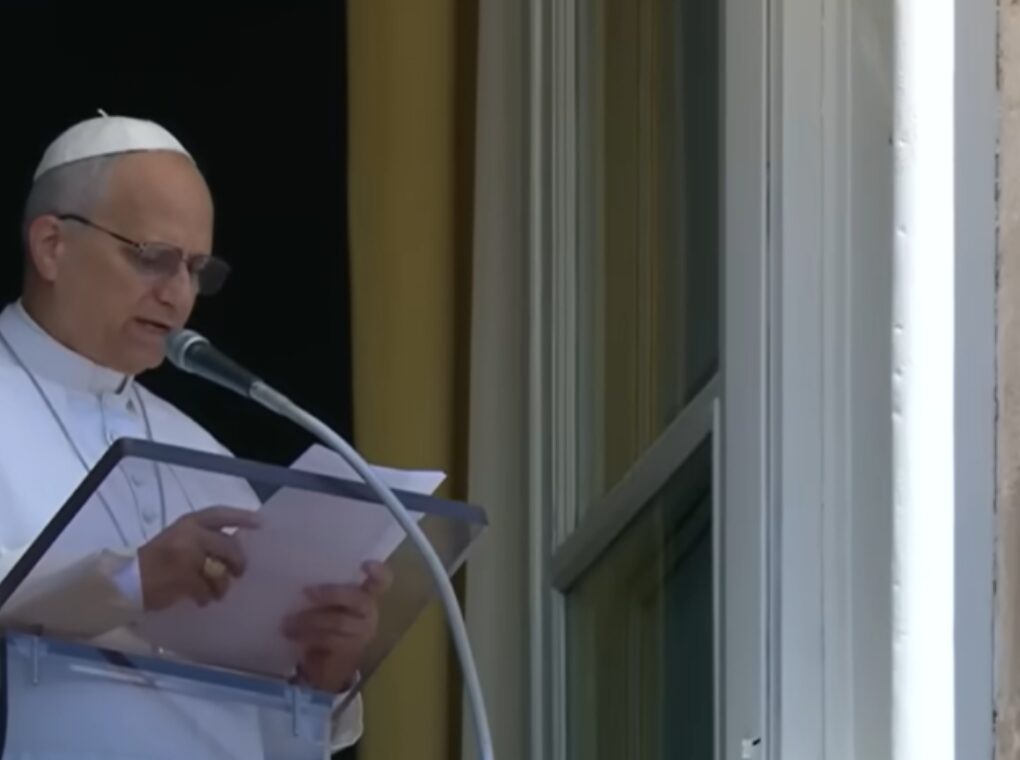
In a major and closely watched intervention on the future of technology, Pope Leo XIV has issued a sweeping call for the “disarming” of artificial intelligence, warning that unchecked development of AI could create “new forms of slavery” and deepen global inequality. The remarks were published in his first encyclical, Magnifica Humanitas (Magnificent Humanity), positioning AI ethics at the center of his papacy.
The document, presented at the Vatican alongside leading AI researchers and ethics experts, signals one of the most direct engagements by the Catholic Church with the rapidly accelerating AI revolution. It also marks a strong moral critique of autonomous weapons systems, geopolitical AI competition, and the social cost of automation.
AI and the “Disarming” Metaphor
At the heart of the encyclical is Pope Leo XIV’s repeated use of the term “disarming AI,” a phrase he defines not as rejecting technology, but as removing its role in systems of domination, militarization, and economic concentration.
“Disarming AI means freeing it from the mentality of armed competition,” the Pope wrote, warning that the global race for more powerful algorithms and larger datasets is being driven less by human need and more by geopolitical and commercial rivalry.
He further cautioned that AI systems should not be designed to function as tools of control or exclusion, but must remain “human-friendly,” transparent, and accessible.
Strong Warning Against Autonomous Weapons
One of the most striking sections of the encyclical addresses AI in warfare. Pope Leo XIV rejects the moral legitimacy of delegating lethal decision-making to machines, stating that “no algorithm can make war morally acceptable.”
He also declared that the long-standing doctrine of “just war,” recently referenced in political discourse by the administration of Donald Trump, is now outdated in the age of autonomous weapons and algorithmic targeting systems.
The Pope warned that AI-driven military systems risk removing human accountability from decisions of life and death, creating a future where conflict becomes faster, less reversible, and more detached from ethical restraint.
Ethical AI Debate and Industry Reactions
The encyclical arrives amid growing global debate over AI governance, particularly regarding the use of large-scale models in surveillance, military targeting, and information warfare.
One of the companies indirectly referenced in the broader AI ethics discussion is Anthropic, which has publicly positioned itself as a safety-focused AI developer. Representatives from the company were present during the Vatican presentation, reflecting increasing collaboration between religious institutions and AI researchers on ethical frameworks.
Anthropic has also been involved in broader legal and policy debates over the use of advanced AI systems in military contexts, highlighting tensions within the tech industry about dual-use applications of artificial intelligence.
“Not Magical”: The Human Cost of AI
Beyond military concerns, Pope Leo XIV’s encyclical focuses heavily on the hidden human labor behind modern AI systems. He rejects what he describes as the illusion that AI is “immaterial or magical,” emphasizing instead the vast human infrastructure required to build and maintain it.
According to the document, AI systems depend on millions of workers worldwide — from data labelers and content moderators to miners extracting rare earth materials used in hardware production. The Pope warns that many of these workers are exposed to psychological and physical harm while remaining invisible in public narratives of technological progress.
“They are scarred, injured and worn down so that computational flow may continue uninterruptedly,” the encyclical states, calling this an “often deliberately hidden chain of exploitation.”
The Pope also raised concerns about environmental costs, noting the energy demands of large-scale AI systems and urging global leaders to consider sustainability as a core requirement in technological development.
AI, Inequality, and Global Power
Another key theme in Magnifica Humanitas is the concentration of wealth and influence in the AI sector. The encyclical warns that artificial intelligence could become a driver of extreme inequality, with profits concentrated in the hands of a small number of corporations and states.
The Pope cited projections suggesting that AI could contribute up to $4.8 trillion to the global economy by 2033, but cautioned that such growth may not be evenly distributed. Without regulation and ethical oversight, he warned, AI could reinforce existing global imbalances rather than alleviate them.
Philosophical and Cultural References
The document is notable for its wide-ranging philosophical and cultural references, drawing on thinkers such as Plato, composers like Beethoven, and even literary figures from J.R.R. Tolkien’s The Lord of the Rings. These references are used to frame AI not merely as a technological issue but as a civilizational turning point.
The encyclical was deliberately signed on the anniversary of Pope Leo XIII’s 1891 social doctrine text, linking today’s AI revolution with the industrial transformations of the 19th century. The comparison underscores the Vatican’s view that humanity is undergoing another profound economic and moral shift.
A Potentially Defining Tech-Ethics Document
Observers suggest that Magnifica Humanitas could become one of the most influential religious and ethical texts on artificial intelligence, similar in impact to earlier environmental teachings that shaped global climate discourse.
Much like the landmark 2015 encyclical on environmental stewardship, this new document is expected to influence policymakers, researchers, and global institutions working on AI governance frameworks.
Pope Leo XIV’s intervention places the Catholic Church at the center of one of the most important debates of the 21st century: how to ensure that artificial intelligence remains aligned with human dignity, ethics, and accountability.
By calling for the “disarming” of AI, the Pope is not rejecting technological progress, but challenging the global community to rethink the direction, ownership, and moral boundaries of machine intelligence.
Whether governments and tech giants will adopt these principles remains uncertain — but the encyclical has already intensified global discussion about the future of AI, power, and humanity itself.