
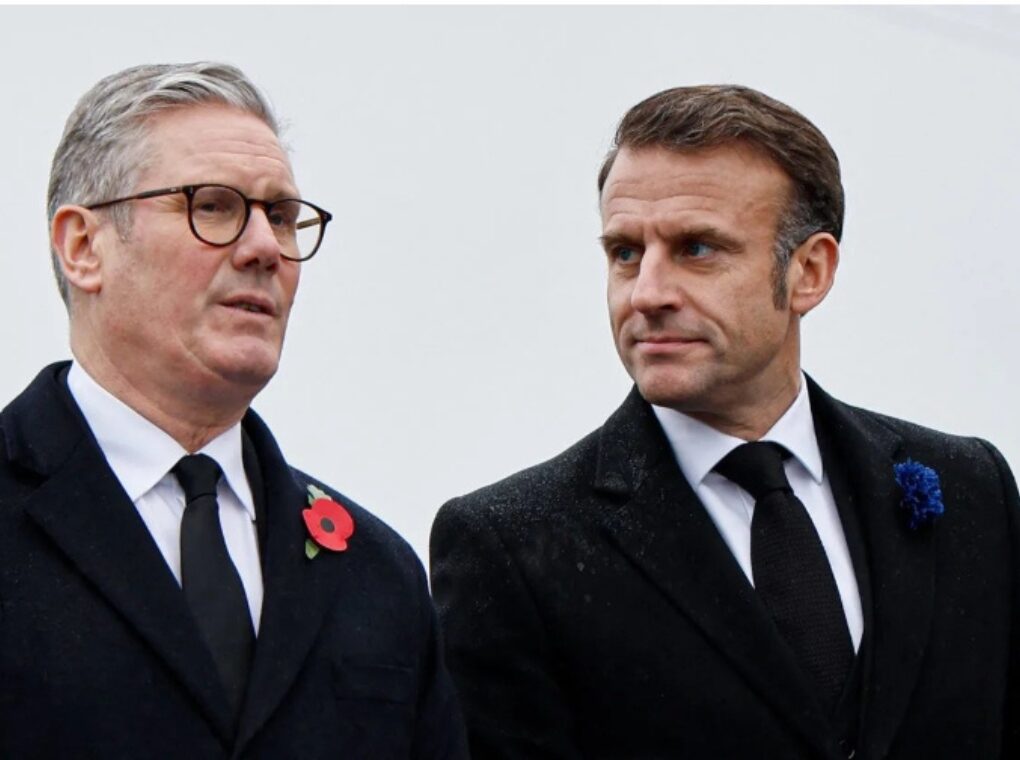
The United Kingdom, France, and several other NATO member states have reportedly blocked a proposal that would have required alliance members to allocate 0.25% of their GDP annually toward military aid for Ukraine, according to reporting by The Telegraph, citing NATO sources.
The proposal, which was informally discussed among alliance members, aimed to create a standardized contribution framework for Ukraine support amid its ongoing war with Russia. However, it has faced significant resistance from multiple key NATO economies, effectively halting its progress before formal adoption.
NATO push for “fairer burden sharing” meets resistance
According to NATO Secretary General Mark Rutte, the idea was intended to address growing concerns about unequal contributions among member states.
Rutte had previously acknowledged that the proposal faced strong opposition and was unlikely to be accepted in its current form. Speaking to reporters, he emphasized that NATO needs a more balanced distribution of support for Ukraine, arguing that only a small number of allies are currently carrying most of the financial burden.
However, unanimity is required for NATO-wide financial commitments, and opposition from major members effectively stalled the initiative.
A NATO source cited in the report indicated that the United Kingdom, France, Canada, Italy, and Spain were among those not supportive of the fixed contribution model. These countries reportedly expressed concerns over tying defense-related assistance to a rigid GDP percentage formula.
Key NATO members push back on fixed funding formula
The proposal would have required each NATO member to contribute 0.25% of their GDP specifically toward military aid for Ukraine. While several Eastern European and Nordic countries already meet or exceed that level of support, larger Western European economies have been more cautious about formalizing such commitments.
Officials from opposing countries argued that defense spending and military aid structures vary significantly by nation and should not be standardized in a fixed percentage model. They also reportedly raised concerns about long-term budgetary constraints, domestic political pressures, and competing security priorities.
Despite the rejection of the proposal, NATO officials stressed that discussions around Ukraine support remain active and ongoing.
Broader political and strategic tensions within NATO
The debate comes at a time of shifting dynamics within the alliance, particularly following changes in U.S. policy under President Donald Trump, who has called for European allies to assume greater responsibility for Ukraine-related military assistance.
Under the current U.S. administration, Washington has reduced direct aid packages to Kyiv and instead shifted toward indirect support mechanisms, including arms sales facilitated through European financing structures. This has increased pressure on European NATO members to fill the gap.
At the same time, NATO continues to navigate internal divisions over long-term commitments to Ukraine’s defense and its potential future membership in the alliance.
Ukraine remains central to NATO’s strategic agenda
Despite disagreements over funding mechanisms, Ukraine remains a central focus of NATO policy discussions. Since Russia’s full-scale invasion in 2022, alliance members have collectively provided billions of euros in military, financial, and humanitarian assistance.
The proposed funding mechanism was intended to institutionalize this support and ensure predictability in long-term aid flows. Supporters of the plan argued that it would help stabilize Ukraine’s defense planning and reduce reliance on ad hoc bilateral contributions.
However, critics within the alliance warned that such a framework could create political friction domestically and deepen divisions between member states with different economic capacities and threat perceptions.
Upcoming NATO summit expected to revisit funding debate
The issue is expected to resurface at NATO’s upcoming annual summit in Ankara, Turkey, where Ukraine is expected to be a key agenda item. Ukrainian President Volodymyr Zelenskyy has been invited to attend, although his participation has not yet been formally confirmed.
Secretary General Rutte had reportedly hoped to finalize or advance the funding proposal at the summit, but the current opposition suggests that any formal agreement is unlikely in the near term.
Diplomatic observers expect continued negotiations focused on alternative funding mechanisms, including voluntary contribution models or expanded bilateral aid commitments rather than a fixed GDP-linked formula.
Implications for NATO unity and Ukraine support
The rejection of the proposal highlights ongoing tensions within NATO over how to sustain long-term support for Ukraine while balancing domestic political and economic constraints across member states.
While some countries continue to advocate for increased and more predictable contributions, others remain cautious about formalizing financial obligations at a NATO-wide level.
For Ukraine, the outcome underscores continued uncertainty in securing consistent long-term military aid, even as the war with Russia continues and battlefield demands remain high.
As discussions move toward the NATO summit, the alliance faces the challenge of maintaining unity while addressing diverging expectations over burden-sharing, strategic priorities, and the future shape of Western support for Kyiv.