
The European Union is undertaking a major shift in priorities, redirecting billions of euros toward defense spending in the Baltic region as concerns over drone incursions and airspace violations intensify. The move comes amid mounting security anxieties along NATO’s eastern flank and reflects a broader transformation in how Brussels views the balance between economic development and military preparedness.
The EU has reportedly committed a €13.5 billion package aimed at strengthening the defenses of the Baltic states — Estonia, Latvia, and Lithuania — with a strong emphasis on air defense systems, anti-drone technology, surveillance infrastructure, and critical security measures. Of that amount, around €12 billion is expected to flow through the EU’s SAFE defense mechanism, while an additional €1.5 billion is reportedly being redirected from regional cohesion and development funds that were traditionally intended to reduce economic disparities between eastern and western Europe.
Security Takes Priority Over Development
For decades, the European Union’s cohesion policy symbolized the bloc’s long-term commitment to narrowing the economic divide between wealthier Western nations and developing regions in Eastern Europe. Funds were primarily focused on infrastructure, education, transport connectivity, green energy transitions, and regional economic modernization.
However, the latest funding decision signals a notable policy recalibration.
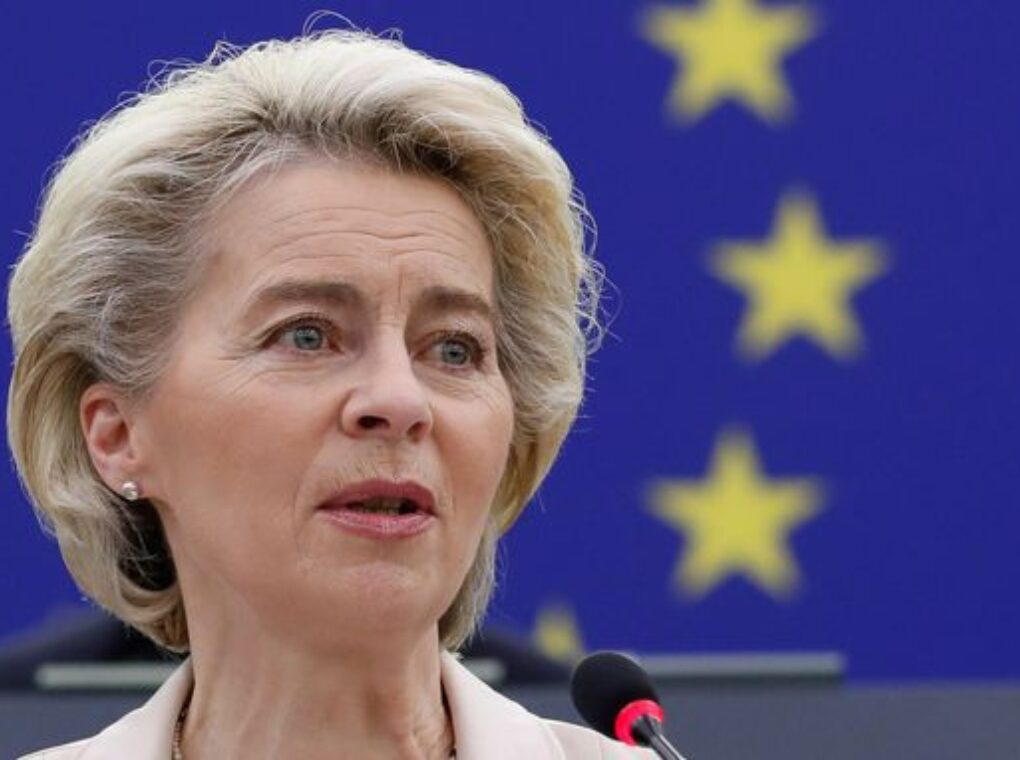
European Commission President Ursula von der Leyen has described the emerging threat environment as a form of “hybrid pressure”, pointing to increasing incidents involving drones, electronic warfare, and airspace disruptions near Europe’s eastern border.
Brussels now appears increasingly convinced that economic integration alone cannot guarantee regional stability if member states feel militarily vulnerable.
Officials argue that prosperity cannot be sustained without security — particularly in countries sharing proximity to the conflict environment surrounding Ukraine and Russia.
Rising Drone Incidents Raise Alarm
The funding push follows multiple reports of drones entering Baltic airspace in recent months, creating political concern and public anxiety.
Several incidents reportedly involved unidentified or diverted drones crossing into or near Baltic territory, temporarily disrupting transportation and civilian activity. Airports in some areas have reportedly introduced precautionary measures, while NATO monitoring activity in the region has increased.
European officials have linked many of these disruptions to broader regional instability stemming from the war in Ukraine and increased electronic warfare activity in the region.
The situation has become especially sensitive because accidental spillovers from military activity near NATO territory raise fears of escalation. Baltic governments have repeatedly urged stronger air-defense capabilities, arguing that their geographic position makes them particularly exposed to security risks.
As a result, anti-drone systems, radar expansion, electronic monitoring, and early-warning capabilities are now becoming a central pillar of EU defense spending.
Debate Inside Europe Intensifies
The reallocation of funds has triggered growing political debate within Europe.
Critics argue that diverting money from development programs could slow economic modernization efforts in poorer EU regions, particularly in Eastern Europe where infrastructure gaps still remain significant.
Some policymakers worry that using cohesion money for military purposes could set a precedent that permanently alters the EU’s long-standing economic mission.
Supporters, however, argue that the changing geopolitical environment leaves Brussels with little alternative.
Baltic leaders have consistently pushed for stronger defense commitments, often exceeding NATO defense spending benchmarks and warning European partners that hybrid warfare — including cyberattacks, drone incursions, disinformation campaigns, and border pressure — is becoming the “new normal.”
Supporters of the funding shift argue that failing to address emerging threats now could carry even greater economic consequences later.
Tourism and Economic Concerns Grow
The broader regional climate has also raised concerns about tourism and investor confidence across parts of the Baltic region.
Local business groups and tourism operators have warned that recurring security alerts and media coverage surrounding drone incidents risk damaging perceptions of safety, particularly during peak travel seasons.
While officials insist the Baltics remain safe destinations, economic stakeholders fear prolonged uncertainty could affect hospitality, transport, and local business confidence.
This adds another layer to the EU’s dilemma: balancing security spending with economic growth.
A Bigger Strategic Shift for Europe?
The Baltic funding package may represent more than a short-term response — it could signal a deeper transformation in Europe’s priorities.
For years, Brussels emphasized economic integration as the foundation of European unity. Today, defense spending is rapidly climbing the agenda as leaders confront an increasingly volatile security environment.
The message emerging from European institutions is increasingly clear: security is becoming a prerequisite for prosperity.
Whether this strategy strengthens European resilience or deepens political divisions over spending priorities remains to be seen. But one thing is evident — Europe’s eastern flank is now at the center of a rapidly changing geopolitical calculation.