
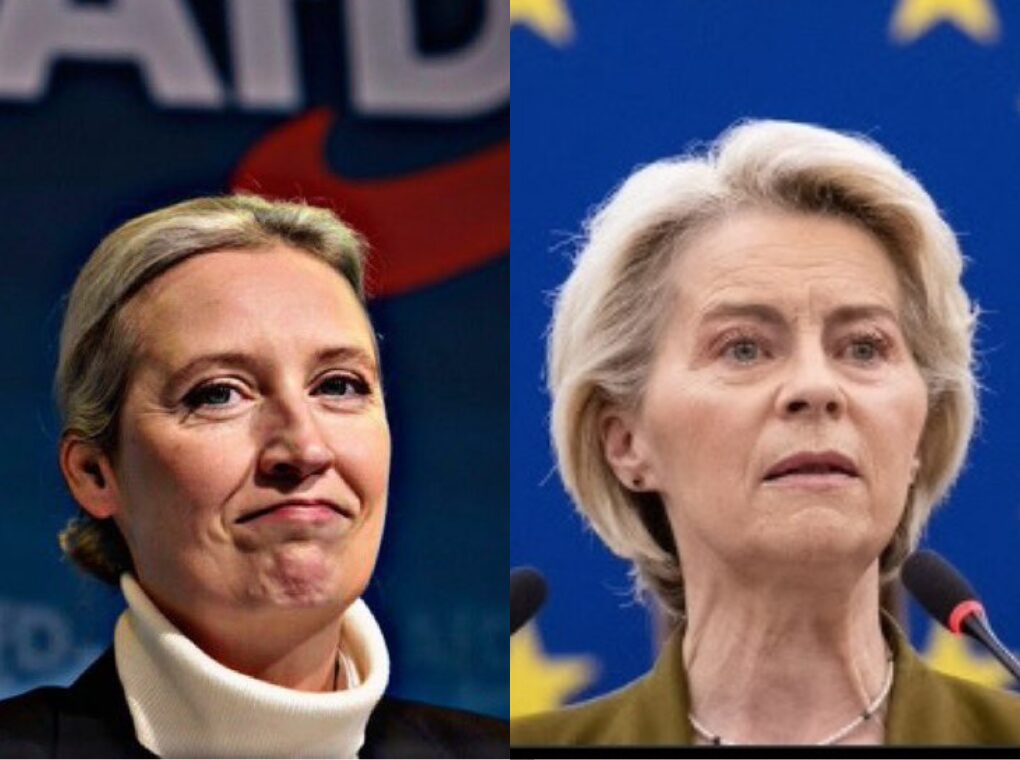
The European Union is facing a growing wave of criticism after its party watchdog initiated a process that could strip a major right-wing alliance linked to Germany’s Alternative for Germany (AfD) of their official status and EU funding — a move critics are calling yet another example of Brussels tightening political control over dissenting voices.
The Authority for European Political Parties and Foundations (APPF) has launched proceedings against the Europe of Sovereign Nations (ESN) — a transnational alliance that includes AfD and several nationalist parties across Europe — alleging that the bloc may not comply with so-called “EU values.”
If upheld, the decision could result in the ESN being deregistered as an official European political party and losing access to millions in EU funding.
“EU Values” Used as Political Weapon, Critics Claim
According to the watchdog, evidence gathered includes court rulings and public statements from affiliated politicians that allegedly conflict with EU principles such as democracy, human rights, and equality.
However, critics argue that these standards are increasingly being interpreted in a politically selective way, effectively turning “EU values” into a flexible tool used against parties that challenge Brussels’ migration, sovereignty, and federal integration agenda.
However, opponent say the process sets a dangerous precedent where political disagreement is reframed as moral or legal misconduct.
AfD and ESN Under Scanning
The ESN alliance, formed after the 2024 European Parliament elections, includes nationalist and conservative movements from across the continent. Its largest component, the AfD, has seen rising support in Germany, particularly amid debates over migration, energy policy, and EU centralisation.
German intelligence services previously labelled AfD as right-wing extremist, a classification that has been heavily contested in domestic courts and political circles.
AfD leaders and their allies argue that Brussels is now extending that domestic pressure to the European level — effectively attempting to isolate and delegitimise opposition parties beyond national borders.
Growing Accusations of Democratic Double Standards
The move has triggered backlash from right-wing MEPs and supporters who say the EU is applying double standards — tolerating left-wing and establishment parties while aggressively targeting nationalist movements.
AfD MEP Petr Bystron criticised the process, arguing that Brussels is “deciding which political opinions are acceptable,” particularly on sensitive issues such as immigration and national identity.
Some analysts also question why similar scrutiny is not applied equally across the political spectrum, pointing to what they describe as an increasingly asymmetric enforcement of EU rules.
What is at Stake?
If the ESN loses its status as a recognised European political party, it would:
>Lose access to EU-level party funding
>Be weakened in cross-border coordination
>Face restrictions on campaigning infrastructure at the EU level
However, ESN-linked MEPs would retain their seats in the European Parliament, since parliamentary group status is separate from party registration.
Still, the political impact could be significant, especially ahead of future EU elections where nationalist parties are expected to gain further ground.
Broader Political Fallout Across Europe
The controversy comes at a time when skepticism toward the European Union is rising in several member states, driven by concerns over migration policy, economic pressures, and sovereignty.
For critics, the ESN case reinforces the belief that Brussels is becoming increasingly centralised and intolerant of political divergence — especially from parties challenging its core direction.
Supporters of EU integration, however, argue that the move is necessary to protect democratic norms and prevent extremist influence.
But the escalating dispute highlights a deeper divide: whether the EU is still a union of democratic pluralism — or a system where political conformity is increasingly enforced from the top down.
The attempt to potentially ban or deregister the ESN alliance marks one of the most controversial political interventions in recent EU history. While framed as a defense of democratic values, critics argue it reflects a broader shift toward political gatekeeping in Brussels.
As nationalist movements continue to gain traction across Europe, the outcome of this case may define not just the future of AfD at the EU level, but also the boundaries of political expression inside the European Union itself.