
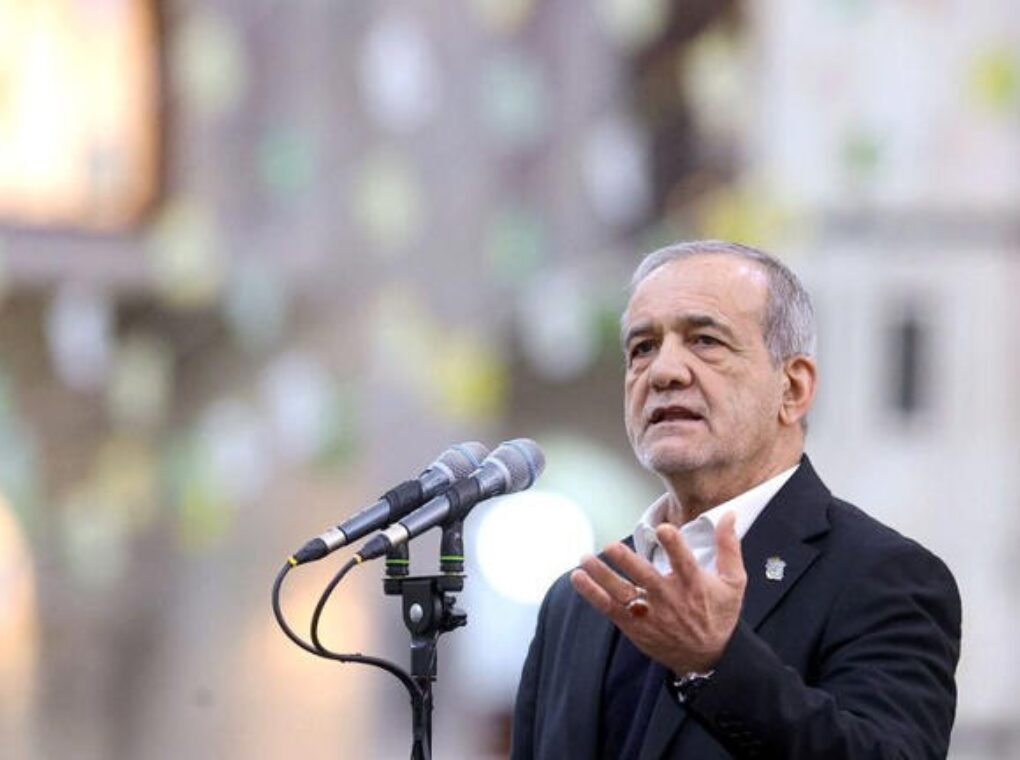
Rumors that Iranian President Masoud Pezeshkian resigned over an alleged power struggle with the Islamic Revolutionary Guard Corps (IRGC) have been firmly denied by Tehran, as speculation surfaced during a sensitive period of diplomatic engagement between Iran and the United States.
As Iran and the US continue negotiations aimed at easing tensions and reaching a broader understanding on regional stability, reports emerged claiming that President Pezeshkian had stepped down due to growing frustration over the increasing influence of the IRGC in state affairs.
The speculation originated from UK-based media outlet Iran International, which reported that Pezeshkian had allegedly submitted his resignation to Iran’s Supreme Leader. According to the report, the president believed the elected civilian government had lost meaningful control over key national decisions, with the IRGC playing an increasingly dominant role in shaping policy.
The report further claimed that Pezeshkian had privately expressed frustration over the shrinking authority of the presidency, allegedly stating that remaining in office made little sense if major decisions were being taken elsewhere.
Iranian Government Rejects Resignation Claims
Iranian authorities swiftly dismissed the reports as baseless. Government-linked news agency *Tasnim*, known for its close association with the IRGC, cited official sources denying that the president had resigned and insisting that he continues to perform his duties.
Seyed Mehdi Tabatabai, Deputy Chief of the Presidential Office’s Department of Communication and Information, also rejected the claims in a post on X, calling them false and politically motivated.
“The President will not step back from serving the people,” Tabatabai said, accusing foreign media outlets of spreading fabricated narratives and attempting to portray speculation as reality.
Why the Reports Gained Attention
The resignation rumors gained traction partly because concerns over the balance of power between Iran’s civilian government and military establishment are not new. Over recent months, several reports have suggested that the IRGC’s influence over key political, security, and strategic decisions has continued to expand.
Earlier, *The New York Times* reported that a powerful network of influential figures—many of them current or former IRGC commanders—plays a major behind-the-scenes role in shaping Iran’s national security and policy decisions.
Why the IRGC Holds Significant Power in Iran
The IRGC is widely regarded as one of Iran’s most powerful institutions. Beyond its military role, the organization exercises considerable influence over foreign policy, national security, economic sectors, and strategic planning.
Critics argue that the growing role of the IRGC has weakened the authority of elected governments, while supporters maintain that a strong IRGC is essential to protecting Iran’s national interests amid mounting regional and international pressures.
For now, Iranian officials insist that President Pezeshkian remains in office, dismissing resignation claims as unfounded rumors circulating amid an already tense political and diplomatic environment.