
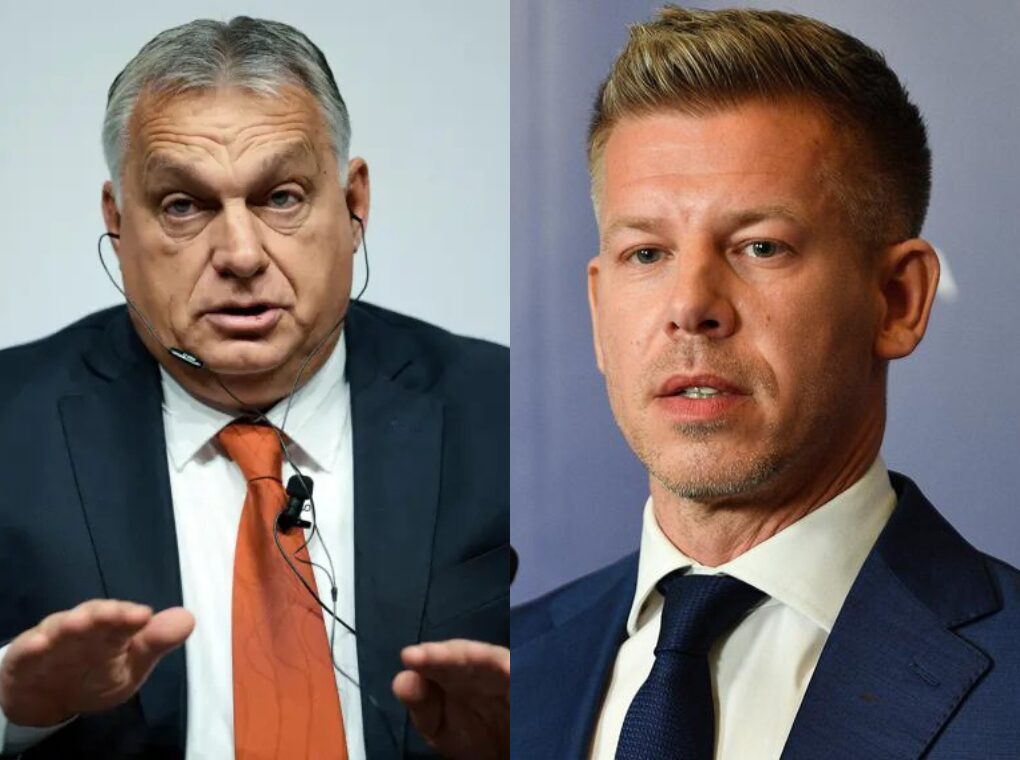
Hungarian Prime Minister Péter Magyar has announced plans to amend the country’s constitution to remove President Tamás Sulyok from office, escalating a political showdown that signals a dramatic restructuring of power in post-Orbán Hungary.
The move comes after President Sulyok, widely viewed as an ally of former Prime Minister Viktor Orbán, refused repeated calls to resign following Magyar’s sweeping electoral victory earlier this year.
Speaking at a press conference in Budapest after a meeting with the president at Sándor Palace, Magyar accused Sulyok of undermining Hungary’s democratic transition and vowed swift action to end what he described as lingering political influence from the Orbán era.
“Tamás Sulyok has betrayed the Hungarian Republic. The institution of the presidency is more important than any individual officeholder,” Magyar said, according to reports.
Why Péter Magyar Wants President Tamás Sulyok Removed
Péter Magyar’s Tisza Party secured a commanding victory in Hungary’s April elections, winning a two-thirds parliamentary majority — enough to amend the constitution without opposition support.
Since taking office, Magyar has pledged to dismantle what critics have long described as an increasingly centralized political system created during Viktor Orbán’s 16-year rule. Orbán’s government faced repeated criticism from the European Union and democracy watchdogs over allegations of democratic backsliding, weakened institutional independence, and growing executive control.
President Tamás Sulyok, appointed during Orbán’s administration, has become a major target of Magyar’s reform agenda.
Although Hungary’s presidency is largely ceremonial, the office still holds important constitutional powers. The president signs legislation into law and can send parliamentary bills to Hungary’s Constitutional Court for review. Supporters of Magyar’s government fear Sulyok could use those powers to delay or obstruct major reforms promised by the new administration.
Magyar had reportedly issued a May 31 deadline for Sulyok to resign voluntarily. However, after talks between the two leaders failed to produce an agreement, the prime minister confirmed plans to begin constitutional procedures to remove him.
Constitutional Changes Could Be Passed Within a Month
According to Magyar, lawmakers from the ruling Tisza Party will immediately begin the legislative process required to amend Hungary’s constitution.
With the party holding a supermajority in parliament, analysts believe the amendments could pass quickly, potentially within a month.
While Magyar insists the move is necessary to restore democratic accountability, critics may question whether changing the constitution to remove a sitting president risks setting a controversial precedent in Hungarian politics.
The planned constitutional amendments have already sparked political debate across Europe, where Hungary remains under scrutiny for governance and rule-of-law concerns.
A Major Break From the Orbán Era
The confrontation between Magyar and Sulyok highlights the broader political transformation underway in Hungary after Viktor Orbán’s departure from power.
Orbán, one of Europe’s longest-serving nationalist leaders, built a political system that opponents frequently described as illiberal and highly centralized. Many key institutions — including the presidency, courts, and public administration — remained staffed by allies appointed during his tenure.
Magyar has framed his reform agenda as an effort to “de-Orbánize” Hungarian politics and rebuild trust in democratic institutions.
Calling Sulyok “Orbán’s puppet” in previous remarks, Magyar argued that the presidency should serve the Hungarian people rather than political loyalties tied to the previous government.
The dispute also raises broader questions about how far the new administration is willing to go to dismantle the political architecture inherited from Orbán.
What Happens Next?
If the constitutional amendment passes parliament, Tamás Sulyok could be removed from office, paving the way for the appointment of a new president more aligned with the government’s political vision.
Such a move would mark one of the most consequential institutional shakeups in Hungary since the change of government.
For now, attention remains focused on Budapest, where Magyar’s government appears determined to move quickly in reshaping the country’s political system.
The coming weeks could prove decisive for Hungary’s democratic future — and for how Europe responds to a government seeking to undo the legacy of Viktor Orbán while consolidating power in its own hands.