
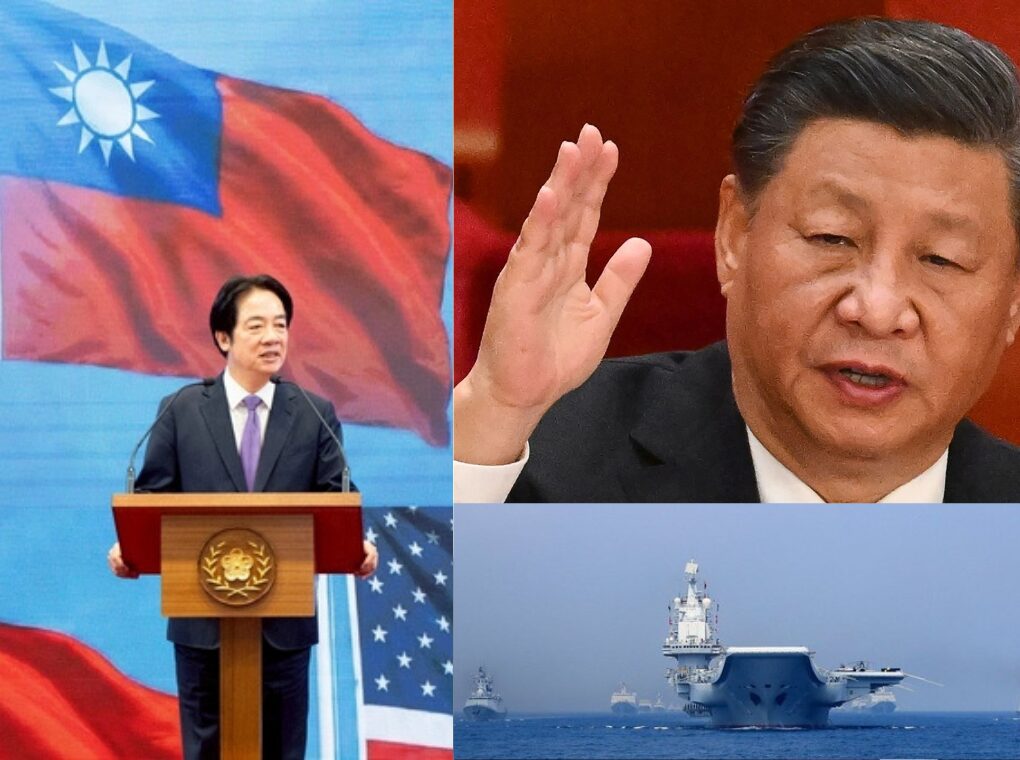
For decades, tensions between China and Taiwan have shaped security debates in the Indo-Pacific. But in recent years, concerns have intensified as Beijing significantly expanded its military capabilities, increased pressure on Taiwan, and accelerated defense modernization under Chinese President Xi Jinping.
Many Western intelligence assessments have repeatedly pointed toward 2027 as a key year for China’s military ambitions. According to various US intelligence and Pentagon reports, Xi Jinping has reportedly instructed the People’s Liberation Army (PLA) to develop the capability to take Taiwan by 2027 if necessary.
The timeline is politically significant. It marks the 100th anniversary of the PLA, often interpreted by analysts as a symbolic deadline for military modernization.
However, military capability and political intention are not necessarily the same thing.
Why 1996 Still Shapes China’s Military Strategy
To understand China’s military buildup, many experts point to one defining moment: the 1996 Taiwan Strait Crisis.
In an attempt to pressure Taiwan ahead of its presidential election, China fired missiles near the island. The move was meant to intimidate Taipei and discourage pro-independence sentiment.
The United States responded decisively.
Washington deployed two aircraft carrier strike groups near Taiwan, signaling military support for the island and demonstrating overwhelming naval superiority.
At the time, Beijing had little ability to challenge American military power.
For many Chinese strategists, the episode exposed a harsh reality: China lacked the military strength to deter US intervention in its own neighborhood.
Nearly three decades later, much of China’s military modernization — anti-ship missiles, aircraft carriers, naval expansion, and advanced air defenses — appears designed to ensure such strategic humiliation never happens again.
China Has Gone To War Before Under Difficult Conditions
Some analysts argue that China’s slowing economy, demographic decline, and internal challenges make war unlikely.
History, however, offers a more complicated picture.
In 1950, China entered the Korean War despite suffering the devastation of years of civil war. In 1962, the PLA launched military action against India even as domestic turmoil from Mao Zedong’s Great Leap Forward continued.
Similarly, in 1979, China fought Vietnam despite an underprepared military that suffered considerable casualties.
The historical lesson is significant:
China has not always waited for ideal military or economic conditions before entering conflict.
This has fueled concerns among security experts who warn against assuming Beijing would only act once the PLA achieves complete readiness.
Is China’s Military Truly Ready For War?
Despite China’s impressive military growth, questions remain over whether the PLA is genuinely prepared for a large-scale conflict — particularly an invasion of Taiwan, considered one of the most difficult military operations in modern warfare.
Xi Jinping has overseen repeated anti-corruption purges inside the PLA, including senior military officials and leadership linked to strategic missile forces.
Recent investigations into high-ranking commanders, including figures tied to the Rocket Force, have raised concerns about internal corruption, procurement failures, and operational reliability.
Critics argue that advanced hardware alone does not guarantee battlefield success.
Unlike the United States military, which has decades of combat experience across multiple conflicts, the PLA has not fought a major war since 1979.
Chinese fighter jets, warships, and missile systems remain largely untested in actual combat conditions.
A failed Taiwan operation could damage China’s global reputation and undermine Xi Jinping’s image of national strength.
Why China May Prefer Pressure Over War
Many experts believe China’s preferred strategy may not involve immediate invasion.
Instead, Beijing could rely on a combination of military intimidation, economic coercion, cyber pressure, and diplomatic isolation to increase pressure on Taiwan.
Potential scenarios include:
>A naval blockade designed to economically isolate Taiwan
>Limited military strikes to demonstrate overwhelming force
>Intensified “grey-zone warfare” through cyberattacks and military drills
>Continued political pressure backed by near-constant PLA presence around the island
Chinese military aircraft and naval vessels already operate regularly near Taiwan, creating sustained psychological pressure without triggering direct war.
Some analysts argue Beijing’s strategy may revolve around convincing Taiwan — and its allies — that resistance would become too costly over time.
Is China Preparing For War To Avoid War?
Another controversial argument suggests China’s military buildup serves an important domestic purpose.
The PLA’s ultimate mission is not only defending borders but also preserving Chinese Communist Party (CCP) rule.
Military modernization, high-profile warships, stealth fighters, and large-scale exercises also project strength to the domestic population, reinforcing nationalism and confidence in state leadership.
At the same time, China faces serious long-term challenges, including an aging population, economic slowdown, and technological competition with the United States.
War over Taiwan could disrupt trade, trigger sanctions, and devastate supply chains — especially involving semiconductors critical to China’s economy.
This creates a paradox.
China appears deeply committed to preparing for conflict.
Yet Beijing also has strong incentives to avoid one.
Ultimately, the question may not be whether China is preparing for war — because clearly it is.
The real question is whether China is building military strength to fight a war… or to make sure it never has to.