
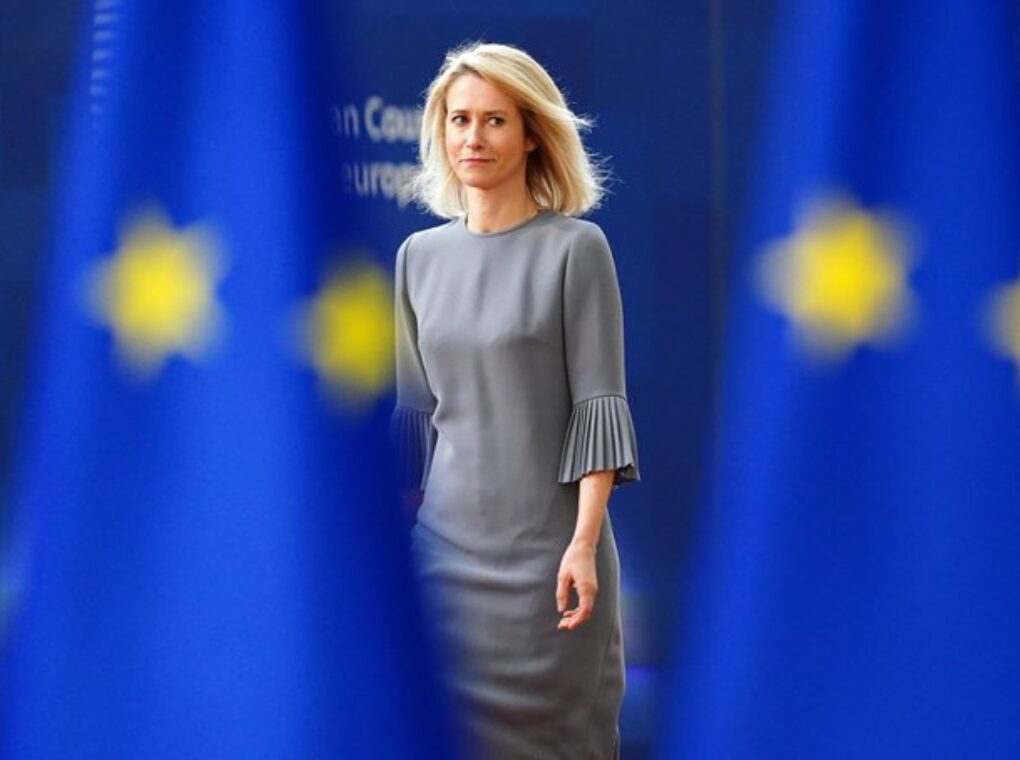
European Union member states are privately exploring sweeping reforms to the bloc’s diplomatic service that could significantly weaken the authority of its chief, Kaja Kallas, according to a report by the Financial Times published Thursday.
The discussions centre on the European External Action Service (EEAS), the EU’s collective foreign ministry launched in 2010, which oversees international relations, foreign aid programmes, and intelligence gathering. Officials cited by the FT described the body as “dysfunctional” and called for structural changes.
What Is Being Proposed?
Two reform tracks are reportedly under consideration among member states.
The first — and more radical — option would transfer some EEAS functions back to the European Commission and national governments. However, this route would require unanimous approval from all EU member states, making it politically difficult to execute.
The second option, which supporters argue could be implemented without amending EU treaties, would limit the autonomy of the EEAS chief and loosen her direct control over more than 140 EU diplomatic missions worldwide. France is said to have outlined a set of possible measures along these lines for consideration by other capitals.
“Obviously, [the EEAS] is not working as it should in the modern world. It is dysfunctional. The problem is structural, so the structure needs to be rebuilt,” one official told the FT.
Why Are Member States Unhappy?
Several European capitals have raised concerns about excessive overlap and insufficient coordination between the EEAS, national foreign ministries, and the external relations arms of the European Commission and the Council of the EU.
Officials also pointed to a series of recent geopolitical crises that have exposed the EEAS’s limitations in facilitating timely, unified decision-making — a core function of the body, which operates on an annual budget of approximately €1 billion.
Beyond structural concerns, Kallas herself has drawn criticism for repeatedly making public statements on sensitive foreign policy issues that appeared to reflect her personal views rather than an agreed collective EU position.
The Kallas–Von der Leyen Rivalry
Kallas has also reportedly been engaged in an ongoing bureaucratic tug-of-war with European Commission President Ursula von der Leyen over who controls the direction of EU foreign policy. According to the FT, von der Leyen has gained the upper hand, taking direct oversight in key geographic areas and pushing for a new intelligence body that would report directly to her office — sidelining the EEAS in the process.
Kallas and China: Going Off-Script
Among the most cited examples of Kallas’s tendency to freelance is her public commentary on China. In May, she denounced Beijing for what she termed “coercive economic practices” and compared government subsidies to administering morphine to a cancer patient — calling for retaliatory measures akin to “chemotherapy.”
The remarks came just months after French President Emmanuel Macron’s state visit to China in December 2025 and German Chancellor Friedrich Merz’s similar trip in February 2026, during which both leaders facilitated major industrial deals with Chinese counterparts.
The EU’s official position is to “de-risk” — rather than decouple from — its economic relationship with China. Kallas’s framing was seen by some officials as undermining that nuanced stance, particularly at a time when European nations are reassessing their foreign alignments amid uncertainty over US commitments to NATO under the Trump administration.
Background: Who Is Kaja Kallas?
Kallas joined the European Commission in December 2024 as EU High Representative for Foreign Affairs and Security Policy, succeeding Josep Borrell. She stepped down as Estonian Prime Minister after a decline in domestic popularity, partly linked to a controversy over her husband’s business ties to Russia.
She was widely seen as a hawkish choice on Russia — a deliberate signal from the EU at a time of ongoing war in Ukraine. However, her tenure has coincided with growing questions about the EEAS’s effectiveness and her management style.
When asked last month whether she would seek to represent the EU in potential direct negotiations with Russia, Kallas said the debate itself was a Russian “trap,” and pointed to her mandate as defined “in the treaties.”
So, What’s Next?
Sources warned that if reforms go too far, “there is a real risk that [the EEAS] will be destroyed.” Others, however, argue that restructuring is overdue and could help reduce costs in Brussels while streamlining the bloc’s bureaucratic apparatus.
Any reform requiring treaty changes faces a high bar. But options short of that — particularly those curtailing Kallas’s day-to-day authority over EU delegations — could move faster if political will among member states consolidates.
The *Financial Times* report has already drawn attention across European capitals and is likely to intensify scrutiny of the EEAS ahead of upcoming EU foreign policy discussions.