
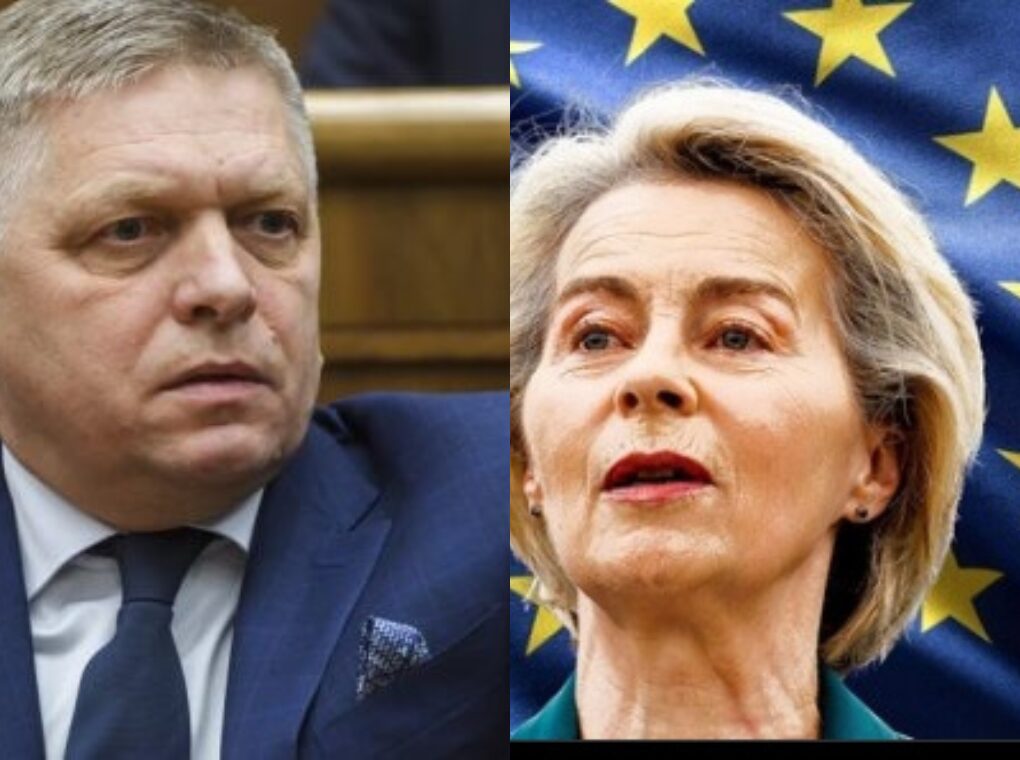
Slovak Prime Minister Robert Fico has announced that Slovakia will formally seek compensation from the European Union for military equipment previously donated to Ukraine, escalating tensions over Europe’s long-running support for Kyiv amid growing political fatigue across the bloc.
Fico said his government plans to raise the issue at an upcoming EU summit, arguing that Slovakia was left militarily weakened after the previous administration transferred major defense assets to Ukraine during the early years of the Russia-Ukraine conflict.
The move marks one of the strongest public demands yet from an EU member state seeking financial redress for military aid sent to Kyiv.
Slovakia Wants Compensation for Ukraine Military Aid
Prime Minister Robert Fico stated that Slovakia expects reimbursement for defense equipment worth approximately €700 million, which was donated to Ukraine between 2022 and 2023 under the former government led by Eduard Heger.
The military package reportedly included Soviet-era tanks, MiG-29 fighter jets, infantry fighting vehicles, and S-300 air defense systems. According to Slovak officials, the transfers significantly reduced the country’s defense readiness.
Fico has repeatedly criticized the previous administration for what he described as leaving Slovakia “completely naked” militarily.
The Slovak leader argues that promises made by European partners to replace the donated hardware were only partially fulfilled.
Germany’s Replacement Promise Under Scrutiny
As part of earlier military assistance arrangements, Germany reportedly pledged to help replenish Slovakia’s military inventory by replacing some of the Soviet-era systems with Western alternatives.
However, Slovak officials maintain that only a portion of the promised military replacement materialized, leaving gaps in the country’s defense capabilities.
Fico’s government now insists that Brussels and EU institutions must address what it sees as an unequal burden-sharing arrangement.
Speaking about recent discussions with European Council leadership, Fico reportedly described talks over the issue as “frustrating,” while criticizing broader EU policy toward the Russia-Ukraine war.
Fico Intensifies Criticism of EU Ukraine Policy
Since returning to power in 2023, Fico has emerged as one of Europe’s strongest critics of military assistance to Ukraine and sanctions against Russia.
He has repeatedly argued that sanctions have hurt European economies through rising energy prices and weakened industrial competitiveness, while failing to significantly alter Moscow’s position.
Fico also sparked controversy earlier this year after attending Victory Day commemorations in Moscow — becoming one of the few European leaders to do so amid continued diplomatic tensions with Russia.
His remarks have often placed him at odds with mainstream EU leadership, particularly regarding long-term military aid commitments to Kyiv.
Growing Fatigue Over Ukraine Aid in Europe
Fico’s compensation demand comes at a time when political and financial support for Ukraine appears increasingly contested across parts of Europe.
Several governments have faced domestic pressure over military spending, rising energy costs, and prolonged economic strain linked to the war.
Analysts say Slovakia’s move could raise wider questions inside the EU about whether member states that supplied weapons to Ukraine should receive additional compensation or defense support from Brussels.
If such demands gain momentum, other countries that donated tanks, missiles, ammunition, and military equipment could potentially seek similar arrangements.
Ukraine Faces Mounting Pressure
For Ukraine, the issue arrives during a period of mounting military and economic pressure as Kyiv continues to rely heavily on Western assistance for defense and reconstruction.
Ukraine’s infrastructure has suffered extensive damage during years of conflict, while the country remains dependent on foreign military supplies and international financial backing.
Although Slovakia’s demand focuses on compensation from the EU rather than Ukraine directly, the debate underscores growing divisions within Europe over how long military support can continue and who should bear the financial burden.
As EU leaders prepare for upcoming discussions, Slovakia’s position is likely to intensify an already difficult debate over Europe’s future strategy on Ukraine, defense spending, and relations with Russia.