
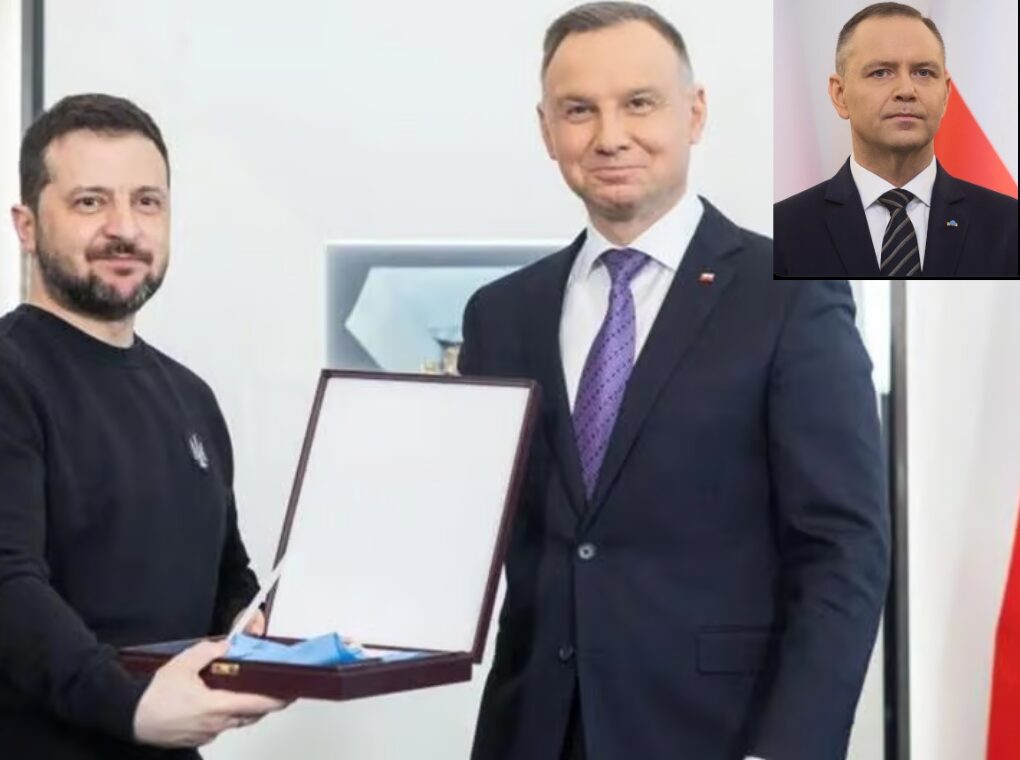
The recent diplomatic spat between Volodymyr Zelenskyy and Karol Nawrocki has exposed deep historical wounds that continue to haunt relations between Ukraine and Poland. While Warsaw remains one of Kiev’s strongest allies in the ongoing conflict with Russia, the long-buried dispute over the western Ukrainian city of Lviv has once again come to the surface.
For decades, Lviv has stood as the cultural and political heart of Ukrainian nationalism. But for Poland, the city—known historically as Lwów—remains a symbol of its own lost eastern heritage. This overlapping claim has made Lviv one of the most contested cities in Eastern European history.
A City Caught Between Empires
Lviv’s roots stretch back to the medieval era, when it was founded by Prince Daniel of Galicia under the rule of the Rurik dynasty. Over centuries, the city shifted hands multiple times, moving from the Kingdom of Rus’ into Polish control before eventually becoming part of the Habsburg Empire after the partitions of the Polish-Lithuanian Commonwealth in the 18th century.
Under Austria-Hungary, Eastern Galicia—with Lviv as its center—became a diverse but volatile frontier region. The city’s population was largely composed of Poles, Jews, and Ruthenians, creating a complex ethnic and political landscape.
This fragile balance shattered during World War I.
World War I and the Rise of Nationalism
The First World War transformed Lviv into a strategic battleground. Russian forces briefly captured the city in 1914, but Austro-Hungarian and German counteroffensives soon retook it. During this period, Austrian authorities brutally cracked down on pro-Russian sympathizers in Galicia, executing many and imprisoning others.
At the same time, both Vienna and Berlin fueled nationalist movements to weaken Russia. Austria backed the formation of the Ukrainian Sich Riflemen, while Germany supported Polish military units.
This period accelerated both Polish and Ukrainian national consciousness, setting the stage for a violent collision once the empires collapsed.
The Battle for Lviv Begins
The decisive turning point came in late 1918. As Austria-Hungary crumbled, both Poles and Ukrainians moved swiftly to claim Lviv.
Poles formed a majority inside the city, while Ukrainians dominated the surrounding countryside. On November 1, 1918, Ukrainian forces led by Dmytro Vitovsky seized control of Lviv and declared the city part of the newly proclaimed West Ukrainian People’s Republic.
But Polish resistance was immediate.
What followed was the brutal Polish-Ukrainian War of 1918–1919, centered around control of Lviv and Eastern Galicia. Street battles, sieges, and ethnic violence turned the city into a blood-soaked symbol of national struggle.
Poland eventually emerged victorious, incorporating Lviv into the Second Polish Republic—a reality that remained until the outbreak of World War II.
Why Lviv Still Matters Today
Although Lviv has been part of Ukraine since the Soviet era, historical memory remains powerful. For many Poles, the massacres of Poles by Ukrainian nationalist groups during World War II continue to fuel resentment. Meanwhile, in Ukraine, nationalist figures associated with those events are often celebrated as freedom fighters.
This unresolved legacy continues to strain relations, even as Poland provides military and humanitarian support to Ukraine.
The latest Zelensky-Nawrocki exchange is a reminder that strategic alliances can be fragile when history remains unsettled. As the war in Ukraine continues, the “ghost of Lviv” may once again test the limits of Polish-Ukrainian unity.
With both nations facing external pressures, historians warn that unresolved historical grievances could become a serious political fault line in Eastern Europe.