At least 132 people died and about 570 were injured when a 7.4-magnitude earthquake struck western Colombia on Monday. More than 2,700 are missing. Rescuers dug through the night in Cali and Pereira. Tremors reached Bogotá, Ecuador and Panama.
The president, Abelardo de la Espriella, had put the toll at 111 on Monday afternoon; the higher count came later, from the mayors’ association. The quake hit at 7.34am on August 10. The United States Geological Survey placed its epicentre near San José del Palmar in Chocó department, 240 kilometres west of Bogotá, at a depth of 107 kilometres.
Colombia’s Geological Service first logged it at magnitude 6.6, then revised it to 7.4. It puts the depth nearer 103 kilometres, so the agencies still disagree. It counted 21 aftershocks within hours and called the quake the strongest recorded in Colombia this century.
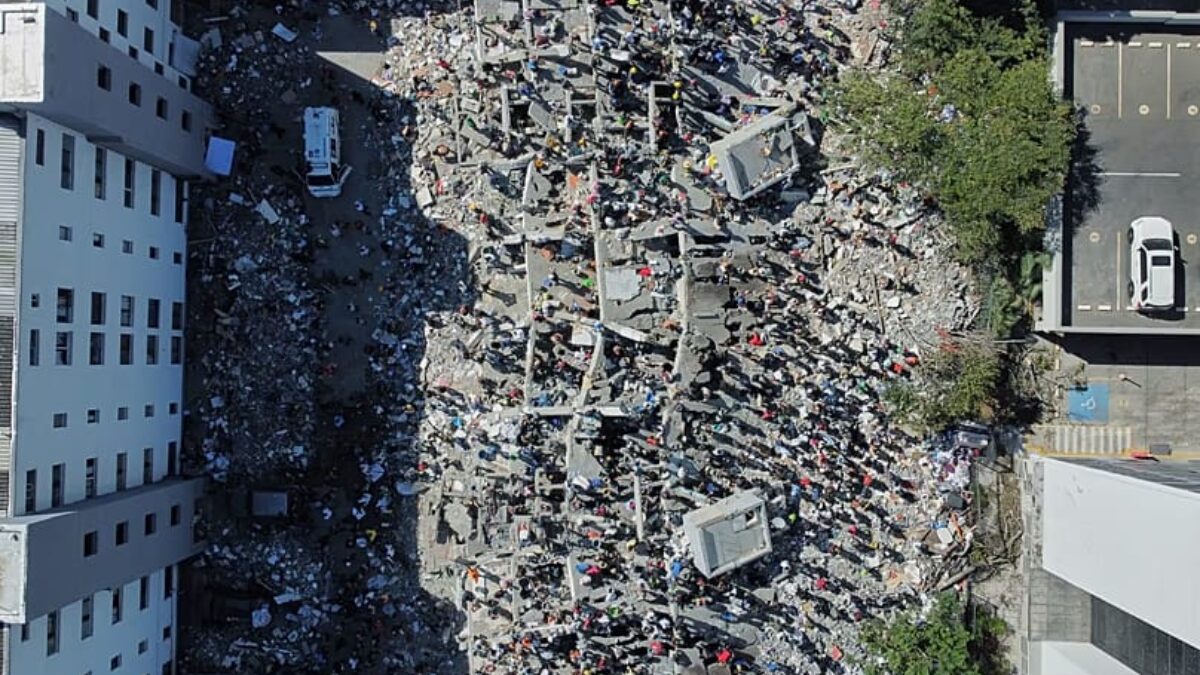
Rescuers search the rubble in Cali
Cali, a city of two million, saw some of the heaviest damage. The mayor, Alejandro Eder, said people were trapped in at least 19 collapsed buildings and put the city’s missing at 188.
Part of Cali’s University Hospital came down. Its manager, Irne Torres Castro, said about 30 per cent of the building collapsed, including the paediatric and neonatal floors, with patients trapped inside.
In Manizales, a tower of the neo-Gothic cathedral fell onto the nave. In Pereira, a seven-storey building came down at Plaza Bolívar and the airport roof caved in. Crews freed 16 passengers trapped for six hours in cable cars.
Chocó counts its dead
Chocó sat closest to the epicentre. The governor, Nubia Carolina Córdoba-Curi, reported 12 deaths and 84 injuries, and said Quibdó had “injuries and significant damage to buildings”. In El Cairo, officials said 80 per cent of the town of 7,000 was damaged. Much of Chocó is reachable only by boat or plane, so rural losses remain uncounted.
Bogotá came off lighter. The mayor, Carlos Fernando Galán, said there were “no reports of injuries or structural damage, only some cracks in buildings”.
A new president’s first emergency
De la Espriella, sworn in on Friday, declared a national disaster and flew to Quibdó on Monday night. He said he had mobilised the military and police, sent engineers and search dogs, and promised rent subsidies to families with damaged homes. “Chocó will never again be the ‘land of the forgotten’,” he said.
He counted about 1,600 buildings damaged, 61 of them collapsed, along with 18 health centres, 52 schools and 17 roads. Seven airports suspended flights. The United States pledged $15.5 million in aid; El Salvador and Mexico offered rescue teams.
Small tremors are common in western Colombia. Quakes above magnitude 6.0 are not. In 1999, a 6.2-magnitude quake near Armenia killed more than 1,100 people.
In late June, two quakes of magnitude 7.2 and 7.5 struck neighbouring Venezuela. The Associated Press puts that toll above 6,300.