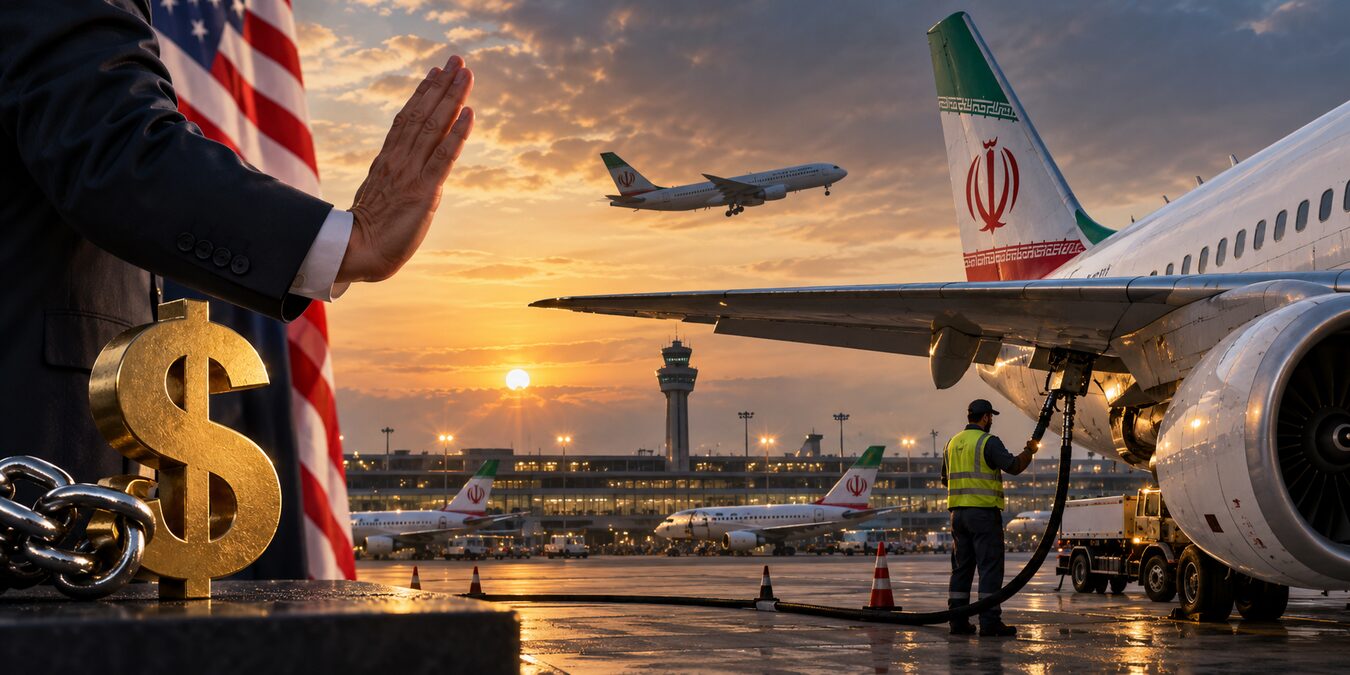
US Treasury Secretary Scott Bessent says Washington will shut down every Iranian airline starting Wednesday, September 23. He issued the warning during a September 21 interview on CNBC’s “Squawk Box.” The threat is aimed at the world, not just at Iran — any airport, fuel supplier or ticket agent that serves an Iranian carrier risks losing its access to the dollar.
Bessent said offenders would find themselves “knocked out of the dollar system,” adding that Washington was squeezing Tehran harder than ever before.
The announcement lands as the US-Iran war nears its seventh month, and just as Iranian President Masoud Pezeshkian prepares to address the United Nations in New York.
How the New Sanctions Target Iranian Airlines
The move builds on a Treasury action from September 8. The Office of Foreign Assets Control (OFAC) designated 36 targets that day, including 27 Iranian airlines, using Executive Order 13224, a counterterrorism authority, and Executive Order 13902, which covers key sectors of Iran’s economy.
Treasury also suspended three aviation authorisations, including permissions covering overflights, and said it would weigh aviation safety requests on a case-by-case basis.
OFAC named intermediaries in the UAE, Turkey, Malaysia and Kazakhstan. Treasury said Mahan Air obtained at least three Boeing 777s during the summer of 2026 by routing through the UAE and Oman.
Bessent launched the wider campaign, Operation Economic Outcast, on August 24, calling it “Economic D-Day.” He warned that anyone dealing with the sanctioned carriers would be “cut off from the global financial system.” Earlier rules mainly stopped American firms from serving Iranian carriers; this latest step extends that risk to every foreign supplier in the chain.
Where Iranian Airlines Still Fly
Iran’s air links have already narrowed sharply. FlightConnections data show flights from Iran reaching 67 airports across 16 countries this month, operated by some 23 airlines, including foreign carriers.
Mahan Air, the country’s largest private operator, serves 10 international destinations across seven countries and 24 domestic routes — a network that shrinks week by week.
Mahan halted its Tehran–Muscat service on September 17, then dropped Istanbul, Ankara and destinations in Georgia from September 21, blaming instructions from local aviation authorities.
Who Is Falling In Line
Iraq moved first. Two government sources said Baghdad would enforce the ban from Tuesday at dawn, with one official warning that countries ignoring the decision risk sanctions themselves.
According to reports, Georgia barred Iranian carriers on Monday. Turkish officials said their ban on Mahan Air took effect on September 21, and Turkish Airlines has suspended its own Iran flights until at least March 2027.
China remains the real test. Bessent spoke after concluding talks with Chinese Vice-Premier He Lifeng, describing discussions with Chinese financial authorities as positive. Beijing’s commerce ministry, however, opposes secondary sanctions and has reserved the right to defend its firms.
Analysts question the plan’s reach. Saj Ahmad of StrategicAero Research said Pakistan and China would not “fold like a deck of cards,” and questioned whether airports would genuinely turn away Iranian money. Brett Erickson of Obsidian Risk Advisors called the September action “a significant escalation.”
What This Means For Iran
Tehran says its civilians will bear the cost. Ambassador Gholamhossein Darzi wrote to the UN Secretary-General calling the measures “economic terrorism,” arguing they block spare parts, maintenance, inspections and technical services for civilian aircraft.
The economic backdrop is already harsh. Iran’s economy contracted by 10 percent between March 21 and June 20, while the rial has slumped and food and energy prices have climbed.
The timing creates a diplomatic puzzle: Pezeshkian is set to present Iran’s positions at the UN, the semi-official Tasnim news agency said, with his delegation flying in on an Iranian-registered aircraft that will need fuel for the return journey.
The Open Question
Oil prices climbed after the warning, and traders are now watching the sidelines of the UN General Assembly for any sign of a thaw.
Enforcement remains unresolved. Washington cannot police every apron, fuel truck and ticket desk — but it can make the dollar-related risk unmistakably clear to every bank involved. Wednesday will show how many governments choose the dollar over Tehran.