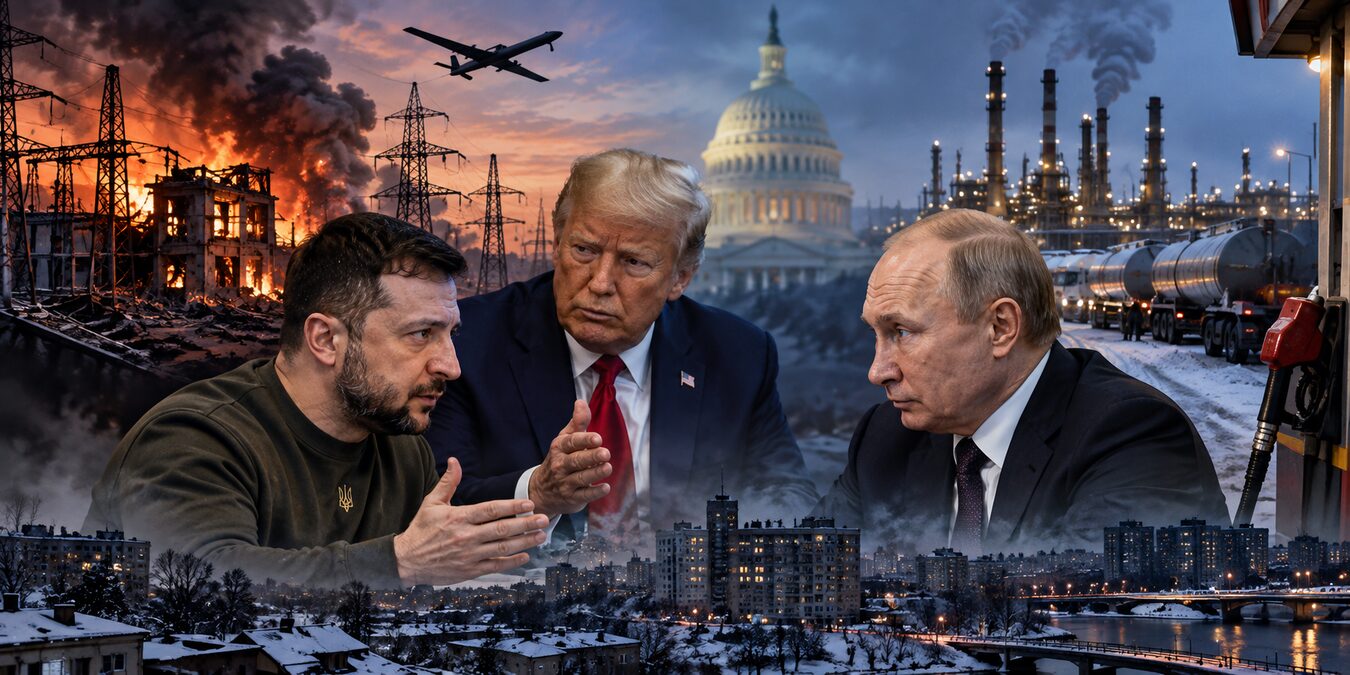
Ukrainian President Volodymyr Zelenskyy has offered Russia a truce on energy strikes. He hopes the coming winter and American election-year politics will push Moscow back to the negotiating table. The offer came after he met US President Donald Trump in New York on September 22, and he’s now pressing Trump to host a three-way meeting with Russian President Vladimir Putin. The Kremlin, for now, says there’s no basis for peace talks.
Russia stops attacking Ukraine’s energy, electricity, heating and water infrastructure, and Kyiv halts its drone strikes on Russian energy sites in return. Zelenskyy isn’t pretending he expects a yes — he said on social media he wasn’t sure Russia was ready for this as of today. He’s asked Trump to get Putin to meet him in person at the G20 summit in Miami, and to bring Chinese President Xi Jinping into the effort, given Beijing’s influence over Moscow.
Winter is the driver. Russia has escalated ballistic missile and jet-drone attacks on Ukraine’s power grid, and hours after the New York talks, Russian jet drones hit Kyiv in a rare daytime strike. Zelenskyy has also asked Trump for a winter package of Patriot missiles, plus licences to build them domestically.
Kyiv isn’t negotiating from weakness, though. Ukrainian drone strikes have pushed Russian refining capacity to its lowest level in over 20 years. Moscow has responded by temporarily banning most petrol and diesel exports, a significant blow given Russia supplied roughly 10% of the world’s diesel before the campaign. Zelenskyy has framed the strikes as tit-for-tat: if Russia causes blackouts in Ukraine, Kyiv will respond in kind.
There’s a second clock running in Washington. US diesel prices have risen above $6.50 a gallon, hitting a record high. With November’s midterm elections approaching, the surge is rattling Republican candidates in Iowa and Michigan, some of whom now want to curb US diesel exports. Trump has partly blamed Kyiv for the price spike, telling reporters on September 13 that Zelenskyy needed to stop knocking out diesel fuel in Russia. The next day, he claimed both sides had agreed to halt energy strikes — a claim neither Kyiv nor Moscow confirmed. Trump pressed Zelenskyy again by phone on September 20.
Viewed this way, the truce offer serves several purposes at once. It meets Trump’s demand without forcing Ukraine into a one-sided climbdown. It also gives the White House a potential pre-election win on fuel prices while shifting responsibility for rejecting the offer onto Moscow.
Early signs point to no. Kremlin spokesman Dmitry Peskov said Russia currently has no preconditions for peace talks. He added that Russia remains open to negotiations in principle. He also called a Putin-Zelenskyy meeting premature without prior expert-level discussions.
Moscow has effectively raised the price of any energy truce. Earlier this month, Peskov called the idea good in principle but said refinery safety alone would not solve broader problems. He demanded secure global oil shipping routes and an end to sanctions on Russian producers. Putin has also repeatedly ruled out meeting Zelenskyy in a neutral country, offering to host in Moscow instead.
That said, Russia has its own incentives to deal — its refineries have sustained serious damage and fuel queues have appeared in Russian cities. Still, skepticism runs deep: prediction markets currently give only a 21% chance of a ceasefire by year’s end.
The track record isn’t encouraging. In March 2025, Putin agreed to a 30-day pause on energy strikes after speaking with Trump. Within hours, both sides accused each other of violating the agreement. In January 2026, US, Ukrainian and Russian delegations held their first three-way talks since the 2022 invasion in Abu Dhabi, but ended without progress on territory or security guarantees. A second Abu Dhabi round in February produced a prisoner swap involving 314 people. Washington and Moscow also agreed to restore military-to-military contacts. However, a third round in Geneva that month again failed to resolve the territorial dispute. Notably, the three leaders have never sat down together at any point in the war.
Russia currently controls roughly a fifth of Ukraine’s territory, including Crimea. Zelenskyy says he’s ready to meet Putin any time; the Kremlin says it wants expert-level talks first. As temperatures drop, both capitals face the same choice they have confronted before. They must choose between a genuine truce or another winter of mutual strikes on energy infrastructure.