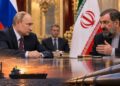
Iran has dismissed Washington’s latest reply on reopening the Strait of Hormuz as “insufficient”. Mohsen Rezaei, secretary of Iran’s Supreme National Security Council, said on Sunday. He said the US had accepted some of Tehran’s seven conditions but left others unclear. He also said Tehran had stopped drafting replies and now expects Washington to clarify its stance.
The remark leaves Iran’s Hormuz proposal in limbo. It also deepens a stalemate that has choked a vital energy route since February. Before the war, roughly a fifth of global oil and liquefied natural gas passed through the strait. So what did Iran offer, how did the US reply, and why does the deadlock persist?
How did the crisis begin?
The war began on 28 February, when the US and Israel attacked Iran. Iran struck back with missiles and drones and effectively closed the Strait of Hormuz. Washington then imposed a naval blockade on Iranian ports. The closure has jolted the world economy and pushed up fuel prices.
In June, the two sides signed what Iranian officials call the Islamabad memorandum of understanding (MoU). It aimed to end the war, reopen the strait and launch nuclear talks. Donald Trump declared the deal over in July.
What is Iran’s seven-day plan?
Foreign Minister Abbas Araghchi unveiled the plan at the UN General Assembly on 25 September. Qatar carried the proposal to Washington. Under the plan, the US would take agreed steps over the first four or five days. Iran would then reopen the strait on day six. Talks on a final deal, including Iran’s nuclear programme, would begin on day seven.
Araghchi insisted that none of the US steps was new, since the June MoU already listed them. “The choice now rests with the United States,” he said.
Parliament Speaker Mohammad Bagher Qalibaf, Iran’s chief negotiator, later framed these steps as seven conditions. Reports suggest Tehran wants the US to end its naval blockade, lift the oil export ban and release frozen assets. It also wants Washington to scrap all sanctions and stop attacks on Iran and allies such as Hezbollah. Tehran has not published the full list.
How did the US respond?
Trump rejected the plan publicly on 26 September. He argued that Iran wanted a quick deal only “because they are losing so badly”. He reportedly told aides he expects to resume bombing Iran after November’s midterm elections.
Yet Qatar kept the channel open. Qatari mediators handed Araghchi a formal US reply in Doha on 29 September. An official familiar with the talks said that the gap concerned the order of steps, not the steps themselves.
A US official said that Trump would offer sanctions relief and frozen funds for concrete nuclear progress. Trump denied a similar report, insisting he had offered Iran “NOTHING”. He has since stressed that the US naval blockade will remain.
Why does Iran call the reply insufficient?
Rezaei did not say which conditions Washington accepted. Three gaps stand out, however.
The first gap is timing. Iran wants Washington to end the blockade, free oil sales and release assets before it reopens the strait. Washington wants nuclear concessions first.
The second gap is the nuclear file. Foreign Ministry spokesperson Esmaeil Baghaei said the US proposals largely repeated Washington’s old nuclear demands. Tehran still refuses to halt domestic enrichment or ship its uranium stockpile abroad.
The third gap is trust. President Masoud Pezeshkian said Iran no longer trusts talks with Washington, citing strikes that followed earlier rounds. Tehran therefore wants firm commitments before it gives up its strongest bargaining chip.
Why did the US decline?
Washington sees the plan as one-sided. UN envoy Mike Waltz said that Iran was “asking for everything up front”. US officials also argue that Iran broke the June MoU by firing on commercial vessels. One official said Washington needs guarantees that Iran wants a real deal, not just economic relief.
The US also wants to bundle the issues together. Washington wants a single package, not separate deals on shipping and nuclear matters. In short, the US wants Iran’s nuclear programme on the table straight away. Finally, Washington believes it holds the stronger hand. A US official has claimed that Trump holds all the cards in the talks.
What happens next?
Rezaei insisted that the strait will stay shut, and talks will not start, until Washington meets Iran’s conditions. He also warned that regional data cables and artificial intelligence facilities could become targets if war resumes. Meanwhile, the violence at sea continues. Two more tankers suffered strikes in Hormuz in recent days.
Still, the diplomatic channel remains open, and Araghchi says messages continue to pass through mediators. Yet each side now waits for the other to move first. Until one does, the strait will stay largely closed. That keeps pressure on fuel prices and on economies far beyond the Gulf.