
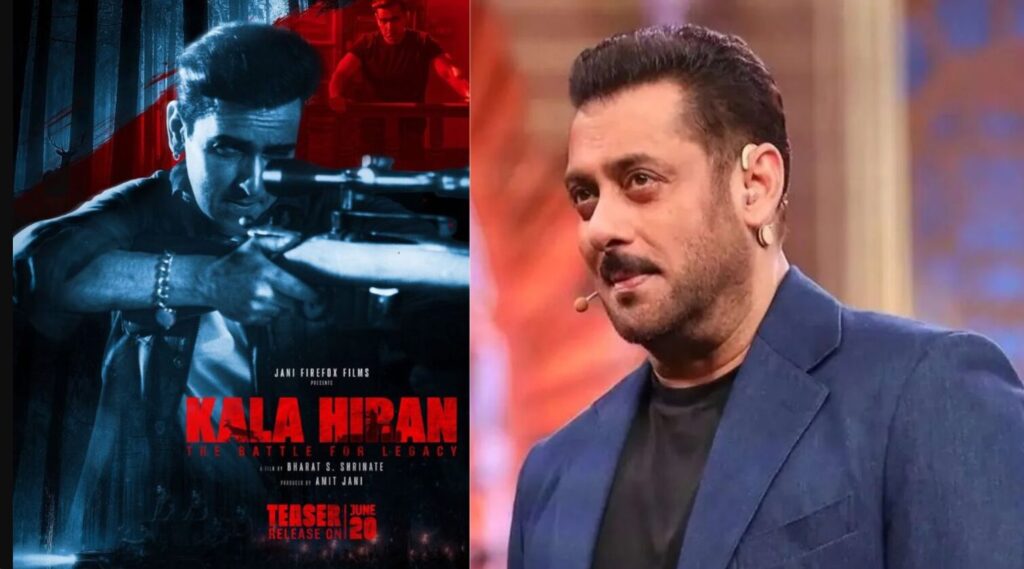
In 2026, the Delhi High Court issued a ruling in Salman Khan v. Ashok Kumar/John Doe & Ors., marking another milestone in the protection of personality rights in India. Justice Jyoti Singh prohibited the makers of Kala Hiran: The Battle for Legacy from commercially exploiting the actor’s persona, including his name, mannerisms, and distinctive attributes. The teaser and all related posts were ordered to be taken down within 24 hours. Should the uploaders fail to comply, platforms X, Meta, and Google are required to remove the relevant URLs within a further 24 hours.
This ruling illustrates a growing trend. Indian courts treat the unauthorized use of a “persona” as grounds for an immediate injunction even in fictional and dramatized formats. Against the backdrop of proliferating generative AI and the rapid spread of video content, expedited takedowns and platform-specific takedown directions are becoming the norm rather than the exception.
Legal Foundation Without a Dedicated Statute
No dedicated Personality Rights Act exists in India. Nevertheless, courts have built a functioning system of protection by drawing on several sources:
- Article 21 of the Constitution of India (right to life and personal dignity)
- Article 19(1)(a) (freedom of speech and expression)
- The Trade Marks Act, 1999
- The Copyright Act, 1957
- The doctrine of passing off, i.e., common law passing off
Protection has been shaped by judicial precedent and built brick by brick from case to case. The absence of a codified statute has not prevented courts from creating a fully developed legal architecture that is now cited in dozens of suits.
Key Terms Essential to Understanding These Disputes
Personality rights serve as an “umbrella” encompassing all of a person’s interests in their own identity. Publicity rights constitute the commercial dimension of that umbrella, conferring control over the monetization of one’s name, likeness, and voice. Privacy rights protect dignity and prohibit the exploitation of a person’s identity against their will. In cases involving AI and deepfakes, courts typically engage both dimensions simultaneously.
What Attributes Courts Recognize as “Persona”
Indian courts protect the following elements of identity:
- Name or stage name (e.g., Rajinikanth, Jackie Shroff as “Jaggu Dada”)
- Image, face, and likeness (e.g., the Titan Industries and Aishwarya Rai cases)
- Voice, including AI clones (the Arijit Singh and Asha Bhosle cases)
- Signature and distinctive style (Rajinikanth)
- Recognizable gesture (Anil Kapoor)
- Catchphrase (“Jhakaas” for Anil Kapoor, “Bhidu” for Jackie Shroff)
The key criterion is identifiability. If the public is able to identify a specific individual from the attribute used, that attribute is entitled to protection.
An important implication follows from this criterion: celebrity status is not required for protection. The Dr Devi Prasad Shetty case has already extended the doctrine beyond the entertainment industry, and the same logic applies to radio hosts whose voices audiences recognize within seconds, and to voice actors whose vocal qualities are particularly easy to clone using AI. The same applies to the online entertainment space, where live stream hosts perform before thousands of viewers daily. According to data reviewed, such formats are especially popular with leading online casinos 1Win, Parimatch, and PinUp. In the case of Melbet, the variety of such games is striking, while casino game shows at Parimatch keep live hosts on screen for hours at a time. Their faces, intonations, and signature phrases are remembered by regular audiences just as well as those of television presenters.
Recordings of such broadcasts can easily be edited into clips for fake ads or synthetic promos, and under the Indian identifiability standard that is sufficient for a host to seek an injunction. Awareness is central here: a person who knows that their voice, image, and mannerisms are protected by law is in a position to detect a violation in time and put a stop to it. This is why rights holders are turning to the courts with increasing frequency, and there are several reasons for that.
Five Reasons Celebrities Choose Litigation
Commercial harm ranks first. Using another person’s name and likeness without a licence constitutes free riding, which dilutes genuine endorsement contracts and deprives the rights holder of income. The technological factor comes next: generative AI has made morphing, deepfakes, and voice cloning cheap, scalable, and anonymous. The third reason concerns dignity and reputation, when a person is associated with products, actions, or content to which they have no connection. The fourth involves harm to third parties: fake “endorsements” by doctors or investment clips featuring a cloned voice deceive audiences. Finally, the John Doe format allows multiple infringements to be addressed through a single order and establishes platform takedown obligations.
Five Phases in the Development of the Doctrine
The doctrine evolved in stages. First came the constitutional foundation, when privacy was read into Article 21 (1994) and confirmed as a fundamental right (2017). Courts then recognized a distinct right of publicity and began restraining the commercial exploitation of persona through passing off. The third phase opened in 2022 with the emergence of broad John Doe injunctions. The fourth, from 2023 onward, was a response to the wave of AI deepfakes and voice cloning. The fifth phase, running in parallel, has been defining the limits of freedom of expression: parody, news reporting, and public interest remain outside the scope of injunctions.
How John Doe Works and What the Amitabh Bachchan Case Established
The 2022 case established that a court may issue a single omnibus injunction against unknown/unnamed defendants, protecting a celebrity’s name, voice, and likeness. Previously, a claimant had to play whack a mole, pursuing each individual infringer separately. The John Doe order resolved that problem: it extends to anyone falling within the description and allows new infringements to be restrained without returning to court.
It is important not to conflate two distinct mechanisms. John Doe (or Ashok Kumar in Indian practice) is directed against unknown defendants. Ex parte refers to a procedure conducted without hearing the other side due to urgency. In practice the two often coincide, but they address different procedural questions.
How Courts Are Responding to the Challenge of Generative AI
Generative tools have made counterfeits cheap and mass-produced, and the judicial system has responded with faster and more targeted measures. The Anil Kapoor case (2023) was a turning point, being the first to include AI morphing, face swap, and GIF within a list of specifically prohibited formats. The Arijit Singh case in Bombay (2024) recognized voice as an independently protected attribute, including its synthetic versions. The wave of cases from 2025 and 2026 — from Aishwarya Rai to Jubin Nautiyal — has entrenched an emergency response mode: courts are increasingly acting through platforms, demanding the removal of specific URLs within hours.
That said, publicity rights are not absolute. The Digital Collectibles case (2023) demonstrated that freedom of expression, parody, news reporting, and public interest remain outside the scope of any injunction.
What the Salman Khan Case Means for the Industry
The 2026 ruling sends a practical signal to producers and marketers. The court intervened at the earliest stage of a release, focusing not only on the name but also on “mannerisms” and distinctive attributes as part of the protected persona. The entrenchment of short content-removal deadlines — with the possibility of direct directions to X, Meta, and Google — raises the legal risk for any project that uses the recognizable features of a real person without their consent.