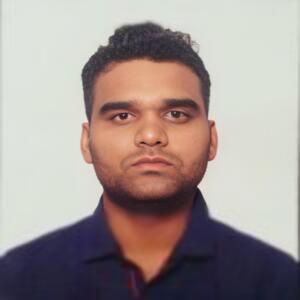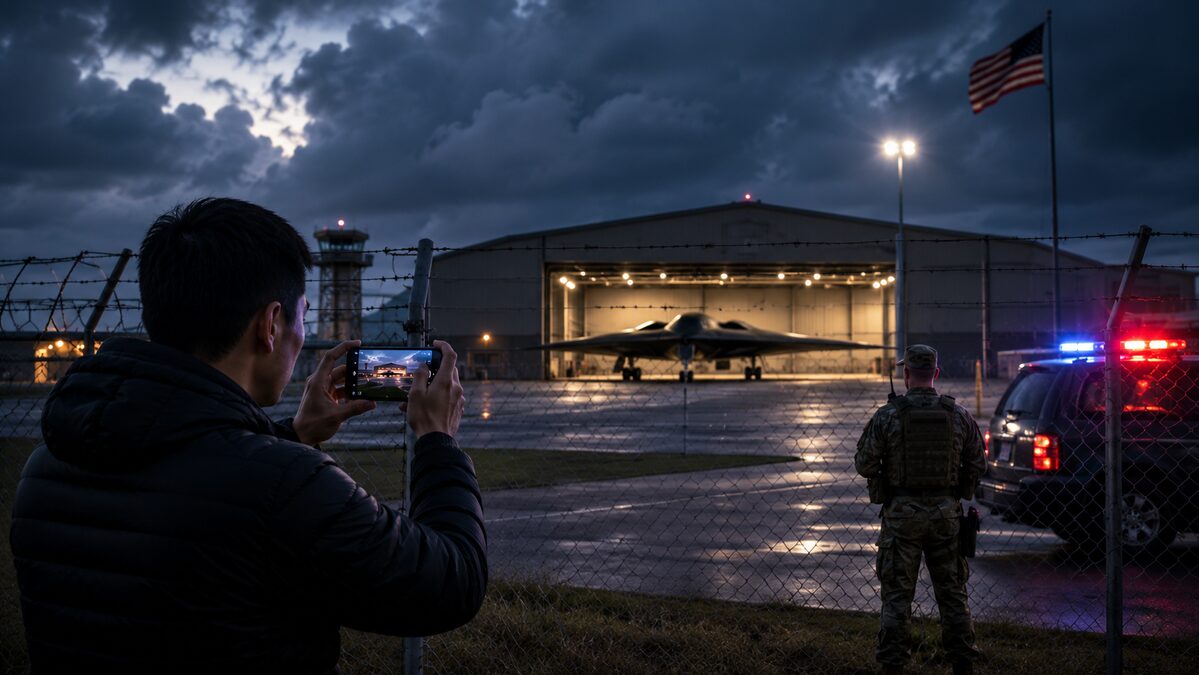
A US judge has sentenced a Chinese national to six months in prison after he returned to Whiteman Air Force Base in Missouri and photographed its perimeter, a day after security personnel had warned him against doing so. The base, in Missouri, houses every B-2 Spirit stealth bomber in the US Air Force’s fleet.
The Air Force Office of Special Investigations (AFOSI) announced the sentence on August 13. Prosecutors built their case on a law President Harry Truman signed in 1950 — a rule now enforcing itself, 76 years later, in rural Missouri.
Why the Case Reached Court
Qilin Wu, 35, was charged under Section 795 of Title 18 of the US Code, which bans photography of sites the president designates as vital to national security. That designation traces back to Truman’s Executive Order 10104. Together, the law and the order carry a maximum penalty of one year in prison — the charge is classified as a misdemeanour, not espionage.
Photographing a military base from public land is typically lawful in the US; plane spotting is a long-established hobby, and enthusiasts gather outside American airfields most weekends without incident. Wu’s case turned not on the act of photographing itself, but on what he did after being warned.
How the Arrest Unfolded
Airmen from the 509th Security Forces Squadron stopped a suspicious minivan with Massachusetts plates near the base on December 2, 2025. Wu told them he had come to watch the B-2 bombers. Officers warned him not to photograph the installation.
He returned the following day. Agents found the same vehicle parked beside the base’s perimeter fence. Wu admitted to filming a bomber and photographing fencing, a gate, and other equipment — investigators recovered 18 images and videos from his phone. He also admitted to photographing military bases in Florida and Virginia.
Investigators said their concern extended well beyond the photographs themselves. Wu’s decision to return after being warned, combined with his focus on fencing and infrastructure rather than aircraft alone, raised red flags.
Colonel David Bethel, who commands AFOSI Region 8, framed the case as part of a broader shift. “For our Special Agents, this isn’t about a single case,” Bethel said. “It’s about recognising that the operating environment has changed.”
An Immigration Case Underneath the Espionage Concern
Wu’s presence in the country traced back to an illegal border crossing near Nogales, Arizona, in June 2023. He was released on his own recognisance at the time due to a shortage of detention space, with a removal hearing scheduled for February 2027. Immigration and Customs Enforcement re-arrested him on December 3, 2025.
Wu pleaded guilty in April before US Magistrate Judge Jill A. Morris. Following sentencing, he was remanded to the US Marshals Service and will be deported to China after completing his term.
A Familiar Pattern
Wu’s case joins a growing list of similar incidents. Between 2018 and 2020, authorities arrested four Chinese nationals near Key West. Zhao Qianli served a full 12-month sentence after entering a joint task force site, claiming he was a music student who had lost his way — investigators later found photographs of a Defense Department antenna on his camera. Lyuyou Liao was arrested walking along a fence line at dawn in December 2019, claiming he only wanted sunrise photos. Weeks later, two more men, Jielun Zhang and Yuhao Wang, drove onto the same base after guards had already turned them away once.
In 2023, five Chinese nationals faced charges following a Michigan training exercise, with prosecutors alleging they lied about photographing equipment at Camp Grayling. In July 2025, two more men, Yuance Chen and Liren Lai, faced spying charges tied to intelligence gathering on Navy bases and personnel.
The pattern continued into this year. Federal agents charged Tianrui Liang, 21, in April 2026 after he photographed aircraft outside Offutt Air Force Base in Nebraska — home to Strategic Command, the RC-135, and the E-4B “doomsday plane.” Agents detained him at JFK Airport as he attempted to leave the country. Liang pleaded guilty in May, and a judge sentenced him to time served in June, rejecting prosecutors’ request for a tougher penalty; his lawyer described him as an obsessive aircraft spotter. The contrast between his outcome and Wu’s underscores how differently similar-seeming cases can resolve.
What the Sentence Signals
The B-2 fleet remains small and tightly guarded — 19 of the 21 aircraft ever built are still in service. The US military used the bombers in June 2025 during Operation Midnight Hammer, a strike against Iranian nuclear sites. The B-21 Raider will eventually replace them and is not expected to enter service until 2027. Whiteman Air Force Base also hosts the 509th and 131st Bomb Wings and supports a community of roughly 12,000 people.
AFOSI says it will continue investigating unauthorised photography near protected military sites, evaluating each incident on its specific facts, and has emphasized the importance of coordination between base security and federal agents. The agency withheld the names of several agents involved in the case, citing operational security.
Bethel described the outcome in blunt terms: “Det. 811’s work delivered strategic deterrence,” he said.
Some may still question whether photography alone warrants a prison sentence. Defence officials maintain that it’s the pattern of behaviour — not a single photograph — that drives these prosecutions. Wu, they note, ignored an explicit warning, returned to the site, and photographed fencing and infrastructure, not merely aircraft.
Truman’s 1950 order was written with Soviet agents in mind. Seven decades later, it remains in active use.