TFIGlobal
TFIGlobal
TFIPOST English
TFIPOST हिन्दी
No Result
View All Result
  • Indo-Pacific
  • Americas
  • Canada
  • Indian Subcontinent
  • West Asia
  • Europe
  • Africa
  • The Caribbean
TFIGlobal
  • Indo-Pacific
  • Americas
  • Canada
  • Indian Subcontinent
  • West Asia
  • Europe
  • Africa
  • The Caribbean
No Result
View All Result
TFIGlobal
TFIGlobal
No Result
View All Result
  • Indo-Pacific
  • Americas
  • Canada
  • Indian Subcontinent
  • West Asia
  • Europe
  • Africa
  • The Caribbean

China befriended South Korea, hugged it but stole its fish anyway

Abhyoday Sisodia by Abhyoday Sisodia
May 26, 2021
in Indo-Pacific
China, South Korea, Indo-Pacific, West Sea, Moon Jae-in, Short takes,

[PC:Bloomberg]

Share on FacebookShare on X

China followed the same age-old policy that it has been repeatedly using, and that is to hide behind the pretence of mere fishing binormal Chinese fishermen and fishing companies and then start exerting control over the region. This is what China has been doing near the Philippines and now the same development is visible near South Korea. Chinese fishing is increasing security risks near South Korea’s tense nautical border, said a top Cabinet member in Seoul, pledging to deploy advanced technology to crack down on illegal trawling.

Minister of Oceans and Fisheries Moon Seong-hyeok said in an interview that illegal fishing must be “completely eradicated,” joining in calls from across Asia to end what many see as Beijing’s assertive push into regional waters. South Korea has long complained about Chinese trawlers operating in the Yellow Sea — what Koreans call the West Sea — near its islands off the coast of North Korea. “When it comes to illegal fishing, whether it be foreign or domestic vessels, we will crack down,” Moon told Bloomberg News on Friday, saying South Korea will from next year increase its maritime surveillance systems using drones at sea and artificial intelligence.

Also Read

One Man, 14 Break-Ins: Anthropic’s Report on How AI Became a Weapon for Hire

The 1,000-Mile Kill Shot: America’s New Missile Plan Puts China in Its Sights

Ten Missiles, One Message: North Korea Rebuffs Trump as Joint Drills End

China, South Korea, Indo-Pacific, West Sea, Moon Jae-in, Short takes,
[PC:TheKoreaHerald]
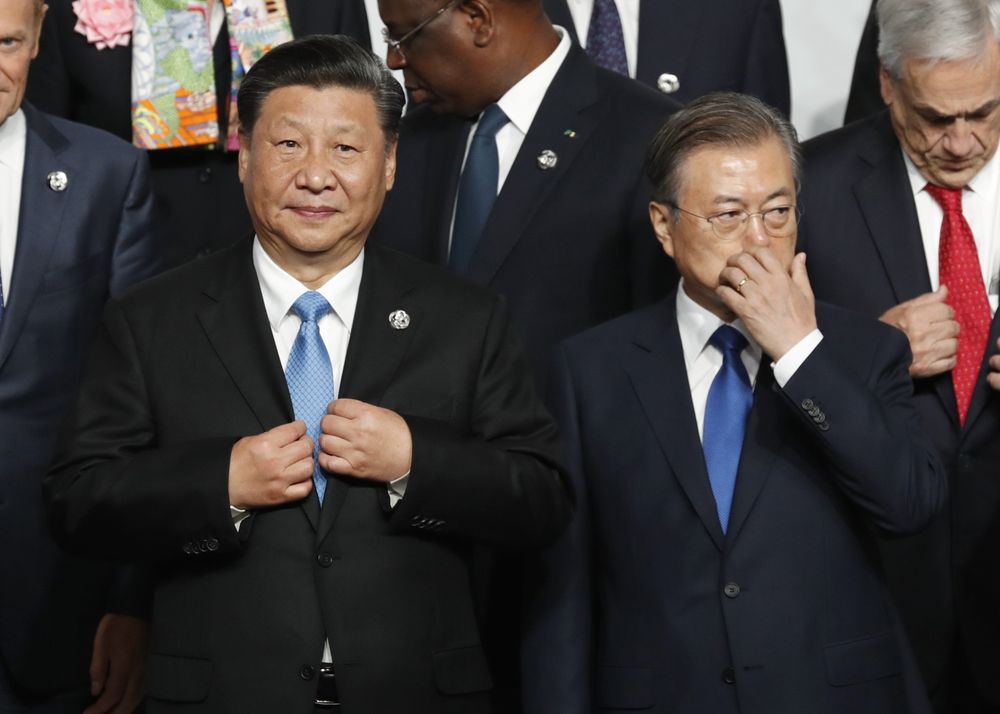
The Chinese Communist Party and Xi Jinping have realised that the position of Moon Jae-in has become weaker and he is in no position to galvanize the support of his countrymen and bring a united front against China. On top of that, Moon’s recent tilt towards China has also not gone down well with the Korean people.

South Koreans actually hate China more than any other global power on this planet, including Japan. People in South Korea are afraid of China’s “cultural imperialism” wherein Beijing tends to appropriate Korean cuisines, national heroes and even Korean clothing. In such circumstances, Moon Jae-in’s China ‘pivot’ is not at all resonating with the popular opinion of China in South Korea. On the other hand, the Conservatives are happily cashing in on Moon Jae-in’s blunder.

Read more: South Korean President is sitting cozily in Jinping’s lap and this can oust Moon’s Democratic party

Moon Jae-in’s reaction to China’s “cultural imperialism” has, however, been passive. The South Korean President is facing accusations of kowtowing to Beijing and now he is also being blamed for failing to take a tough stance against China’s poor response to the COVID-19 pandemic. And now with his position weakened politically, China has done what it does best and backstabbed the South Korean leader.

South Korea, which counts the United States as its most important military ally and China as its largest commercial partner, increased the pressure on Beijing over the weekend when it secured the termination of bilateral missile rules that had previously limited Seoul’s missile development to ranges of less than 800 kilometres (500 miles). More major Chinese cities may now be within South Korea’s missile range as a result of the shift.

South Korea’s military did not immediately respond to a request for numbers on suspected illegal Chinese fishing, but last month, an average of 180 Chinese vessels were spotted per day near the maritime border with North Korea, three times more than a year ago, according to broadcaster KBS.


Tags: ChinaIndo-PacificMoon Jae-inShort takesSouth KoreaWest Sea
ShareTweetSend
Abhyoday Sisodia

Abhyoday Sisodia

M.A. in East Asian Studies, Department of East Asian Studies, the University of Delhi, India. Deep interest in geopolitics, foreign policy and world affairs.

Also Read

A dramatic cyberwarfare illustration showing a shadowy hacker from China launching digital attacks from red-lit servers toward major US government, scientific and industrial facilities, with blue shields marking defended targets and red broken locks indicating compromised systems.

From Victims to Targets: US Quietly Edits Its Chinese Hacking Claims

August 30, 2026
A hooded hacker sits before multiple computer screens as images of the U.S. Capitol, NASA, federal institutions, servers and network data surround them, symbolising a Chinese-linked cyber-espionage hacking campaign targeting American government agencies.

Eight Years in the Dark: Chinese Hacking Campaign Reached NASA, the Fed, and the US Senate

August 27, 2026
A hypersonic glide vehicle streaks through the upper atmosphere as it launches a missile toward a US AWACS radar aircraft, with tanker and support aircraft flying in the distance above dramatic cloud cover.

China’s Hypersonic Gliders Can Now Shoot at Aircraft — And America’s Radar Planes Are the Target

August 25, 2026
A dramatic collage showing Hui Ka Yan in the foreground, Evergrande’s rise symbolised by a luxury skyscraper, car and stacks of cash, and China’s property crisis represented by unfinished buildings, rubble, displaced families and a prison cell. Evergrande founder life sentence

From China’s Richest Man to a Prison Cell: The Evergrande Founder’s Life Sentence Explained

August 24, 2026
A container ship sails through icy Arctic waters toward a snow-covered coastal port, surrounded by floating sea ice and towering mountains under a dramatic sunset.

A Ship Sails North, and the China-Russia Arctic Shipping Route Comes Alive

August 22, 2026
Conceptual illustration of Chinese data infrastructure feeding into a central artificial intelligence system, with glowing data streams spreading toward chatbots and users worldwide, symbolising China’s growing influence over AI training data and information ecosystems.

Explainer: How China Plans to Shape What the World’s AI Knows

August 22, 2026
Youtube Twitter Facebook
TFIGlobalTFIGlobal
Right Arm. Round the World. FAST.
  • About Us
  • Contact Us
  • TFIPOST – English
  • TFIPOST हिन्दी
  • Careers
  • Brand Partnerships
  • Terms of use
  • Privacy Policy

©2026 - TFI MEDIA PRIVATE LIMITED

Welcome Back!

Login to your account below

Forgotten Password?

Retrieve your password

Please enter your username or email address to reset your password.

Log In

Add New Playlist

No Result
View All Result
  • Indo-Pacific
  • Americas
  • Canada
  • Indian Subcontinent
  • West Asia
  • Europe
  • Africa
  • The Caribbean
TFIPOST English
TFIPOST हिन्दी

©2026 - TFI MEDIA PRIVATE LIMITED

This website uses cookies. By continuing to use this website you are giving consent to cookies being used. View our Privacy and Cookie Policy.