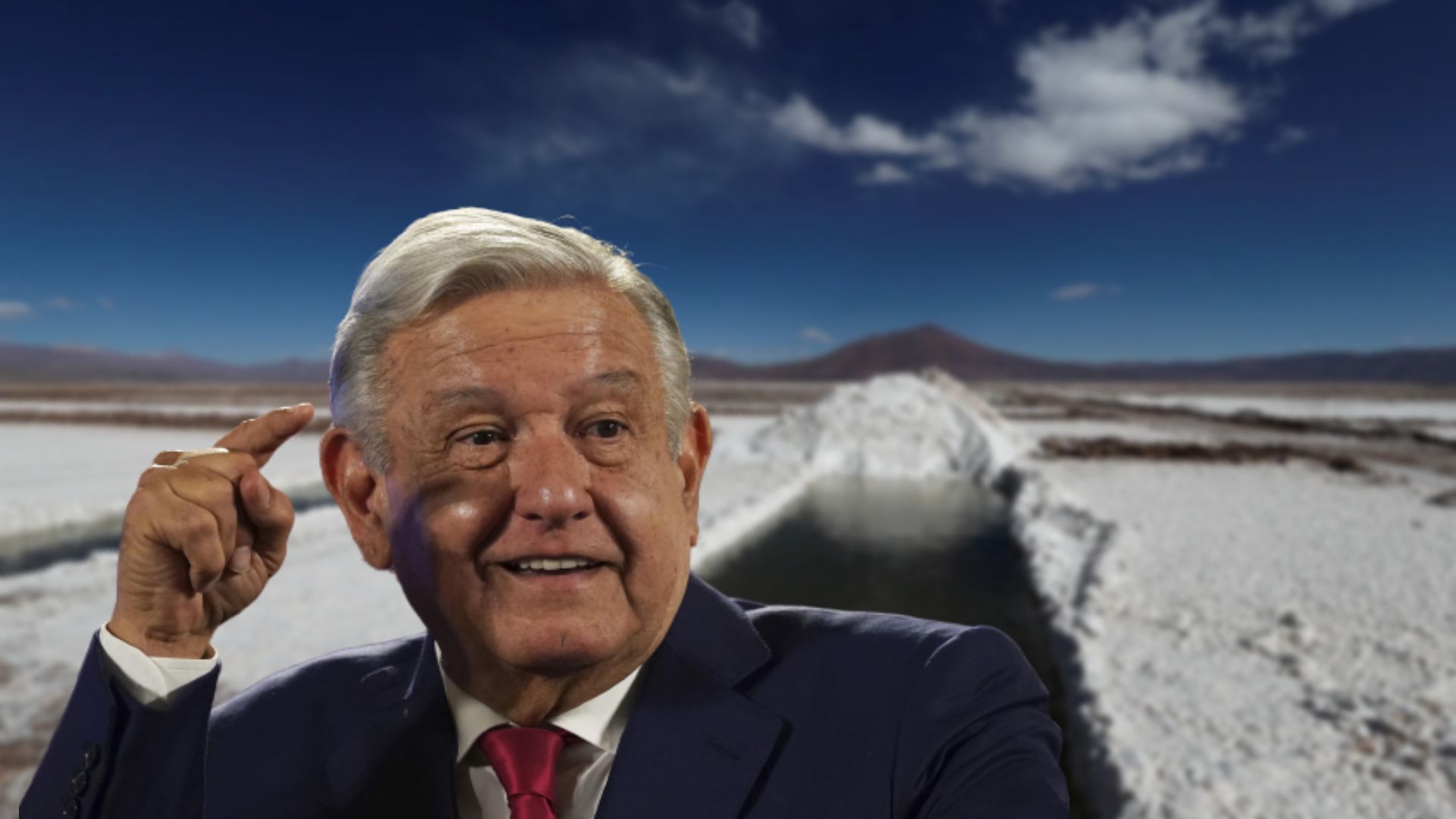
Mexico: Lithium is an essential component in many green technologies. It’s in rechargeable batteries, it’s in electric vehicles, it’s in watches, cell phones, laptops and more.
Though it’s one of the oldest elements to have been around, lithium is not nearly as abundant here on Earth as its gaseous counterparts. The metal makes up just 0.002% of the Earth’s crust, though arguably, that is higher than the supplies of tin, silver, gold and platinum combined.
More recently, lithium has been a central player in the development and production of renewable energy technology. Its ability to store energy has been crucial in capturing and storing energy created through wind, solar and hydro power, and many pieces of machinery or technology have lithium batteries to maintain and distribute that energy long after the source has stopped producing energy.
As you can imagine, demand for lithium has spiked in recent years, as more people choose electric vehicles, and is likely to continue growing as high gas prices push more to transition to electric modes of transportation. As a result, lithium prices have soared and this has led to a scramble for lithium resources.
Against this backdrop, Mexican President Andres Manuel Lopez Obrador recently signed a decree handing over responsibility for lithium reserves to the energy ministry, after nationalizing lithium deposits last April.
During an event in Sonora, Lopez Obrador signed the decree that orders the energy ministry “to take the actions necessary to carry out” the nationalization process.
It also declared 234,855 hectares (907 square miles) in Sonora as a mining zone known as Li-MX 1.
This comes after a few months when President of Mexico Andres Manuel Lopez Obrador issued a Decree) setting up a new state-owned company called LitioMx (Litio para Mexico), which will be responsible for managing the exploration, mining exploitation, and refining of lithium throughout the national territory of Mexico, as well as controlling the economic value chains of this mineral.
An experience from Latin American nations?
The recent steps about lithium and EV by Mexico seems to be inspired from the Latin America nations. Let me elaborate my assertion.
According to statistics, Latin America holds 60% of all identified lithium resources around the world. These are located mainly in Bolivia, Argentina and Chile, sometimes referred to as the “lithium triangle”. All the three nations treat lithium as property of the State.
The State supervises the production process in Bolivia through a public company. Once the resource is obtained, the government will only work with private enterprises to add value.
Chile treats lithium similarly to oil and gas, leasing its exploitation to private businesses through a bidding mechanism for a set length of time. The present leases are set to expire in 2030. In Argentina, the provinces have exclusive rights to lithium and other natural resources located within their borders. The provinces all manage their resources in accordance with the federal Mining Code, which allows state-owned firms and private companies, both domestic and foreign, to engage in mining activities. Exploration permissions are awarded in perpetuity, subject to specified maintenance duties.
However, lithium deposits are limited, and provincial state-owned enterprises currently control the majority of exploration and mining exploitation rights. As a result, newcomers (whether domestic or foreign, state-owned or private) are usually required to collaborate with those corporations in order to establish significant lithium projects. The provincial government retains a minority stake in the joint venture, while the investor provides finance and expertise for the project.
Besides, as we have previously explained, these days, leaders of the world’s most powerful governments and corporations are encountering new resistance in Latin America, which is acutely aware of the importance of its lithium supplies.
As a result, several Latin American administrations are now driving a much tougher bargain.
Take, for example, Chile. During his first year in office, President Gabriel Boric has made it a key priority to rein in mining firms, both domestic and foreign.
In his most aggressive move to date, the left-wing president rejected a proposed $2.5 billion iron-ore project in the northern Chile, citing its proximity to a wildlife preserve.
Mexico is undoubtedly adopting cues from Latin American countries, whose policies have proven to be conducive to the country’s domestic economic success. So, the recent nationalization of lithium should be viewed as a manifestation of appreciation of Mexico for Latin American policymaking.
Yet, nationalization is not without its drawbacks.
You see, aside from the Sonora asset, Mexico lacks significant, advanced lithium projects. The battery metal has been found at 57 locations nationally, but unlike Latin American nations, prospects for developing economically viable lithium operations are weak due to low concentrations and the presence of impurities.
Moreover, any state-run lithium mining operation will face major technical and financing challenges. Sonora benefits from world-leading technical expertise in the lithium industry, both within the Bacanora management team and Ganfeng, which a nationalized business would need to replicate.
Only time will tell whether the recent stint on the Mexican government’s part would be lucrative for the North American nation.