NATO focused all its might on Ukraine. It lost the war. Then it looked at some of the other strategic regions in the world. And realized it lost them too.
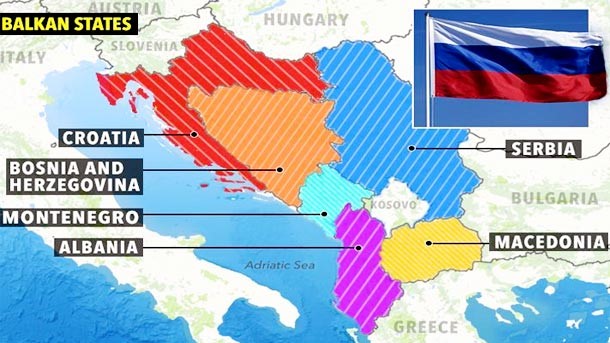
The European Union maintains its position as the preeminent economic force in the Western Balkans. However, Russia carves out a significant strategic niche, particularly in energy sectors within nations such as Serbia and Bosnia and Herzegovina. Gazprom and other Russian state-owned enterprises wield considerable control over the natural gas supply, anchoring these countries’ energy security while simultaneously fostering a reliance on Russian resources.
Join us on Telegram: https://t.me/tfiglobal
Russia extends its influence beyond energy by investing in underperforming sectors, positioning itself as a steadfast ally amid aloofness from Western institutions. Investments span various domains, including infrastructure enhancements like railways, roads, and bridges, along with engagements in mining, agriculture—where the Western Balkans exhibit strong potential—and the tourism sector, with notable investments in hotels and resorts.
A pivotal aspect of Russia’s strategy involves cultivating personal relationships with influential leaders in the region, notably Serbian President Aleksandar Vučić and Bosnian Serb leader Milorad Dodik. Milorad Dodik, a fervent nationalist and the president of Republika Srpska, stands as Russia’s staunchest ally in Bosnia and, broadly, in Europe.
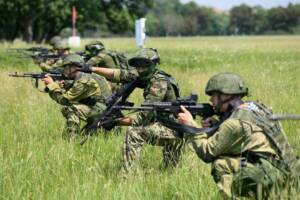
In the military domain, Russia’s involvement is notably pronounced in Serbia, underscoring the longstanding alliance between the two. Joint military drills, arms trading, and diplomatic backing, especially concerning Kosovo’s independence, are facets of this partnership.
Read More: As Russia flattens Ukraine, NATO undergoes CIVIL WAR
The conflict in Ukraine has significantly impacted Russia’s relations with Western Europe, casting a shadow over its influence. However, this has not been the case in the Western Balkans, where economic ties, military partnerships, and personal connections between Russia and regional states have not only endured but have strengthened even more. Bosnia and Herzegovina, alongside Serbia, notably remains one of the few European nations that have not imposed sanctions on Russia, highlighting a distinct stance within the European context.
Amidst the ongoing geopolitical tensions, the energy sector in the Western Balkans has witnessed a peculiar growth. Gazprom, Russia’s state-controlled energy company, has expanded its market share in Serbia and Bosnia and Herzegovina. Despite the complications brought about by sanctions related to the Ukraine war, these measures have not halted the flow of energy supplies from Russia to these countries.
Furthermore, Russian investments in the region have seen a significant uptick. By the end of 2023, Russian nationals had registered approximately 9,000 new businesses in Serbia, a figure anticipated to increase in 2024, according to data from the Serbian Business Register Agency (APR). These ventures span various sectors, including IT companies, kindergartens, online retail platforms, production facilities, real estate firms, and co-working spaces, particularly in Belgrade and Novi Sad.
Additionally, the sale of arms in Serbia and Bosnia and Herzegovina has experienced a notable increase, reinforcing the military dimension of Russia’s influence in the Western Balkans. This aspect of the relationship, alongside economic investments and enduring personal connections, illustrates the multifaceted nature of Russia’s presence in the region, even as it faces global scrutiny and sanctions elsewhere.
And Europe has just woken up to this reality. German Foreign Minister Annalena Baerbock is now vocally emphasizing the urgency of integrating Western Balkan nations into the European Union. Baerbock perceives this expansion not merely as an extension of the EU’s influence but as a critical countermeasure against Russian efforts to destabilize Eastern Europe.
Baerbock has issued a stark warning about the consequences of the EU’s further neglect of the Western Balkans, highlighting the risk of increased Russian interference if these nations are left unsupported in their aspirations to join the EU.
Read More: Robert Fico’s Message to NATO is LOUD and CLEAR
Funnily, Germany, historically cold to Western Balkans, is suddenly opposing any forces that may impede Bosnia-Herzegovina’s path to EU integration, especially those that deepen national divisions.
If you think Western Balkans is the only region that slipped from the West’s hands while they focused on Ukraine, then you are totally wrong. Africa did that too and did that in style.