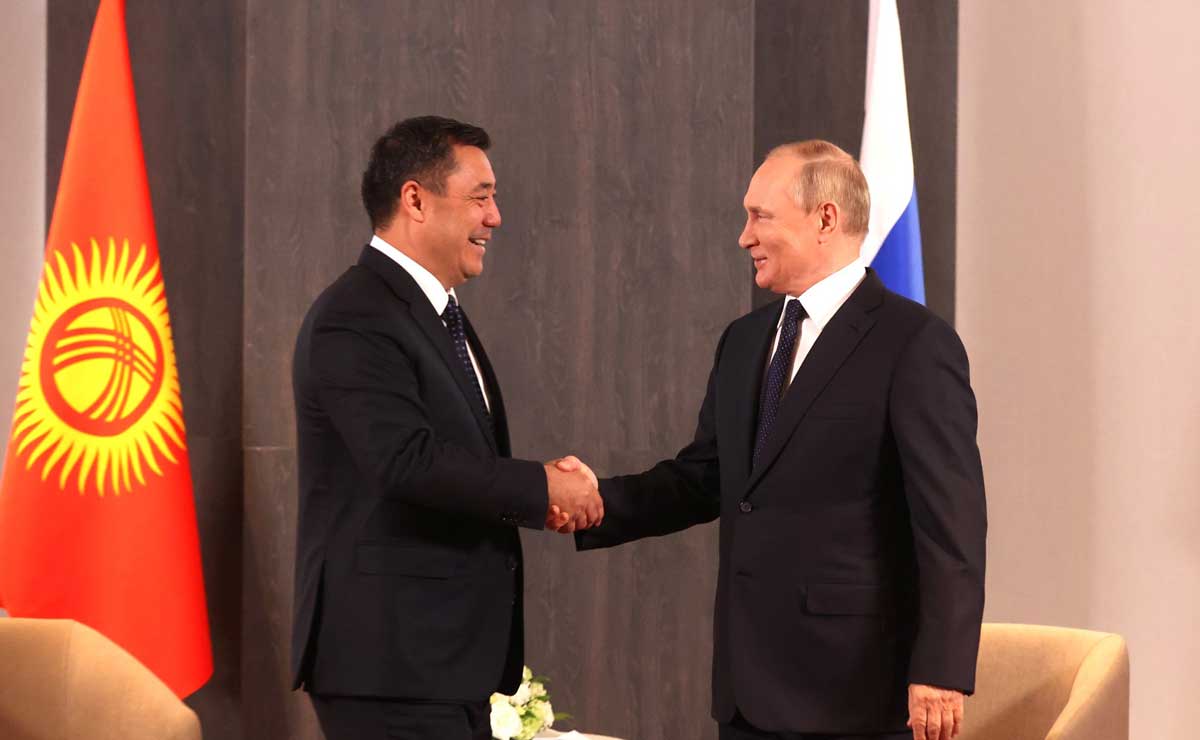
Kyrgyzstan’s decision to cease accepting Russia’s Mir bank cards, as announced by the nation’s local payments operator, marks a significant move within the Central Asian geopolitical landscape. This development, occurring last week, aligns with actions taken by most Kazakh banks and Armenia’s formal cessation the previous month. It is noteworthy that Kyrgyzstan, unlike Kazakhstan’s Western pivot and Armenia’s NATO alignment, does not evidently harbor any antagonistic motives towards Russia.
The narrative surrounding Kyrgyzstan’s relationship with the United States provides a backdrop to this financial decision. A discourse from last August highlighted claims of Kyrgyzstan being targeted for regime change by the U.S., primarily based on a letter from the then Chairman of the Senate Foreign Relations Committee, Bob Menendez, to Kyrgyz President Sadyr Japarov. The letter was interpreted as having an ulterior motive to destabilize Japarov’s administration, allegedly under the guise of Kyrgyzstan’s non-compliance with U.S. sanctions and purported regression in democratic and human rights norms. It must be noted that democracy and human rights are the most potent weapons in the American arsenal and are used when no real reasons exist.
Further complicating the bilateral relations, Kyrgyzstan’s government has actively sought to counter perceived U.S. interference. Two months prior, President Japarov openly criticized a letter from U.S. Secretary of State Antony Blinken, which expressed concerns over a proposed law in Kyrgyzstan resembling America’s Foreign Agents Registration Act (FARA). Japarov’s staunch defense of his nation’s sovereignty—amid a history of color revolutions and the quest for stability—underscored the tensions between Kyrgyzstan and U.S. policy directives, reflecting a broader narrative of geopolitical maneuvering and resistance to external influence in the region.
Kyrgyzstan’s stance, under President Sadyr Japarov, exemplifies the delicate dance between maintaining strategic alliances and navigating the imposing pressures of global superpowers. Despite insinuations of unfriendly intentions towards Russia, Kyrgyzstan’s cessation of accepting Russia’s Mir bank cards, propelled by the looming threat of severe sanctions from the U.S., underscored a nuanced strategy of political resistance coupled with financial acquiescence. Japarov’s forthcoming visit to the U.S., scheduled from April 14-20, aims to articulate Kyrgyzstan’s inability to sever economic ties with Russia, signaling a reaffirmation of their strategic partnership amidst American skepticism and latent regime change ambitions. Also remember, my country India does everything and more that Kyrgyzstan has been doing but like a classroom bully, the US aims for weakest kid in the class.
This diplomatic endeavor, albeit potentially undoable against the backdrop of American foreign policy, underscores Kyrgyzstan’s commitment to its sovereignty and the importance of Russia as a strategic ally. The development of the “Southern Transport Corridor” with Russia, Uzbekistan, and Turkmenistan further cements this alliance, showcasing a collective effort to ensure regional trade continuity in the face of potential disruptions. This initiative, born out of mutual trust and strategic foresight, highlights the interconnectedness of regional politics and the value of diplomatic hedging.
Criticism from certain quarters of the Alternative Media Community regarding Kyrgyzstan’s decision to discontinue the Mir bank card might be premature or misplaced. This action, while unfortunate, is a pragmatic response to an untenable situation, balancing financial vulnerability with political steadfastness. Kyrgyzstan’s approach, characterized by a blend of diplomacy and strategic partnerships, demonstrates a keen awareness of its geopolitical position and a nuanced understanding of the limits and possibilities within the complex web of international relations.