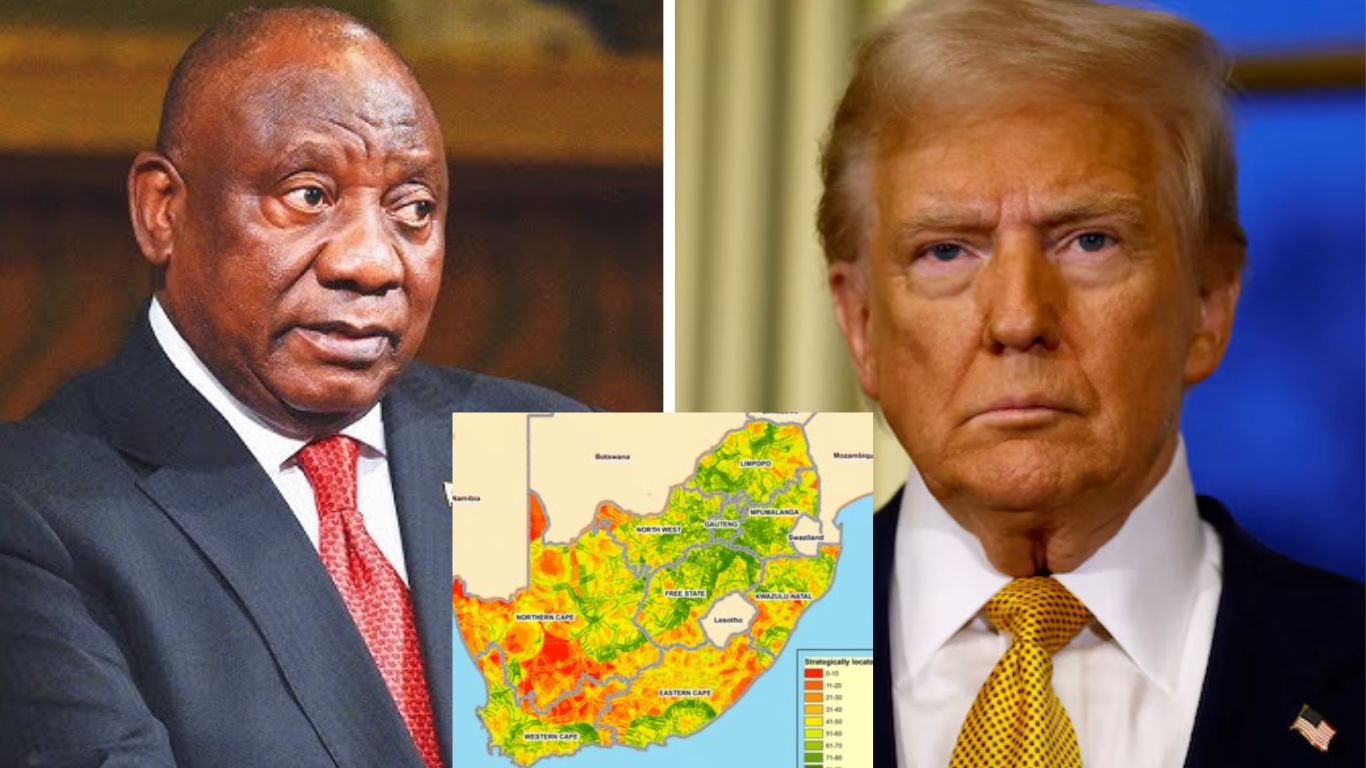
On Thursday, February 6, US Secretary of State Marco Rubio announced that he would not be attending the G20 summit in Johannesburg this year. He criticized South Africa, stating that the country was engaging in “very bad things,” including “expropriating private property.”
The US administration has escalated pressure on South Africa due to its recently enacted land reform law, which permits land expropriation without compensation under specific conditions. Previously, Trump and Musk also strongly criticized the law on social media. Elon Musk migrated to the US from South Africa in the 1980s.
Rubio’s remarks referred to the Expropriation Act of 2024, which came into effect in January. The legislation establishes a legal framework for the South African government to acquire private property without the owner’s consent for “public purposes or in the public interest.”
US President Donald Trump also condemned the law, threatening to cut aid to South Africa. He accused the country of “confiscating land” and mistreating certain groups of people. In response, South African President Cyril Ramaphosa defended the Act, asserting on X that it is part of a “constitutionally mandated legal process” designed to ensure fair and equitable land access.
The reaction from the US president, Elon Musk and Marco Rubio look very hypocritical. The native people in South Africa have long been exploited and deprived by the small numbers of white colonizers who came from Europe. During Apartheid, native people were dictated where they would live, work, and go to school. The natives were restricted in who could vote. It separated people by race, including through physical separation, such as building walls between Blacks and Whites’ residence areas. It made it illegal for people of different races to marry or have sexual relationships.
After all, the US has always sailed on its interest and has seldom criticized the apartheid during the Cold War. Today, again, When people from Mexico and other nations are coming to the US for better lives and job opportunities, Trump is deporting them in an inhumane way, labelling them criminals, citing they are exploiting the resources of American citizens but a small group of white colonizers who controls more than three fourth of the land resources in South Africa and while native South Africans are struggling due to their accumulation of resources he is saying South Africa is doing “bad things.” This is more than hypocrisy and should not be entertained by the world.
Also Read: Trump plans to take over Gaza permanently
This is the problem with almost western nation. When they or their allies exploit, they do not utter a word and keep a ‘strategic silence’. But when others try to fix things by reversing certain historical misdeeds, these nations (the US and Europe) start crying, citing Human Rights and law. The same case is with South Africa. South Africa has the full right to introduce and enact a law for the country, and that not only comes under state jurisdiction but is also an internal matter of the country.
The concept of expropriation can be traced back to the 1625 legal treatise De jure belli ac pacis (On the Law of War and Peace) by Dutch scholar Hugo Grotius, also known as the father of International Law. He introduced the term “dominium eminent” (Latin for “supreme lordship”), explaining that the state holds ultimate ownership of all property. According to Grotius, private property rights may be overridden if deemed necessary for “public utility.”
After the fall of apartheid in the early 1990s and the adoption of a new Constitution, the South African government initially implemented a “Willing Seller, Willing Buyer” policy to acquire land from White landowners for redistribution to the native majority. However, this approach has been widely criticized for its ineffectiveness. Edward Lahiff, a professor at University College Cork, noted that by the end of apartheid, White ownership accounted for approximately 86% of agricultural land. Despite decades of reform, a 2017 land audit revealed that this figure had only decreased to 72%.
Land ownership remains a highly contentious issue in South Africa. Although native South Africans make up around 80% of the population, White landowners still control nearly three-fourths of all freehold farmland. Reports indicate that only about 4% of farmland is owned by native landowners. The country’s history of racial segregation under apartheid, which ended in 1994 with Nelson Mandela’s election as the first native president, continues to influence debates on land reform.
More than 30 years after apartheid’s end, South Africa has finally enacted its long-awaited land reform law, replacing the 1975 Expropriation Act. The new law allows land expropriation without compensation in limited cases where it is deemed “just and equitable and in the public interest.” This includes land that is unused with no future plans for development or property that poses a risk to public safety. The law also stipulates that expropriation can only occur if authorities have made unsuccessful attempts to reach a fair agreement with the landowner. It means deprived native people who are living in densely populated areas may get a piece of land to live their lives with dignity.
The legislation was enacted after more than five years of consultations and the findings of a presidential panel dedicated to the issue. However, concerns over land ownership persist, particularly regarding the slow pace of redistributing. Historical inequalities remain deeply entrenched. During the colonial period in the 19th century, White settlers systematically dispossessed native South Africans of their land through a series of laws.
The most significant of these was the Natives’ Land Act 27 of 1913, which restricted Black land ownership to designated reserves, amounting to just 7.3% of South Africa’s total land area, while the remaining 92.7% was allocated to the White minority. This was an absurd decision if we look at it from today’s lens. If a water body, the Gulf of Mexico, which has close geographical proximity to the US, Trump wants to change its name to the Gulf of America; it is an excellent idea, but a group of white people who snatched the land of the native people a hundred years back, redistributing that land is a “bad things.” Hypocrisy died a thousand deaths.