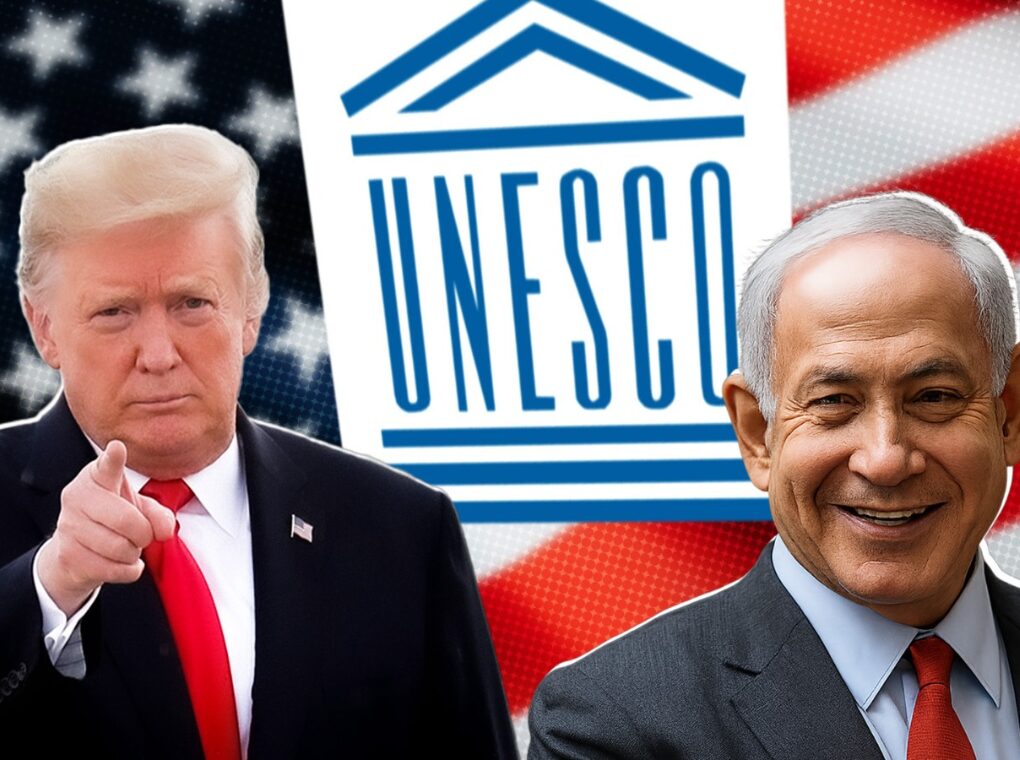
The United States of America has announced its decision to withdraw from the United Nations Educational, Scientific and Cultural Organization (UNESCO), with the move set to take effect by the end of 2026. This marks the third time the U.S. has left UNESCO since its founding in 1945, following previous withdrawals in 1984 and 2017 (the U.S. rejoined in 2003 and again in 2023). The latest withdrawal is rooted in long-standing concerns related both to UNESCO’s policies and its alignment with U.S. national interests.
Reasons for the Withdrawal
The Trump administration’s primary grievances focus on what it perceives as UNESCO’s support for “divisive social and cultural causes” inconsistent with American values and policy priorities. The U.S. State Department, through spokesperson Tammy Bruce, cited UNESCO’s “outsized focus” on the U.N.’s Sustainable Development Goals, which Washington regards as a “globalist, ideological agenda” conflicting with its “America First” foreign policy.
Critically, the U.S. highlights UNESCO’s decision to admit the “State of Palestine” as a member state, which the administration sees as highly problematic and a catalyst for an increase in anti-Israel rhetoric within the organization. This issue has been a recurring point of contention since at least 2011 when the U.S. and Israel ceased financial contributions following Palestine’s membership vote. The U.S. argues this decision undermines impartiality and fairness in UNESCO’s cultural and educational missions.
Historical Pattern: Joining, Exiting, and Rejoining
The U.S. relationship with UNESCO has been fraught with political tensions and repeated cycles of disengagement and renewed membership. Initially a founding member in 1945, the U.S. first withdrew in 1984 during the Reagan administration, citing what it characterized as politicization, budget mismanagement, and hostility towards free-market and press freedoms within the agency. The withdrawal reflected dissatisfaction that UNESCO had strayed from its original mission into ideological posturing.
In 2003, under President George W. Bush, the U.S. rejoined citing reforms, only to pause financial contributions in 2011 after the Palestine admission. The Trump administration formally withdrew again in 2017, making effective in 2018, citing continued anti-Israel bias and institutional politicization. The Biden administration rejoined in 2023, reflecting a brief reversal towards multilateral engagement. The current withdrawal signals a renewed U.S. skepticism regarding certain international organizations and their agendas.
Impact on UNESCO and International Cooperation
UNESCO, with its 194 member states, oversees over 1,200 World Heritage sites, including 26 in the U.S., such as the Statue of Liberty and Yosemite National Park. Being listed as a World Heritage site provides access to international conservation funding and expertise. The U.S., contributing about 8% of UNESCO’s funding, played a major role in the organization since its inception, a fact lamented by UNESCO’s Director-General Audrey Azoulay and UN Secretary-General Antonio Guterres.
The withdrawal is viewed as a setback for UNESCO’s mission to foster international cooperation in education, science, and culture, undermining a multilateral framework that aims to transcend political divisions. Azoulay described the U.S. decision as contradictory to fundamental multilateral principles and damaging to global initiatives, including heritage preservation, creative city networks, and academic exchange programs.
Other U.S. Withdrawals from International Organizations
The withdrawal from UNESCO fits a broader pattern of the U.S. exiting or threatening to exit key UN and international organizations, reflecting shifting U.S. approaches to multilateralism under recent administrations:
World Health Organization (WHO): In 2020, the U.S. under President Trump announced its withdrawal, citing dissatisfaction with the WHO’s handling of the COVID-19 pandemic and alleged China bias, though the Biden administration reversed this in 2021.
Paris Climate Agreement: The U.S. withdrew in 2017, criticizing it as disadvantageous to American industry, before rejoining in 2021.
UN Human Rights Council (UNHRC): The U.S. left in 2018, citing anti-Israel bias and reform failures but rejoined in 2021.
International Criminal Court (ICC): While not a member, the U.S. has taken strong stances opposing ICC investigations into American forces.
These exits often cite concerns about organizational bias, sovereignty, or policy misalignment with U.S. government priorities and reflect an “America First” emphasis on national interests over global cooperation.
The U.S. and Multilateralism Today
The repeated withdrawals and re-entries reveal a complex, politically driven U.S. calculus balancing sovereignty, global leadership, and international diplomacy. The current pullout from UNESCO underscores a prioritization of bilateral or unilateral policy control over cooperation through international bodies perceived as ideologically driven or insufficiently aligned with U.S. foreign policy goals.
While critics argue these withdrawals weaken U.S. influence on the global stage and reduce the effectiveness of multilateral institutions, proponents within the administration view them as necessary steps to preserve national interests and resist what they see as politicization of international fora.
The U.S. withdrawal from UNESCO in 2026 marks the continuation of a fraught and cyclical relationship with the agency, driven by concerns over anti-Israel bias, ideological agendas, and national sovereignty. This action is part of a wider pattern of U.S. disengagements from UN and international bodies amid debates over the role and limits of multilateralism. How this affects UNESCO’s operations and U.S. global influence remains to be seen, but it emphasizes ongoing tensions between national interests and international cooperation in the 21st century.