U.S. Attorney General Pam Bondi announced this historic increase in a video message, asserting that Maduro poses a direct threat to U.S. national security by facilitating the trafficking of massive quantities of fentanyl-laced drugs. Bondi highlighted that the U.S. Department of Justice has seized over $700 million in assets linked to Maduro, including luxury items such as private jets and vehicles, and traced nearly seven tons of fentanyl-laced cocaine directly to his network.

Trump Administration Doubles Bounty on Maduro
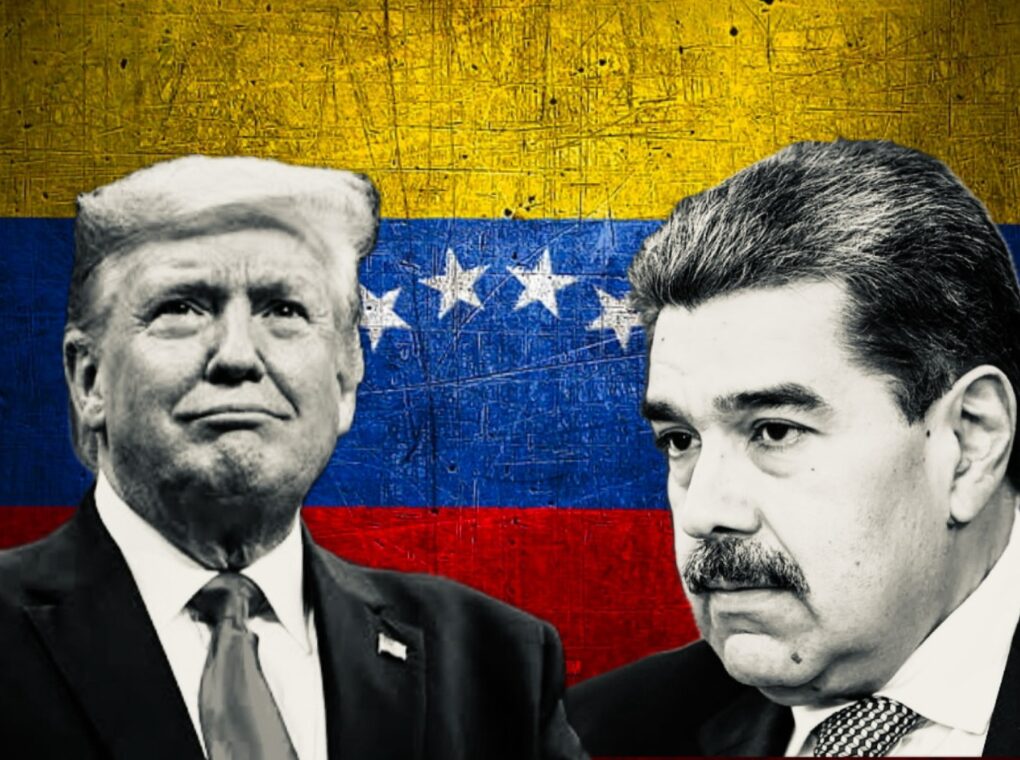
The Trump administration has significantly escalated its pressure campaign against Venezuelan President Nicolás Maduro by offering a $50 million reward for information leading to his arrest, doubling the previous $25 million bounty set earlier in 2025. This move underscores the U.S. government’s continuing portrayal of Maduro as one of the world’s largest narco-traffickers, allegedly collaborating with Latin American criminal organizations such as Venezuela’s Tren de Aragua, the notorious Cartel of the Suns, and Mexico’s Sinaloa Cartel to flood the United States with cocaine laced with fentanyl.
The intensified bounty reflects longstanding U.S. attempts to hold Maduro accountable, who was initially charged in Manhattan federal court with narco-terrorism and drug trafficking during Trump’s first term in office. Despite these legal actions and international sanctions, Maduro has remained firmly in power in Venezuela, controversially winning a third presidential term in 2024 that was widely rejected by the U.S., European Union, and many Latin American countries as fraudulent.
This latest U.S. escalation follows strategic moves such as allowing Chevron to resume oil drilling in Venezuela and negotiating the release of imprisoned Americans, pointing to a complex dynamic of pressure combined with limited engagement. However, Maduro’s government swiftly denounced the reward increase as “pathetic” and a politically motivated “media spectacle” aimed at distracting from U.S. domestic scandals, with Venezuelan officials emphasizing national sovereignty and dismissing the charges as propaganda.
Analytically, the doubling of the bounty is both a symbolic and tactical measure designed to intensify international isolation of Maduro and increase intelligence flows for his capture. It signals the Trump administration’s continued prioritization of dismantling narco-trafficking networks embedded within Venezuela’s political leadership. Yet, the effectiveness of such monetary incentives is complicated by Maduro’s tight control over Venezuela’s territory and support from allied states, which limits the immediate prospects of arrest or regime change.
Moreover, the $50 million reward must be contextualized within a broader geopolitical contest involving U.S. interests in Latin America, the ongoing humanitarian crisis in Venezuela, and the role of narcotics in funding transnational criminal and political networks. The focus on Maduro as a drug trafficking kingpin aligns with U.S. strategic efforts to curb fentanyl and cocaine flows, which are seen as critical national security threats.
The Trump administration’s offer of $50 million for Nicolás Maduro’s arrest marks a peak in U.S. legal and financial pressure on the Venezuelan president, reinforcing his portrayal as a central figure in global narco-trafficking. This move intertwines counter-narcotics objectives with geopolitical rivalry and reflects a continued hardline stance against the Maduro regime despite his enduring hold on power.
Also Read: Venezuela’s Controversial Elections: Maduro Claims Big Win Amid Opposition Boycott
United States’ Geopolitical Stakes in Latin America
The political, economic, and social repercussions of Muduro’s continued hold on power were not confined to Venezuela alone, but extend throughout Latin America, shaping the region’s political dynamics, economic stability, and international relations, especially with US.
President Donald Trump in his second term faced a significant decision: whether to continue the pressure on Venezuela or negotiate a deal with Maduro. Trump, along with figures like Senator Marco Rubio and National Security Adviser Mike Waltz, has advocated for bolstering the democratic opposition and increasing sanctions on Maduro’s government. The Trump administration had the task to decide whether to continue backing the opposition and pursuing economic sanctions or to explore a new diplomatic strategy.
In Latin America, the Maduro regime had become a source of division. While countries like Russia, China, and Iran have continued to support Maduro, most of the region had grown increasingly critical of his authoritarian rule. Neighbouring Colombia and Brazil, which once maintained diplomatic ties with Venezuela, have condemned the lack of transparency in the election and distanced themselves from Maduro’s government.
As the global economic and political landscape becomes increasingly multipolar, Latin America has emerged as a key battleground between two major powers: China and the United States. Once considered the United States’ backyard, the region is now a strategic pivot point where China’s economic diplomacy and financial influence have become deeply entrenched and this seems to be a bigger problem for Trump. This intensifying contest reflects broader geopolitical trends that mirror a shift in global power, where influence is asserted not just through diplomacy and military strength, but through trade, investment, infrastructure, and technological reach.