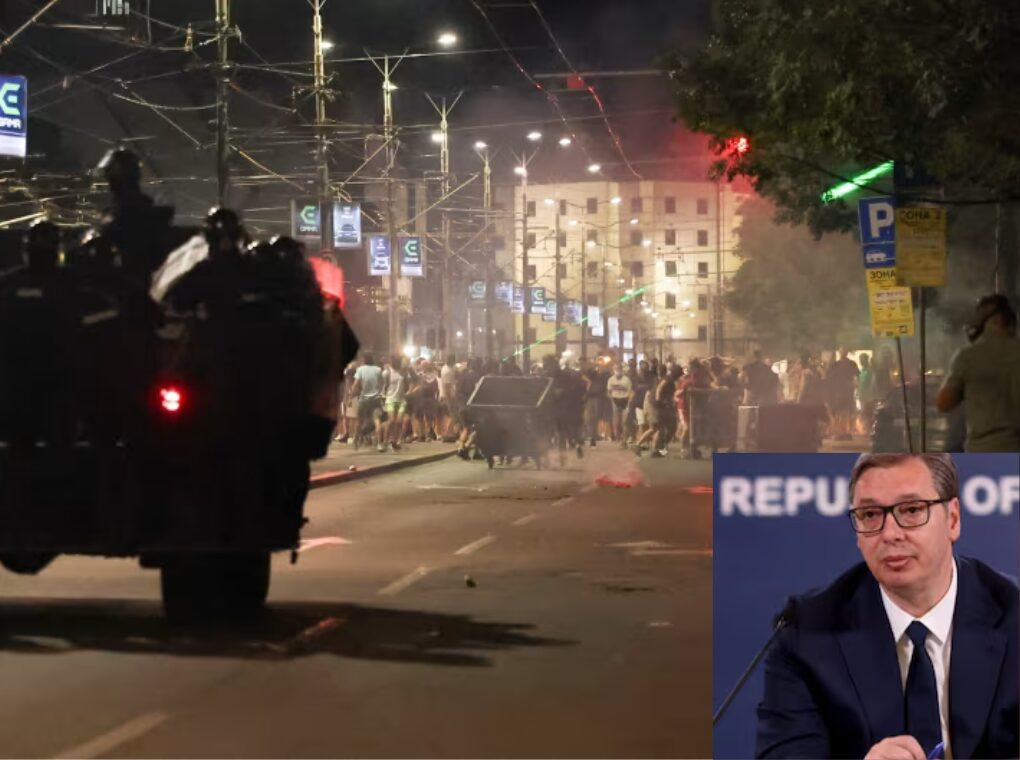
Serbia is engulfed in its most turbulent political crisis in over a decade, as anti-government protests spread across the country and President Aleksandar Vučić pledges a sweeping crackdown on what he has described as “pure terrorism.”
The unrest, triggered by a deadly infrastructure collapse, has escalated into violent clashes, exposing deep anger over corruption, democratic backsliding, and Serbia’s uncertain geopolitical path.
From Tragedy to Mass Protest
The demonstrations began in late 2024, after a concrete canopy at a railway station in Novi Sad collapsed, killing 16 people. For many Serbians, the tragedy became a symbol of entrenched corruption and negligence in state-run infrastructure projects. Initial calls for justice and accountability quickly broadened into a nationwide anti-corruption movement demanding political change.
Over the past nine months, hundreds of thousands of people have joined marches across Belgrade, Novi Sad, Valjevo, and smaller towns. Until recently, the protests had remained largely peaceful, reflecting the resilience of civil society in the face of Vučić’s increasingly centralized and authoritarian style of governance.
Violence on the Streets
The past week marked a turning point. On Saturday, angry demonstrators set fire to the offices of Vučić’s ruling Serbian Progressive Party (SNS) and smashed the windows of coalition partner headquarters. Riot police responded with tear gas and stun grenades as protesters hurled bottles, flares, and makeshift explosives.
Clashes spread to multiple cities, with unverified videos circulating online showing police beating demonstrators. Human rights groups and the Council of Europe’s Commissioner for Human Rights have expressed alarm over allegations of excessive force and arbitrary arrests. Scores have been detained, with many reportedly injured on both sides.
Despite warnings of an imminent crackdown, protests continued into Sunday. In Belgrade and other towns, demonstrators chanted “Arrest Vučić” and demanded the release of those detained. For now, the unrest shows little sign of abating.
Vučić’s Hardline Rhetoric
In one of his frequent late-night televised addresses, Vučić escalated his rhetoric, accusing the demonstrators of being part of a Western-orchestrated plot to destabilize Serbia.
“Our country is in grave danger,” he declared. “Unless we undertake tougher steps, it is a question of days before they will kill someone. I am saying this for history.”
The president did not specify what measures the state would take, though he ruled out an immediate state of emergency. Instead, he promised that within a week, Serbians would “witness the determination of the state” and that the government would use “everything at our disposal to restore peace and order.”
Critics argue that such language is aimed at legitimizing a broader clampdown on dissent, deepening fears of Serbia’s slide into authoritarianism.
East vs. West: A Familiar Balancing Act
The turmoil also highlights Serbia’s precarious geopolitical balancing act. While the country is formally pursuing European Union membership, Vučić has cultivated strong ties with both Russia and China. On Sunday, he praised Moscow for backing his government against what he termed a “colored revolution.”
Russia’s Foreign Ministry quickly stated support, calling Serbia a “brotherly nation” under attack and defending the use of police force. Hungary, one of Vučić’s closest allies in the EU, accused Brussels of plotting to topple Central European governments. Meanwhile, European human rights officials have urged restraint, calling on Belgrade to respect democratic freedoms.
A Nation at a Crossroads
The anti-government movement has grown beyond the original tragedy that sparked it. Protesters now demand early elections, an end to corruption, and the dismantling of Vučić’s 12-year grip on power. Their persistence, despite police crackdowns and government threats, reflects growing frustration with a political system many see as stagnant and dominated by one man.
The coming days may prove decisive. If Vučić follows through on his threat of tougher measures, Serbia could face further unrest, international condemnation, and potential isolation from Europe. Yet if he seeks compromise or agrees to early elections, it could mark the beginning of a political transition.
Either way, Serbia stands at a critical juncture. The railway station collapse that killed 16 people has evolved into a national reckoning with corruption, democracy, and the country’s future orientation between East and West. Whether the government chooses repression or reform may determine not only Vučić’s political survival but also Serbia’s broader path in the years ahead.