
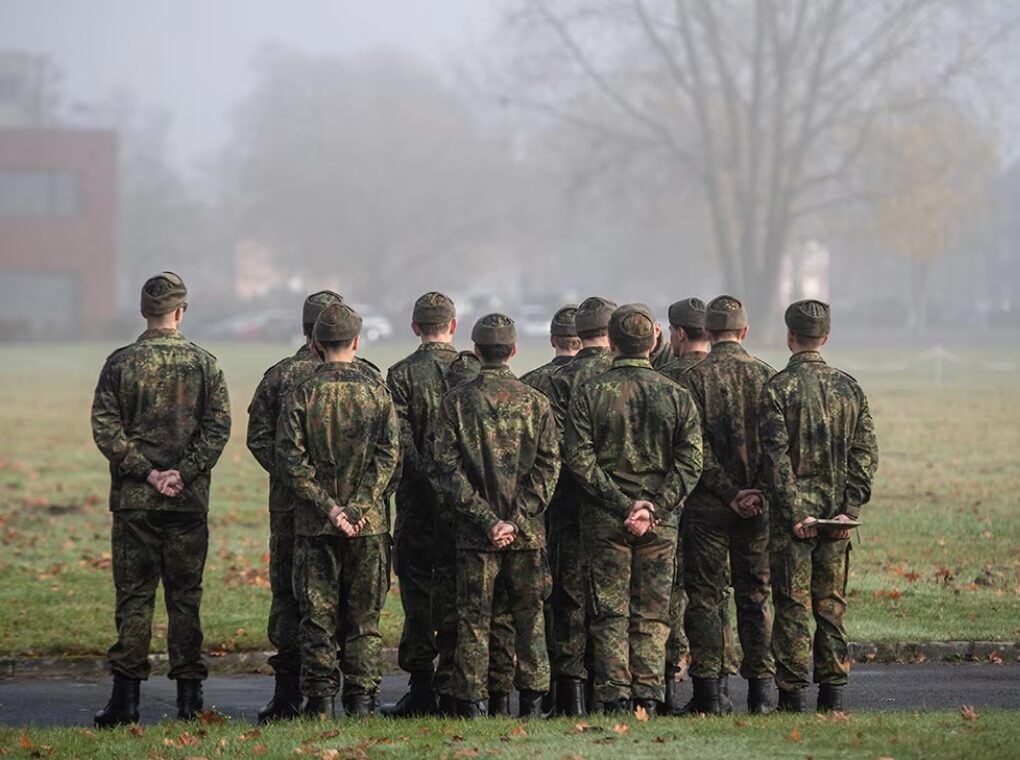
In a significant yet largely unnoticed legal shift, Germany has introduced a new rule requiring men aged 17 to 45 to obtain official permission before leaving the country for more than three months. The regulation, which came into force on January 1, 2026, is part of a broader overhaul of the nation’s military framework aimed at strengthening the Bundeswehr.
The change was implemented under amendments to the Military Service Act (Wehrpflichtgesetz – WPflG) as part of the Military Service Modernization Act. Previously, such travel restrictions applied only during extreme scenarios, such as a declared state of defense or heightened military tension. However, the revised law extends this requirement into peacetime, marking a notable shift in Germany’s defense preparedness strategy.
What the New Rule Means
Under the updated provisions, all men within the specified age group must seek approval from a Bundeswehr Career Center if they plan to stay abroad for more than three months. This applies universally—whether the purpose is education, employment, or extended travel.
According to officials from the German Ministry of Defense, the primary objective is to maintain a “reliable and up-to-date military register.” Authorities want to ensure that in the event of a national emergency, they have accurate data on citizens who may be outside the country for extended periods.
Despite the mandatory application process, officials have indicated that permits will generally be granted. However, the administrative procedure remains compulsory, and the consequences of failing to comply are still unclear.
Lack of Public Awareness and Debate
One of the most striking aspects of this policy change is how little public attention it has received. Reports suggest that millions of German citizens remain unaware of the new requirement, as it was introduced with minimal public debate.
Even the Ministry of Defense has acknowledged that the implications of this law are “serious.” Authorities are currently working on refining the process, including defining exceptions and minimizing bureaucratic hurdles. However, a clear implementation framework has yet to be finalized.
Part of a Larger Military Expansion Strategy
This travel restriction is not an isolated measure—it is part of a comprehensive effort by Germany to modernize and expand its military capabilities. The government has set a target to increase the size of the Bundeswehr from approximately 184,000 personnel to between 255,000 and 270,000 by 2035.
As part of this broader reform:
Young people born in 2008 or later are being issued questionnaires بشأن their willingness to serve in the military.
Completion of this questionnaire is mandatory for men but voluntary for women, in line with Germany’s constitutional provisions.
Initial medical screenings will begin in 2026 for those who express a willingness to serve.
While the government maintains that military service will remain voluntary, these steps signal a gradual reactivation of conscription mechanisms.
Strategic Context: Europe’s Changing Security Landscape
The timing of these reforms is significant. With shifting geopolitical dynamics and increasing security concerns in Europe, Germany appears to be positioning itself for a more assertive defense role. Discussions within NATO have increasingly emphasized the need for stronger European military capabilities, especially amid uncertainties about long-term U.S. involvement in the region.
German political leaders, including figures like Friedrich Merz, have hinted at ambitions to build one of the most powerful military forces in Europe. These legislative changes align with that broader vision.
Unanswered Questions
Despite the clarity of the law itself, several practical questions remain unresolved:
What penalties, if any, will apply to those who leave without permission?
How quickly will permits be processed?
Will there be exemptions for students, professionals, or emergencies?
Until detailed guidelines are issued, uncertainty continues to surround the real-world impact of the regulation.
Germany’s new travel permission rule for men aged 17–45 represents a subtle but significant shift in national defense policy. While framed as an administrative measure to maintain accurate military records, it reflects bigger strategic changes as the country prepares for a more active role in European security.
As implementation details emerge, the policy is likely to draw greater public scrutiny—especially as it directly affects millions of citizens and touches on fundamental issues of mobility and state oversight.