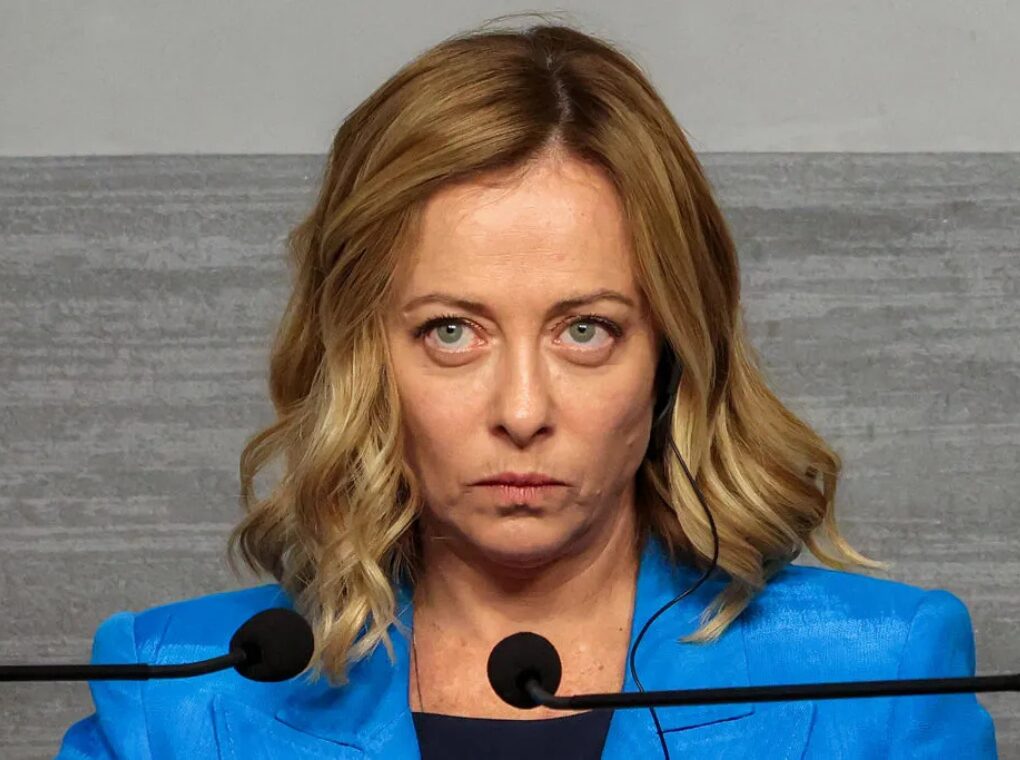
In a sharp escalation of tensions between Italy and Brussels, Prime Minister Giorgia Meloni has strongly criticised the European Union, claiming that its rigid bureaucracy and regulations are severely restricting Italy’s and the bloc’s ability to achieve robust economic growth and global competitiveness.
Meloni’s latest remarks come amid growing friction as the European Commission released its Spring 2026 Economic Forecast, which delivers a sobering outlook for Italy’s economy. The report projects Italy will record the lowest GDP growth and highest public debt levels in the EU by 2027, intensifying the ongoing EU-Meloni standoff.
Meloni Hits Out at EU Overreach
Speaking publicly, Meloni accused EU institutions of imposing excessive rules that hamper national economies. “EU bureaucrats are stifling economic growth,” she stated, arguing that overly strict fiscal constraints and regulatory burdens prevent member states like Italy from unleashing their full potential on the world stage.
Her comments reflect a consistent theme of her leadership: pushing for greater national sovereignty in economic matters while navigating EU membership. Meloni has repeatedly called for more flexible application of EU rules, especially regarding the Stability and Growth Pact, to allow Italy room to stimulate investment and tackle immediate challenges.
Grim EU Forecast for Italy
The European Commission’s latest projections paint a challenging picture for Italy:
GDP Growth: Italy’s economy is forecast to expand by only 0.5% in 2026 and 0.6% in 2027. These figures represent downward revisions and place Italy at the bottom of EU rankings. In 2027, no other member state is expected to grow slower.
Public Debt: Italy’s debt-to-GDP ratio is projected to rise to 139.2% by the end of 2027, making it the highest in the entire European Union. This surpasses Greece, whose debt burden is expected to decline over the same period.
Deficit: The deficit-to-GDP ratio is expected to remain stable at 2.9%, just below the critical 3% threshold, potentially allowing the closure of the excessive deficit procedure.
While the Commission partly attributes the slowdown to the crisis in Iran — which has pushed energy prices higher and dampened consumption — it stresses that Italy faces deeper structural issues.
Energy Policy Criticism and Renewables Push
A notable section of the EU report singles out Italy’s heavy reliance on natural gas for electricity generation. Unlike Spain and Portugal, where high renewable penetration limits gas influence on prices, Italy remains “gas-dependent,” with gas setting prices during most market hours.
Brussels appears to be sending a clear message: Italy must accelerate investment in renewables to reduce vulnerability to energy shocks. This indirect criticism comes as Meloni’s government has sought greater flexibility in EU budget rules to manage rising energy costs.
Economy Commissioner Valdis Dombrovskis warned that high-debt countries like Italy have “limited room for manoeuvre on spending” and must exercise caution.
End of EU Recovery Funds Adds Pressure
Another major concern is the winding down of the Recovery and Resilience Facility (NRRP) funds. The Commission notes that the end of these investments will lead to lower capital expenditure, while rising pension costs due to inflation will increase current spending.
Brussels is once again urging pension reform to ensure fiscal sustainability. Without the stimulus from EU recovery money, Italy’s growth will depend heavily on domestic reforms, productivity gains, and a global trade recovery.
Political Implications for Meloni’s Government
The forecasts arrive at a sensitive time for Meloni’s right-wing coalition (FdI-Lega-FI). Opposition parties are expected to weaponise the data, arguing that Italy’s economic underperformance and rising debt have worsened under her leadership.
Despite the criticism, Meloni’s government highlights external factors — including geopolitical tensions and energy market volatility — and maintains that excessive EU interference is part of the problem rather than the solution.
Economists following the situation point to Italy’s long-standing challenges: sluggish productivity, an ageing population, and slow reform implementation. The EU report notably offers little recognition of recent government efforts, focusing instead on risks ahead.
Broader EU-Italy Tensions
The Meloni-EU clash highlights deeper philosophical differences. Meloni advocates for a more pragmatic, growth-focused Europe that respects national priorities. In contrast, the European Commission emphasises fiscal discipline, green transition, and structural reforms across member states.
Key Economic Projections for Italy (EU Spring 2026 Forecast):
2026 GDP Growth: 0.5%
2027 GDP Growth: 0.6%
Debt-to-GDP by 2027: 139.2% (highest in EU)
Deficit-to-GDP: Stable at 2.9%
What’s Next for Italy and the EU?
As Italy heads toward the post-Recovery Fund era, the coming months will be decisive. Success in implementing meaningful reforms, boosting renewable energy capacity, and attracting private investment could help reverse the negative narrative.
Meloni’s ability to balance her firm stance against EU bureaucracy with constructive engagement in Brussels will likely shape both her political future and Italy’s economic trajectory.
The ongoing EU vs Meloni debate is more than a bilateral dispute — it reflects wider questions about the balance between centralised EU governance and national economic autonomy in a competitive global environment.
For now, Meloni continues to position herself as a defender of Italian interests against what she sees as an overreaching bureaucracy, while the European Commission maintains that fiscal responsibility and structural changes are essential for long-term prosperity.