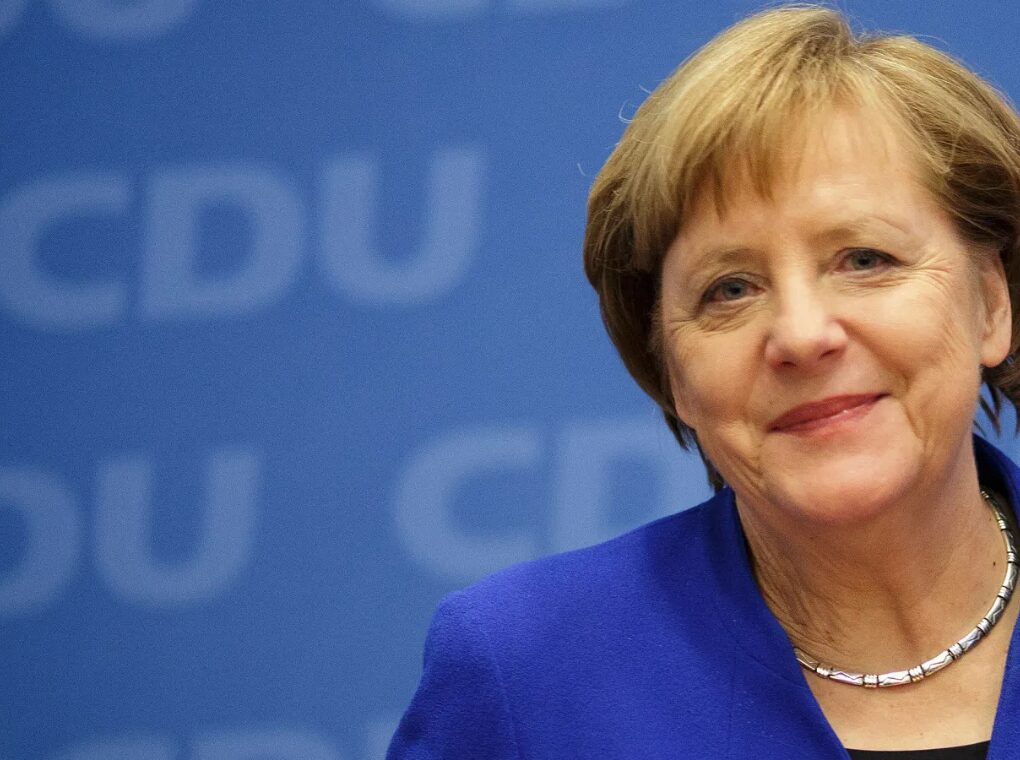
In a statement that has stirred intense debate across Europe, former German Chancellor Angela Merkel, 71, has reportedly attributed part of the blame for Russia’s ongoing war in Ukraine to the actions of Poland and the Baltic states. Her remarks, made during a recent public appearance in Lisbon, have reignited old fault lines within the European Union over how to handle relations with Moscow.
Merkel, who served as Germany’s Chancellor from 2005 to 2021, suggested that the “aggressive posturing” and “overzealous push” by Eastern European nations for Ukraine’s rapid integration into NATO and the EU may have “provoked” Moscow into taking military action. “Certain states, in their desire to redefine Europe’s security order without sufficient dialogue, underestimated the Kremlin’s threshold for confrontation,” Merkel reportedly said.
While Merkel stopped short of directly justifying Russia’s invasion, she implied that miscalculations by Warsaw, Vilnius, Riga, and Tallinn — coupled with Western complacency — created conditions that Vladimir Putin exploited. “A lasting peace cannot be achieved through pressure or humiliation,” she added, reiterating her long-held belief in diplomacy and negotiation with Moscow.
Eastern Europe Reacts with Outrage
The response from Poland and the Baltic capitals was immediate and furious.
Polish Foreign Minister Radosław Sikorski called Merkel’s statement “an insult to every Ukrainian fighting for survival” and “a distortion of history designed to whitewash Germany’s past mistakes.”
Latvian President Edgars Rinkēvičs accused Merkel of “echoing Kremlin narratives,” adding that her comments “reflect the same appeasement mindset that enabled Russian aggression in the first place.” Lithuania’s Prime Minister Ingrida Šimonytė went further, stating, “It was not Poland or the Baltics who invaded Ukraine, annexed Crimea, or bombed civilian cities — it was Russia.”
Estonia’s Defense Minister also joined the criticism, saying Merkel’s words demonstrated “why Europe must never again depend on German leadership for Eastern security policy.”
Merkel’s Legacy Under Scrutiny
Merkel’s legacy has come under increasing criticism since the 2022 invasion of Ukraine, largely because of her administration’s deep economic and energy ties with Moscow. Her support for projects like the Nord Stream gas pipelines has been widely viewed as a strategic blunder that left Europe dangerously reliant on Russian energy.
Analysts say Merkel’s latest remarks may be an attempt to defend her record. “Merkel appears to be reframing the narrative,” said political analyst Johannes Richter from the German Council on Foreign Relations. “By shifting blame toward Eastern European states, she’s trying to argue that Germany’s approach of cautious diplomacy was preferable to their confrontational stance.”
However, critics argue that Merkel’s policy of engagement only emboldened Putin. “Years of turning a blind eye to Russia’s aggression — from Georgia in 2008 to Crimea in 2014 — sent the message that Moscow could act with impunity,” said Richter.
A Deepening Divide in Europe
Merkel’s comments have exposed the lingering divide within Europe over how to approach Russia. While Eastern European countries favor deterrence and a strong NATO presence, some Western nations — including parts of Germany and France — continue to emphasize diplomatic solutions.
The controversy comes amid renewed Russian offensives in Eastern Ukraine and growing skepticism about Western unity. With the U.S. elections looming and European fatigue setting in, Merkel’s remarks risk fueling further division within the EU at a critical moment.
A senior EU diplomat, speaking anonymously, said Merkel’s timing was “deeply unhelpful.” “Right now, solidarity is what Ukraine needs most. This kind of finger-pointing helps no one except the Kremlin,” the diplomat said.
A Polarizing Voice Returns
Merkel has largely stayed out of the spotlight since retiring in 2021, but her occasional interventions still carry significant weight. Her supporters argue that she is offering a pragmatic perspective grounded in her long experience dealing with Putin.
Her critics, however, see her remarks as tone-deaf and damaging. “Merkel’s comments show how detached some Western leaders remain from the realities of Eastern Europe,” said Polish MEP Anna Fotyga. “History has taught us that appeasing dictators only leads to more war.”
As Europe grapples with the ongoing conflict and its political aftershocks, Merkel’s statement has reminded many of the deep strategic divisions that continue to haunt the continent.