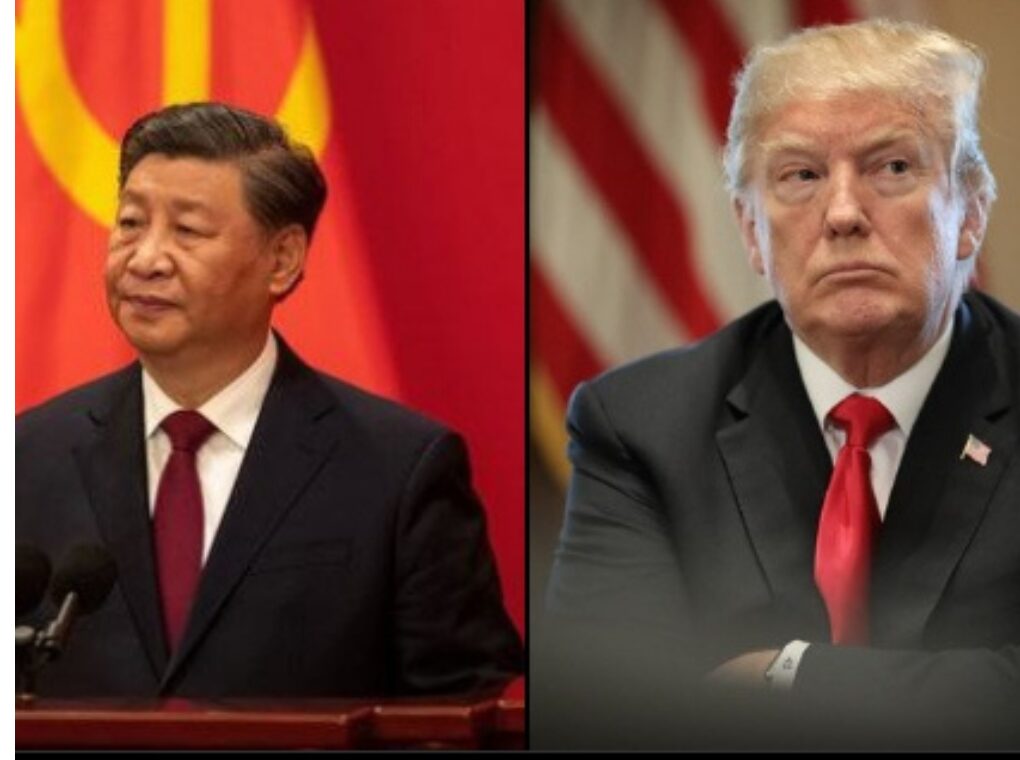
The simmering tensions between the United States and China have erupted once again, marking the start of a new and potentially dangerous chapter in global trade relations. This latest escalation comes after former U.S. President Donald Trump posted on Truth Social, accusing China of hostile actions against American interests. The post sent shockwaves through global markets, with the S&P 500 plunging more than 70 points in mere seconds—a stark reminder of how sensitive the world economy is to U.S.-China relations.
At the core of this dispute lies China’s control over rare earth elements (REEs), a group of 17 metals essential for high-tech industries, including smartphones, electric vehicles, wind turbines, and military equipment. China produces over 90% of the world’s rare earth supply, giving it enormous leverage in global markets.
On October 9, China’s Ministry of Commerce announced strict export controls on rare earths, requiring foreign companies to obtain special approvals even for products containing small quantities of these materials. Trump described the move as a “sinister and hostile attempt to monopolize the market,” warning that it threatens the U.S. defense and technology sectors.
Adding fuel to the fire, China also announced special port fees on U.S.-operated ships docking at Chinese ports, starting at 400 yuan per net ton and potentially exceeding $1 million per voyage for large container ships. In response, the U.S. signaled that similar charges could be imposed on Chinese vessels. This tit-for-tat economic strategy demonstrates how both nations are weaponizing trade to gain leverage at the negotiation table.
Trump’s post went further, hinting at a massive increase in tariffs on Chinese imports, potentially reaching 100% on goods ranging from electronics to machinery. Alongside this, the U.S. has tightened export controls on critical technologies, including semiconductors and advanced chipmaking tools, citing national security concerns.
Companies like TSMC have had licenses revoked for shipments to China-bound facilities, while lawmakers are pushing for stricter restrictions. Trump framed the escalation as a demonstration of U.S. strength, claiming, “For every element that China has monopolized, we have two,” referring to America’s dominance in semiconductors, AI, and aerospace.
The market impact was immediate. The S&P 500 dropped 2.7%, the Dow Jones lost 900 points, and the Nasdaq fell 3.5%, with tech companies heavily reliant on Chinese supply chains taking the hardest hit. Investors fear a return to 2018-style trade war volatility, when tariffs exceeded $500 billion and global growth slowed. The difference today is that both nations appear more willing to use every available tool—tariffs, export controls, port fees, and rare earth leverage—to gain an upper hand.
Diplomatic efforts have also been affected. The Asia-Pacific Economic Cooperation (APEC) summit in South Korea, intended as a platform for dialogue, now faces uncertainty. Plans for a bilateral meeting between Trump and Xi Jinping were reportedly disrupted, reflecting the frost in U.S.-China relations. Experts warn that this is not merely a trade dispute but a confrontation between an established superpower—the United States—seeking to maintain the status quo—and an aspirational superpower—China—challenging that order through economic coercion.
The implications are global. Supply chains for electric vehicles, renewable energy, consumer electronics, and defense industries could face disruptions. Shipping companies may incur soaring costs due to port fees, and inflationary pressures could rise as tariffs take effect. Other nations, from Australia to Brazil, have voiced frustration over the collateral damage caused by these tensions, highlighting the far-reaching consequences of U.S.-China hostilities.
Trump framed this escalation as potentially painful but ultimately “good for the U.S.A.,” echoing his first-term emphasis on reshoring jobs and strengthening domestic industries. Yet, with elections approaching and inflation concerns mounting, the calculus is complex. Meanwhile, China continues to rely on domestic stimulus measures to maintain economic resilience, signaling that neither side is willing to back down easily.
As tariffs loom and negotiations teeter, the world watches closely. This high-stakes showdown is not only a battle for economic supremacy but also a test of the post-World War II global order. With supply chains, markets, and global stability hanging in the balance, every move by these two titans will have profound consequences for the international community. The new phase of the U.S.-China trade war has begun, and the stakes could not be higher.