
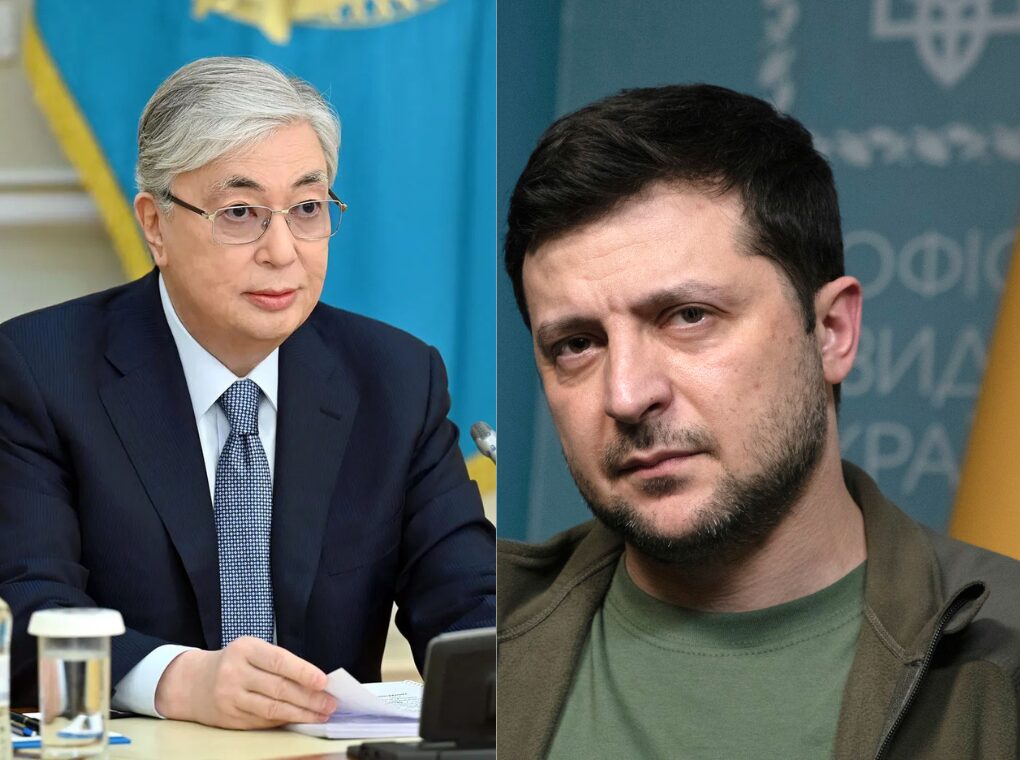
In one of the most consequential escalations of 2025 in the Black Sea region, Kazakhstan has sharply condemned Ukraine for a drone strike that crippled operations at the Caspian Pipeline Consortium’s (CPC) Novorossiysk oil terminal — a facility responsible for more than 1% of global crude flows and roughly 80% of Kazakhstan’s total oil exports.
The attack, carried out on November 29 by Ukrainian naval drones, resulted in heavy damage to one of the terminal’s key offshore loading buoys, forcing a complete shutdown of oil loading activities and triggering immediate concerns over global energy security.
The incident marks the third Ukrainian strike on the CPC terminal this year, but it is the first time Kazakhstan has issued such a strong and public rebuke.
A Precision Strike with Global Consequences
According to the CPC operator, the hit on Single-Point Mooring 2 (SPM-2) caused “significant damage,” rendering the buoy inoperable. This floating terminal is essential for transferring crude oil to tankers bound for world markets.
The CPC pipeline system transports up to 1.4 million barrels per day, making it one of the largest and most strategically important crude export routes in the region. It carried 68.6 million tonnes of Kazakh oil last year, highlighting Kazakhstan’s deep reliance on this infrastructure.
The immediate suspension of operations has forced the withdrawal of all tankers and disrupted export schedules, raising fears of tightening global oil supply at a time when markets are already strained by OPEC+ cuts and winter demand.
Kazakhstan’s Outrage: “A Deliberate Attack on Civilian Infrastructure”
Kazakhstan’s Foreign Ministry issued an unusually forceful statement, accusing Ukraine of striking a purely civilian facility protected under international law.
“Kazakhstan expresses its protest over yet another deliberate attack on the critical infrastructure of the international Caspian Pipeline Consortium in the waters of the Port of Novorossiysk,”
the ministry declared.
Astana emphasized that the CPC terminal is a multinational energy hub — not a military target — and warned Kyiv that repeated attacks threaten diplomatic relations between the two post-Soviet states.
Officials also stressed the broader implications, noting that the strike endangers global supply chains and risks destabilizing markets. Kazakhstan has begun activating contingency routes, but experts warn these alternatives lack the capacity to compensate for the disruption.
Ukraine Defends Its Actions: “We Target Russia, Not Kazakhstan”
Kyiv responded swiftly, firmly rejecting the suggestion that it intentionally targeted Kazakh interests.
Ukraine’s Foreign Ministry said the operation was part of its broader strategy to degrade Russia’s war economy and strike infrastructure used to support Moscow’s invasion.
“Ukraine hits back at the aggressor,”
the ministry stated, asserting that its military actions are aimed exclusively at Russian assets.
Ukrainian officials argue that oil terminals, refineries, and depots located on Russian territory — even if shared with corporate partners — form part of Russia’s logistical backbone and are therefore legitimate military targets.
Online, supporters echoed this sentiment, criticizing Kazakhstan’s reaction as unfair given Russia’s ongoing strikes on Ukrainian civilian infrastructure.
Russia Labels the Strike ‘Terrorism’
Moscow condemned the drone attack in harsh terms, calling it an act of terrorism and accusing Western intelligence services of assisting Ukraine in identifying strategic targets deep inside Russian territory.
Russian authorities warned that repeated Ukrainian drone operations threaten maritime security and commercial shipping lanes across the Black Sea — a region already fraught with naval tensions and unpredictable military activity.
The Kremlin also seized the opportunity to highlight Kazakhstan’s frustration, subtly exploiting the rift between Astana and Kyiv.
A Multinational Energy Asset Caught in the Crossfire
The CPC’s ownership structure underscores the complex international fallout from the incident.
Key shareholders include:
Russia’s Transneft – 50.1%
Kazakhstan’s KazMunayGas – 20%
Chevron – 15%
ExxonMobil – 7.5%
Lukoil – 5.4%
This blend of Russian state interests and major U.S. oil companies has historically shielded the pipeline from sanctions and political turmoil. But the latest attack has rattled investors and renewed debates in Washington and Brussels about tightening controls on Russian-linked energy infrastructure.
Analysts estimate the shutdown could cause losses of up to $50 million per day for consortium members, underscoring the severity of the disruption.
Strategic Context: Ukraine’s Offensive Against Russia’s Oil Revenues
The strike aligns with Ukraine’s expanding campaign to undermine Russia’s oil-dependent war economy. Since early 2025, Ukrainian drones and missiles have targeted dozens of refineries and depots, reportedly cutting Russian refining capacity by about 15%.
The Novorossiysk terminal, though primarily used by Kazakhstan, also handles Russian crude and sits squarely within Russian territory — making it a dual-use asset in the eyes of Ukrainian strategists.
However, this approach risks entangling countries like Kazakhstan that have sought neutrality or balance between Moscow and Kyiv.
Global Energy Outlook: A New Risk Flashpoint
The damage to SPM-2 could take weeks to repair, possibly longer depending on weather conditions and safety concerns. CPC is attempting to reroute flows to its remaining mooring points, but these alternatives have limited capacity.
With Brent crude hovering around $75 per barrel, energy analysts warn that any prolonged outage could nudge prices upward by $2–$5 per barrel, adding inflationary pressure on markets already strained by geopolitical tensions.
The incident also exposes deeper geopolitical shifts:
Kazakhstan’s rare condemnation hints at growing discomfort with regional instability.
Ukraine is increasingly willing to target infrastructure beyond frontline zones.
Russia is leveraging the situation to isolate Kyiv diplomatically.
As the Black Sea becomes an increasingly militarized arena, even ostensibly civilian infrastructure is now subject to wartime calculations.
The drone strike on the CPC terminal has emerged as a flashpoint at the intersection of warfare, geopolitics, and energy security. Kazakhstan seeks to protect its economic lifeline, Ukraine aims to cripple Russia’s war funding, and Russia is using the moment to escalate its narrative of Ukrainian “terrorism.”
With repairs underway and oil exports partially suspended, the international community now faces a sobering reminder: in the era of drone warfare, even the most vital civilian facilities are no longer beyond reach.