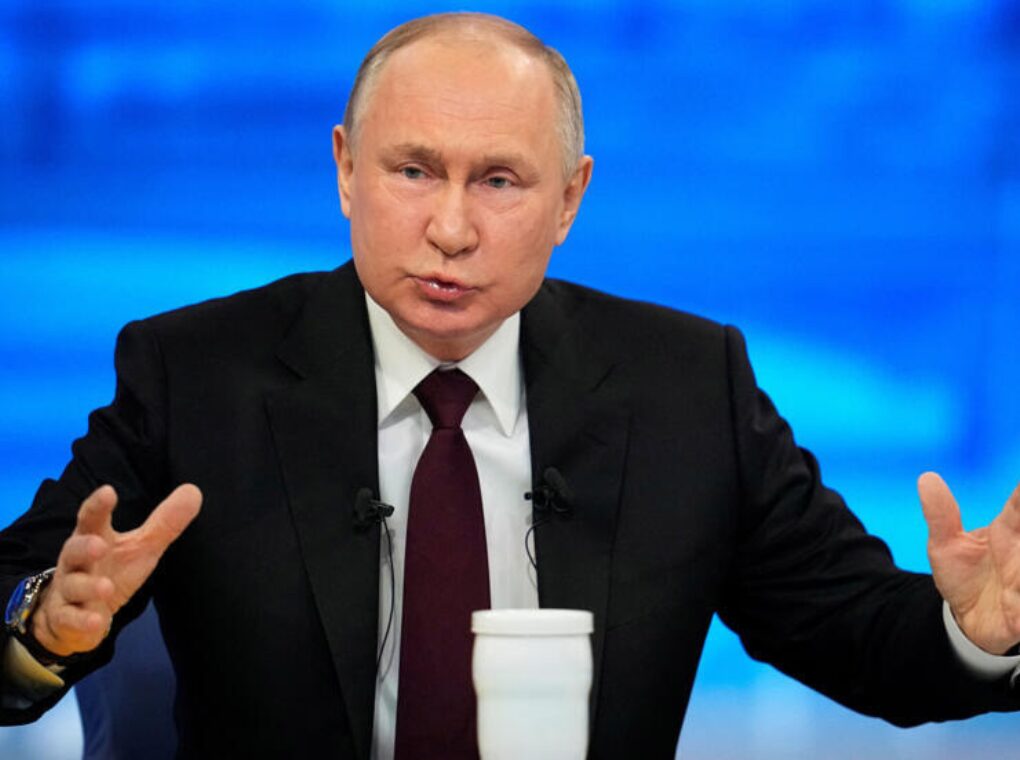
In an unexpected diplomatic twist, reports emerged from Moscow that the United States had offered Russia a pathway back into the G8—a group from which it was expelled in 2014 over the Crimea crisis. The proposal, conveyed during a five-hour meeting on December 2, 2025, between Russian President Vladimir Putin and U.S. special envoys Steve Witkoff and Jared Kushner, was intended as part of a broader attempt to advance a potential peace framework for the Ukraine war.
But what followed delivered a clear geopolitical message:
Russia is no longer interested in returning to the Western-led club.
Two days after the meeting, Putin openly dismissed the idea in an interview with India Today, stating flatly, “Russia is not going to return to the G8.” His remarks underscored a strategic reality that Washington and European capitals have increasingly struggled to confront—Russia views the Western economic order as declining, while BRICS and the wider Global South are rising as the new centers of global power.
A Reversal That Reveals Western Weakness
The U.S. offer marks a striking reversal of post-2014 Western policy. After Crimea, the G8 expelled Russia unilaterally, reinstating the G7 format and amplifying sanctions meant to cripple Moscow’s economy and diminish its global standing.
However, with the prolonged Ukraine conflict draining Western resources, energy turbulence in Europe, and Russia’s ability to weather sanctions far better than predicted, Washington now sees strategic value in trying to pull Moscow closer. Reintegrating Russia into the G8 would theoretically weaken BRICS, fracture Russia’s ties with China and India, and reopen the door for Western investment in Russia’s vast energy and mineral reserves.
Yet Putin’s rejection reflects Moscow’s perception that the G8 no longer offers any meaningful advantage—and that the future of global economic influence is shifting eastward.
Why Moscow Views the G8 as a Relic?
In his interview, Putin questioned the very relevance of the G7/G8, arguing that its role in the global economy has been shrinking “year after year.” He pointed to the group’s sluggish growth—just 1.9% in 2024—contrasted sharply with the 4.9% expansion across BRICS and Russia’s own 4.1% performance.
To the Kremlin, returning to the G8 would mean returning to a platform dominated by U.S. interests, where Russia would be treated as a subordinate partner rather than an equal. The memories of 2014—when Russia was expelled and economically pressured without recourse—still loom large. The idea of stepping back into an institution that once humiliated Moscow is politically unthinkable for the Russian leadership.
BRICS+: The New Pole of Economic Power
While the G8 appears to be fading, BRICS and its expanded BRICS+ format have transformed into a formidable global coalition. With the addition of Egypt, UAE, Iran, Ethiopia, and Indonesia, BRICS+ has evolved far beyond its original mandate. Today, it functions as a platform for: alternative payment systems, de-dollarized trade, development banking, energy alliances and coordinated geopolitical strategy across the Global South
The economic numbers highlight why Moscow sees BRICS—not the G8—as the power bloc of the future:
Population: BRICS+ accounts for 3.7 billion people (45% of the world), while the G7 represents just 10%.
Global GDP (PPP): BRICS+ dominates with 40.2%, outpacing the G7’s 28.8%.
Growth Momentum: BRICS economies continue expanding at 3–4 times the pace of Western nations.
Energy Influence: BRICS nations control some of the largest oil and natural gas reserves globally.
Trade Integration: Nearly 95% of Russia-China trade now takes place outside the U.S. dollar system.
These indicators point to a rebalanced world order—one where economic gravity is shifting toward Asia and the broader Global South.
Russia’s Resilience Strengthens Its Strategic Hand
Western sanctions were intended to exhaust the Russian economy. Instead, they accelerated Moscow’s political and economic reorientation toward Asia.
Russia successfully redirected energy exports away from Europe and toward China, India, and Middle Eastern partners, stabilizing state revenue. Domestic industries expanded to replace Western imports, while the ruble-yuan trade corridor boosted resilience against financial restrictions. In 2024 and 2025, Russia’s economic performance consistently exceeded expectations, even surpassing some major European economies in output and investment.
These developments made the U.S. offer to rejoin the G8 appear less like an invitation and more like an acknowledgment that Western leverage is diminishing.
Geopolitical Stakes: Why Moscow Won’t Bend
European allies responded uneasily to reports of the G8 proposal. Ukraine’s leadership warned against any “agreements behind Kyiv’s back,” while France and Germany signaled opposition to what they described as a “punitive peace” favoring Moscow.
But within Russia, the reaction was clear: the G8 no longer aligns with the country’s strategic trajectory. Putin views BRICS as a space where Russia stands as a co-architect of a new multipolar order—one not defined by U.S. dominance, NATO structure, or Western sanctions.
Rejoining the G8 would risk undermining Russia’s BRICS partnerships, diluting its influence with China and India, and pulling Moscow back into a system it no longer trusts.
A Multipolar Future: Why This Moment Matters
Putin’s rejection of the G8 symbolizes more than a diplomatic refusal. It reflects a profound shift in global power distribution. The U.S. and Europe can no longer assume automatic centrality in global economic governance, while emerging coalitions like BRICS and the Shanghai Cooperation Organisation shape alternative models of cooperation.
As Putin prepares for his high-stakes visit to India—where discussions will span defense, energy, logistics, and the 2026 BRICS chairmanship handover—the momentum behind Eurasian and Global South integration is stronger than ever.
Russia’s message is unmistakable:
The era of Western dominance is waning, and Moscow intends to position itself at the center of the rising multipolar world.
For the U.S., the offer to return Russia to the G8 was an attempt to stabilize a rapidly changing geopolitical landscape. But for Russia, anchored firmly within BRICS, the G8 is a structure of the past—an institution tied to a world order that no longer exists.
In the emerging global reality, Russia believes its future—and its power—lies not in the West, but in a coalition reshaping the 21st century from the East outward.