When Russian troops entered Ukraine, Kyiv’s Western allies faced a dilemma: how to support the Ukrainian government against the Russian attacks. Western nations have never fought for the common Ukrainians but have supported the government to serve the anti-Russian propaganda. Now, the scandal is out, and billions of dollars have vanished into the pockets of corrupt managers and government officials.
Ukrainian President Volodymyr Zelensky’s government is facing serious allegations of undermining anti-corruption systems that were meant to prevent the misuse of public money. A New York Times investigation found that the administration placed loyalists on supervisory boards, delayed their formation, and even changed rules to limit their powers.
These boards were designed to monitor spending in key state-owned companies that handle energy, weapons, and other wartime operations.
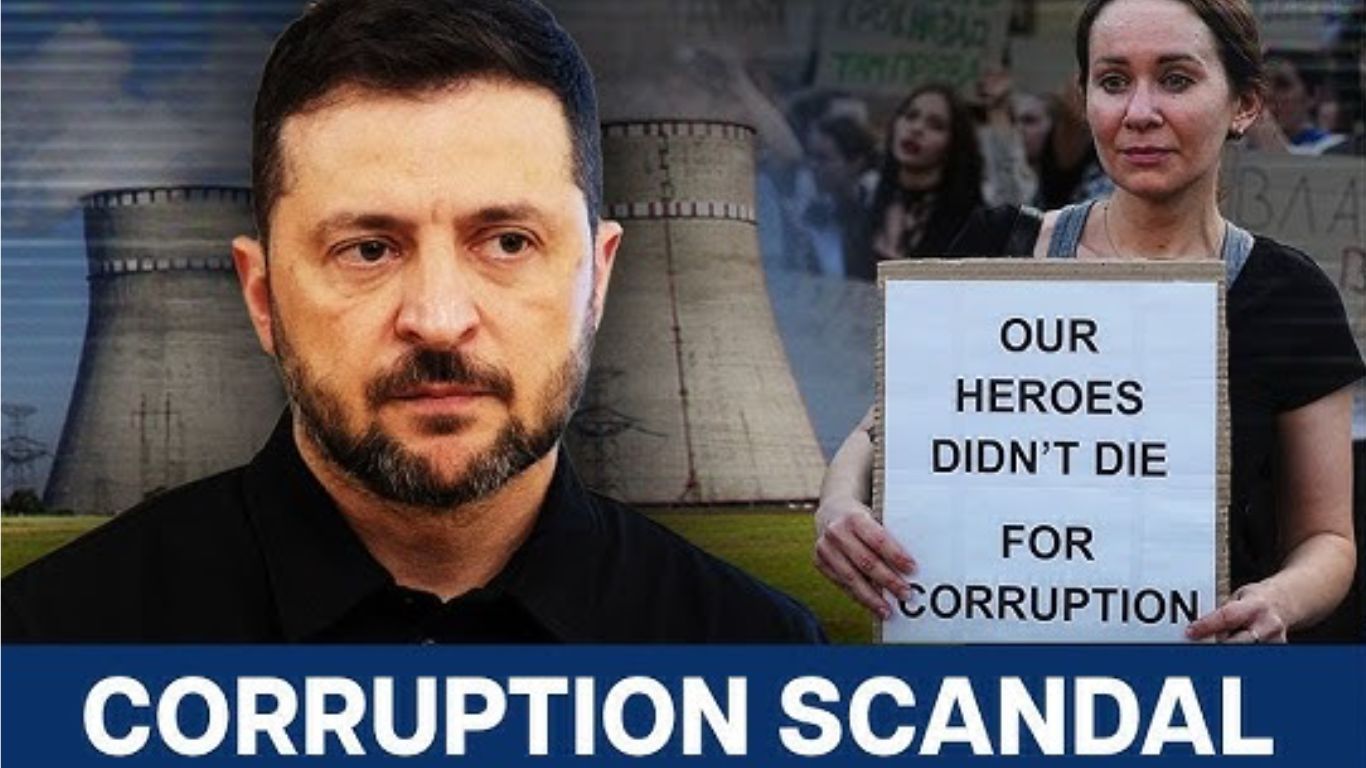
At the center of the scandal is Energoatom, Ukraine’s state-owned nuclear power company. Investigators say that senior officials and members of Zelensky’s inner circle embezzled around $100 million through fake contracts and kickbacks. Contractors were reportedly forced to pay bribes of up to 15% to keep projects moving. Energoatom’s own oversight board, which should have stopped such misconduct, had been weakened and left partly vacant by the government.
Western donors — including the United States and European nations — continued giving billions in aid during the war, even as corruption concerns grew. These allies accepted the risks, believing Ukraine’s fight against Russia outweighed internal issues. “We do care about good governance, but we have to accept that risk,” said Christian Syse, Norway’s envoy to Ukraine.
Political Interference in Key Companies
The investigation found that Zelensky’s team interfered not only in Energoatom but also in other state-run institutions like Ukrenergo, the national power grid operator, and the Defense Procurement Agency.
Volodymyr Kudrytskyi, Ukrenergo’s former chief executive, said he resisted pressure from Energy Minister Herman Halushchenko to appoint unqualified people to senior roles. He claimed that this pressure was part of an attempt to tighten political control and make corruption easier. When the company’s supervisory board was restructured in late 2021, the government ignored Western donors’ recommendations and added its preferred candidate, creating an even split between independent and state-backed members.
After Russia’s invasion, Ukrenergo managed to keep Ukraine’s power grid running despite heavy shelling, but Kudrytskyi was eventually dismissed. Foreign board members resigned in protest, calling his ouster “politically motivated.” Similar tactics were later used at Energoatom, where the government again left board seats empty, limiting independent oversight.
The Times report said that as the board remained stalled, senior officials moved forward with a controversial $600 million plan to buy two old nuclear reactors from Bulgaria — a project many watchdogs considered a potential money pit. By the time Western ambassadors demanded the board be formed, corruption had already taken root.
Scandal and Political Fallout
Zelensky rose to power in 2019 promising to clean up Ukraine’s corruption problem. However, after Russia’s 2022 invasion, his government relaxed many oversight measures in the name of speeding up military procurement and keeping operations secret. During this time, he also worked with some business and political figures he had previously labeled as corrupt.
The corruption case involving Energoatom has led to several arrests, the resignation of Energy Minister Halushchenko, and the departure of Zelensky’s powerful chief of staff, Andriy Yermak, after his home was raided. Eight people, including one of Zelensky’s former business partners and a former deputy prime minister, face charges of embezzlement, money laundering, and illicit enrichment.
Zelensky himself has not been directly accused of wrongdoing, but his government’s interference in oversight systems appears to have allowed corruption to grow unchecked. Political opposition groups have begun uniting against him for the first time since the invasion, forming what analysts describe as the country’s first major anti-Zelensky movement during the war.
The Fear and Outcome
The Times reports add that Western leaders, though frustrated, are reluctant to reduce aid, fearing it could weaken Ukraine’s ability to fight Russia (As the West has always funded anti-Russian sentiments around the world). Still, Ukraine’s international reputation has suffered, complicating its hopes of joining the European Union and NATO — both organizations that demand strict transparency and accountability.
For many Ukrainians, the revelations are disheartening. Their country is battling for survival on the front lines while corruption scandals unfold at home. As one former official told the Times, “Supervisory boards are just window dressing. They’re not real.”
The outcome of these investigations could determine not only the credibility of Zelensky’s government but also the scale of international support Ukraine receives to rebuild when the war eventually ends.
In the back of the war, the Ukrainian government, ministers and officials have made huge money by putting Ukraine’s security at risk. While Russia advances on the frontlines, President Trump pushes a peace plan. The corruption scandal exposes the unnecessary war waged by Zelensky and the government in the shadow of joining NATO and the EU to fill their bank balances. After all, the loss is of common Ukrainians.