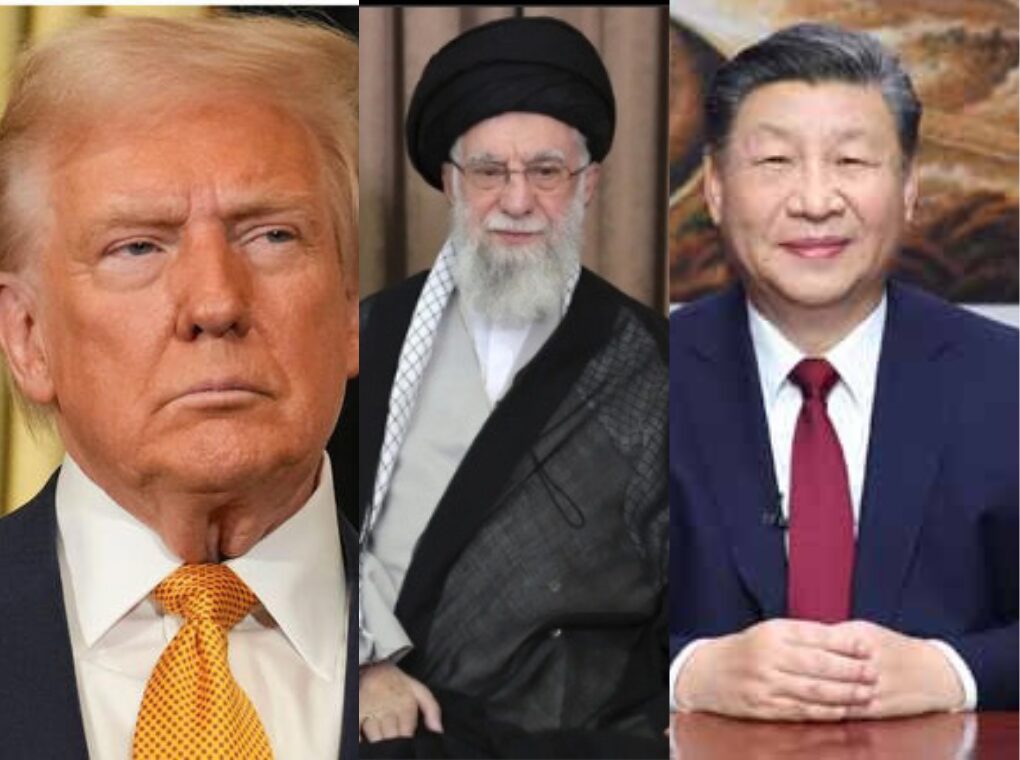
As tensions between Washington and Tehran intensify, a growing body of reports suggests that China and Russia are strengthening Iran’s military capabilities — moves that analysts say are emboldening Tehran while complicating U.S. strategic calculations in the Middle East.
The developments come amid a significant American force buildup in the region and renewed warnings from senior U.S. military officials about the risks of escalation.
China’s Expanding Strategic Role
Beijing has publicly maintained that it does not seek direct military involvement in any potential U.S.-Iran conflict. However, defense analysts point to growing technological and strategic cooperation between China and Iran.
Reports indicate that China has provided advanced air-defense radar technology, including systems comparable to the YLC-8B anti-stealth radar, which are designed to detect aircraft with low radar signatures. Such systems could potentially reduce the effectiveness of U.S. stealth platforms like the F-35 and B-2 bomber in the event of military action.
Speculation has also circulated regarding the possible transfer of China’s Dongfeng-17 hypersonic missile technology to Iran. While no verified evidence confirms deployment of such systems inside Iran, even unconfirmed reports have fueled debate within defense circles about shifting regional balances.
In addition to hardware, Beijing is reportedly encouraging Iran to reduce reliance on U.S.-linked GPS navigation systems and instead adopt China’s BeiDou satellite network. Analysts say this would strengthen Iran’s missile guidance resilience while limiting potential U.S. interference or tracking.
China’s motivations are largely strategic and economic. Under a long-term cooperation agreement reportedly valued at hundreds of billions of dollars, Iran remains a critical supplier of discounted crude oil to China. With roughly 20–30% of global oil shipments passing through the Strait of Hormuz, stability in the region carries immense economic importance for Beijing.
Moscow has also deepened defense cooperation with Tehran. Reports from late 2025 indicated that Iran signed a major arms agreement with Russia for advanced Verba man-portable air defense systems (MANPADS). These shoulder-fired missiles are capable of targeting low-flying aircraft, drones, and cruise missiles, making them particularly effective against modern aerial operations.
Military experts note that portable systems like the Verba are difficult to neutralize because they can be widely dispersed across terrain, increasing operational risks for attacking forces.
There have also been indications that Iran may receive advanced Russian fighter aircraft, such as the Su-35, as well as other military platforms. Although Russia remains engaged in its own prolonged conflict in Ukraine, it continues to leverage arms exports to maintain influence in the Middle East.
For Moscow, strengthening Iran serves as a means to counterbalance U.S. power and reinforce a strategic partnership that has expanded in recent years.
Iran’s Military Posture and Rhetoric
Iranian leaders have responded to the shifting environment with assertive rhetoric. Supreme Leader Ayatollah Ali Khamenei has warned that any U.S. attack would trigger direct retaliation against American assets in the region.
Iran’s armed forces have reportedly elevated readiness levels, repositioned missile units, and reinforced command structures. Observers note that Tehran has invested heavily over the past decade in domestic missile production, drone warfare capabilities, and hardened underground facilities designed to withstand airstrikes.
Unlike Iraq before the 2003 U.S. invasion, Iran maintains a sizable ballistic missile arsenal, naval assets capable of threatening shipping lanes, and regional proxy networks in multiple countries. These factors, analysts argue, make any military campaign far more complex and unpredictable.
U.S. Deployment and Internal Concerns
In response to rising tensions, the United States has deployed significant naval and air assets to the broader Middle East region. Carrier strike groups led by the USS Gerald R. Ford and USS Abraham Lincoln have been positioned to signal deterrence.
Advanced aircraft, missile defense systems, and support units are also operating at heightened readiness levels.
However, reports from Washington indicate that senior U.S. military leaders have cautioned against rapid escalation. Concerns reportedly include the strain on interceptor stockpiles, the possibility of sustained missile exchanges, and the impact a prolonged conflict could have on broader U.S. strategic readiness — particularly regarding competition with China in the Indo-Pacific.
Defense officials have emphasized that Iran’s capabilities differ substantially from those of past adversaries. A limited strike, some analysts warn, could escalate into a wider regional confrontation involving multiple actors.
A High-Stakes Geopolitical Crossroads
The evolving situation underscores a broader great-power dynamic. China seeks to protect critical energy interests and expand its influence. Russia aims to reinforce strategic ties and challenge Western dominance. Iran seeks deterrence and regime survival. The United States aims to prevent nuclear escalation and maintain regional stability.
Whether tensions lead to renewed diplomacy or further escalation remains uncertain. What is clear, however, is that the convergence of Chinese and Russian support with Iran’s expanding military posture has raised the stakes significantly.
Any miscalculation could reverberate far beyond the Middle East, affecting global energy markets, international security, and the balance of power among major nations.