
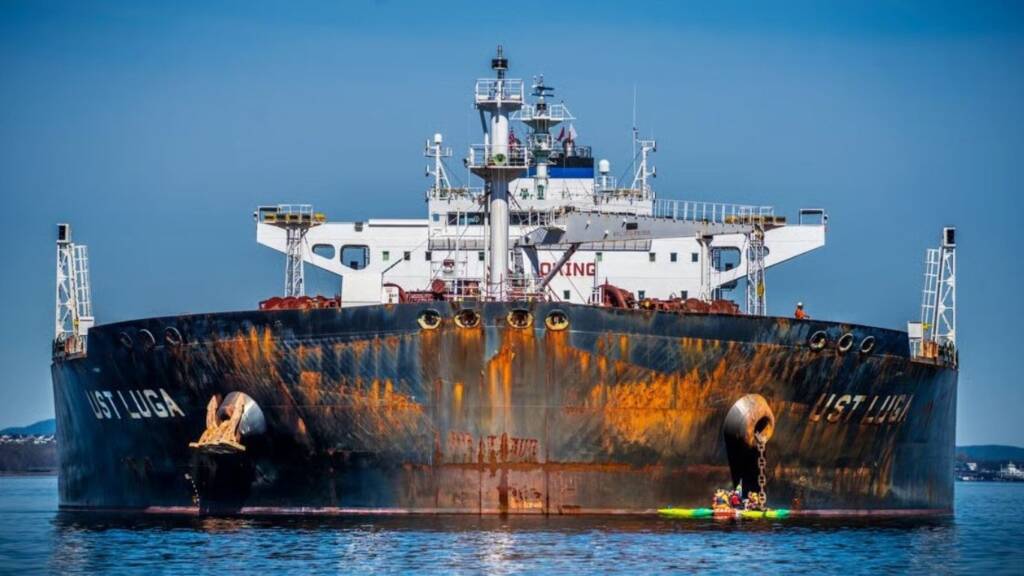
Iran’s recent seizure of an oil tanker carrying six million litres of diesel fuel in the Gulf of Oman is not an isolated maritime incident. Rather, it forms part of a broader and increasingly visible pattern of retaliation and counter-retaliation unfolding across global sea lanes. This development comes just days after the US Coast Guard seized a vessel linked to Iran and Hezbollah, underscoring how maritime spaces are rapidly becoming arenas of geopolitical confrontation.
If one examines recent tanker seizures stretching from the Caribbean to the Indian Ocean and up to the Strait of Hormuz, a clear linkage emerges. Across regions, these actions reflect a tit-for-tat strategy, where enforcement, interdiction, and seizure are used as instruments of pressure rather than purely legal measures. Consequently, what appears on the surface as law enforcement increasingly resembles strategic signalling.
Camps Divided: Sanctions, Energy, and Strategic Alignment
At the heart of these incidents lies a deepening global divide. On one side stands the United States and its allies, invoking sanctions enforcement, maritime law, and counterterrorism concerns. On the other side is a loosely aligned bloc led by Russia, China, Iran, and Venezuela—states whose economies, particularly Iran and Venezuela, remain heavily dependent on oil and gas exports.
However, due to extensive US-led sanctions, these countries argue that they are denied access to free and fair trade in global energy markets. As a result, oil trade among sanctioned states has expanded through opaque networks, shadow fleets, and ship-to-ship transfers. While Washington labels these activities as illegal sanction evasion, Tehran and Caracas view them as economic survival mechanisms. Therefore, confrontation at sea has become an extension of economic warfare on land.
Iran’s Seizure in the Gulf of Oman: What We Know
Against this backdrop, Iranian authorities announced the seizure of a foreign oil tanker in the Gulf of Oman. According to local media cited by AFP, the vessel was allegedly smuggling contraband diesel fuel and had 18 crew members on board, including Indian, Bangladeshi, and Sri Lankan nationals.
Iran’s Fars news agency reported that the tanker was carrying six million litres of diesel fuel and had disabled all navigation systems—an act often associated with illicit maritime activity. The operation was reportedly carried out off the coast of Hormozgan province. Importantly, Iranian officials have repeatedly highlighted that domestic fuel prices in Iran are among the lowest globally, which makes smuggling diesel to neighbouring markets particularly profitable.
While Iranian forces regularly announce such interceptions, authorities dismissed suggestions that the seizure was retaliatory, echoing similar denials made after a tanker was seized in November for carrying “unauthorised cargo.” Nevertheless, the timing raises questions.
A Response to US Actions Near Venezuela?
Notably, Iran’s action followed closely on the heels of a US seizure of an oil tanker off the coast of Venezuela. According to Washington, the ship was transporting oil from Venezuela and Iran, allegedly linked to the Islamic Revolutionary Guard Corps and Hezbollah. The US Treasury had sanctioned Venezuela in 2022 over these ties, further tightening restrictions on its oil exports.
Thus, when viewed together, these incidents reinforce the perception that tanker seizures are increasingly reciprocal. Each side appears to be signalling its capacity to disrupt the other’s energy lifelines, especially in strategically sensitive waters.
Expanding the Theatre: Indian Ocean and Strategic Chokepoints
Beyond the Gulf, the confrontation is spreading. Last month, a US special operations team raided a vessel in the Indian Ocean reportedly travelling from China to Iran. According to a Wall Street Journal report, the ship was carrying military-related components potentially usable in Iran’s conventional weapons programs. Although the cargo was seized and destroyed, the vessel itself was later allowed to proceed.
Crucially, this boarding reportedly took place several hundred miles off the coast of Sri Lanka, demonstrating how enforcement actions are no longer confined to traditional flashpoints. Meanwhile, the Gulf of Oman and the Strait of Hormuz remain critical maritime chokepoints, with nearly 20% of global oil trade passing through these waters. Any sustained disruption here carries global economic consequences.
The Shadow Fleet and Strategic Vulnerabilities
Currently, oil from Iran, Russia, and Venezuela is transported on an estimated 1,600 vessels operating within complex sanction-evading networks. Of these, at least twelve ships have been seized or damaged this year alone. If more tankers are taken out of service, retaliatory measures are likely to intensify, further disrupting oil exports from sanctioned states.
Moreover, replacing these vessels is not easy. Building a single oil tanker can take up to three years, making the shadow fleet structurally vulnerable. Therefore, sustained interdictions could impose long-term constraints on sanctioned oil flows, even without formal blockades.
The High Seas as the New Frontline
In effect, what is unfolding is an informal “tanker hunting season” driven by strategic coercion rather than isolated law enforcement. Iran’s seizure in the Gulf of Oman, framed as anti-smuggling, fits squarely into this emerging pattern. As geopolitical rivalries harden, the high seas are increasingly becoming a frontline where economic pressure, military signalling, and legal ambiguity intersect.
Unless diplomatic off-ramps emerge, maritime confrontations are likely to expand—raising risks not only for energy security but also for the multinational crews caught in the crossfire of great-power rivalry.