The United States is reportedly considering relocating advanced air defense systems from East Asia to the Middle East as the conflict involving Washington, Israel, and Iran deepens, raising fears of a prolonged regional war with global economic consequences.
According to reports cited by The Chosun Daily, U.S. officials are reviewing the possible redeployment of THAAD and Patriot missile defense batteries currently stationed in South Korea to reinforce American positions in the Gulf. The move comes amid concerns that interceptor stockpiles are being depleted at a faster pace than they can be replenished.
The decision reflects mounting pressure on U.S. air defense capabilities as Iranian ballistic missiles and one-way attack drones continue targeting American bases in the region. U.S. Secretary of State Marco Rubio recently acknowledged the scale of the production imbalance, stating that Iran is capable of manufacturing more than 100 ballistic missiles per month, while the United States produces only six or seven interceptor units in the same timeframe. Iran also continues to deploy thousands of low-cost attack drones, further complicating defense planning.
The potential relocation of missile defense systems from South Korea signals a strategic shift that could affect security dynamics in East Asia while underscoring the intensity of the Middle Eastern theater.
Trump Signals Long War, NATO Divided
President Donald Trump has indicated that the current military campaign could last four to five weeks, and potentially longer. He has not ruled out deploying U.S. ground forces into Iran, describing the situation as one requiring preparedness for “all outcomes.” Trump has also called on NATO allies to increase their involvement in the conflict.
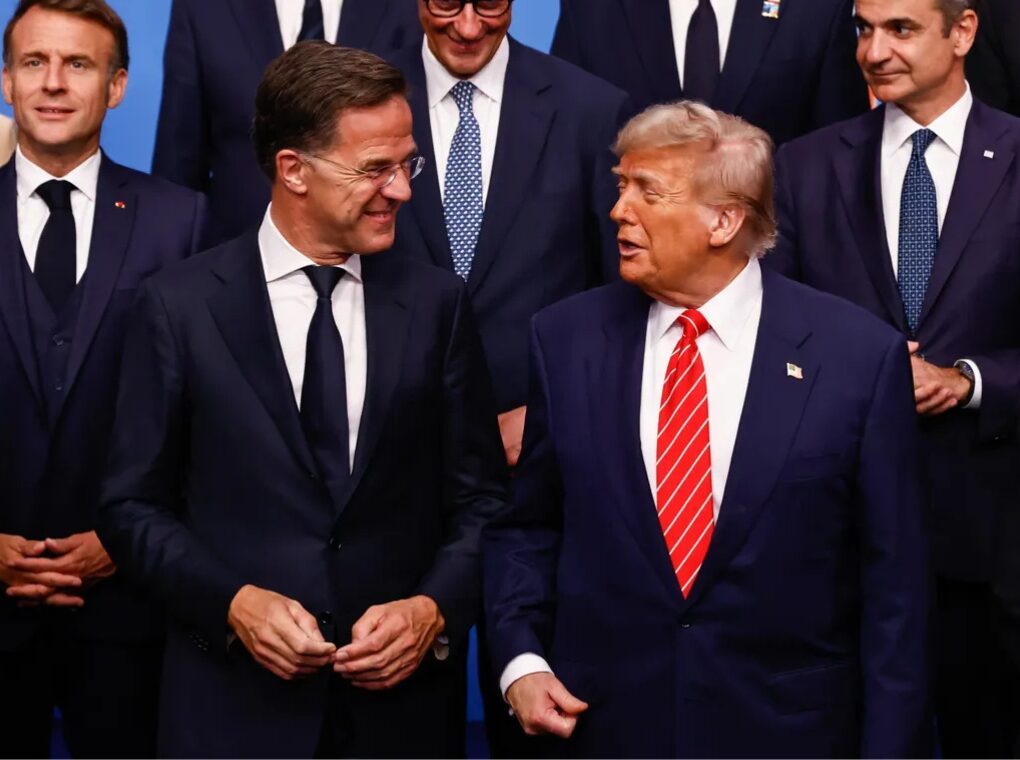
However, NATO Secretary General Mark Rutte clarified that the alliance as a whole would not formally participate in combat operations, though individual member states may offer support to the United States. European Commission President Ursula von der Leyen has stated that Europe is preparing for potential escalation, emphasizing readiness for “all scenarios.”
The divided messaging reflects growing transatlantic caution about being drawn into a wider regional war.
Operation “Epic Fury” and the Question of Imminence
Further controversy emerged after Rubio addressed the rationale behind the U.S. military action, known as Operation “Epic Fury.” He stated that intelligence indicated Iran would retaliate against American assets if attacked, and that Washington acted to preempt such retaliation.
Critics argue that this framing alters the traditional understanding of an “imminent threat.” Rather than responding to an unprovoked Iranian strike, the United States appears to have acted in anticipation of retaliation following Israeli military action. The distinction has fueled debate in Washington and among international observers about the legal and strategic justification for escalation.
Embassies Closed, Casualties Rising
In a sign of increasing regional instability, the U.S. announced temporary closures of its embassies in Saudi Arabia and Kuwait following reported Iranian drone strikes in the vicinity. American military casualty figures are rising, though official numbers remain limited.
The Strait of Hormuz, a critical global oil transit chokepoint, remains under heightened surveillance. Any disruption there could severely impact global energy markets.
Oil prices have already surged amid the uncertainty, driving renewed inflation concerns worldwide. Shipping insurance rates in the Gulf have spiked, and financial markets are experiencing increased volatility.
Regime Change Speculation
While U.S. officials state that the primary objective is to dismantle Iran’s missile and drone infrastructure, speculation persists regarding broader strategic goals. Some analysts suggest Washington may ultimately seek regime change in Tehran.
Exiled opposition figure Reza Pahlavi, son of the former Shah, has been mentioned in political discourse, though he remains a polarizing figure within Iran. Despite sustained military pressure, Iran’s government structures continue to function, and public demonstrations in several cities have shown citizens rallying in support of national leadership amid foreign attacks.
Russia Issues Warning
The geopolitical stakes rose further after Dmitry Medvedev, a close ally of Russian President Vladimir Putin, warned that the conflict risks escalating toward a broader global confrontation. Putin has condemned the reported killing of Iran’s Supreme Leader Ali Khamenei, describing it as a violation of international law.
Medvedev warned that sustained pressure on Tehran could accelerate its pursuit of nuclear weapons capability, heightening fears of regional proliferation.
A Production and Endurance Test
Beyond battlefield tactics, the conflict increasingly appears to be a contest of industrial capacity. Iran’s ability to produce large volumes of relatively low-cost missiles and drones contrasts sharply with the expensive, slower production cycle of advanced U.S. interceptor systems.
Defense analysts note that saturation attacks — overwhelming defenses through sheer volume — could erode even sophisticated air defense networks over time.
With no immediate diplomatic breakthrough in sight, the trajectory of the conflict remains uncertain. Whether the coming weeks bring escalation, prolonged attrition, or backchannel negotiations may determine not only the future of the Middle East but the broader stability of the global order.