A new diplomatic twist has emerged in the ongoing nuclear negotiations involving Iran and the United States, as reports suggest Tehran is considering transferring its stockpile of highly enriched uranium to China as part of a potential peace or nuclear agreement framework.
The proposal, reported by regional media outlets, signals a significant shift in Iran’s negotiating strategy and highlights Beijing’s growing diplomatic relevance in one of the world’s most sensitive nuclear disputes.
Iran explores China as “custodian” of uranium stockpile
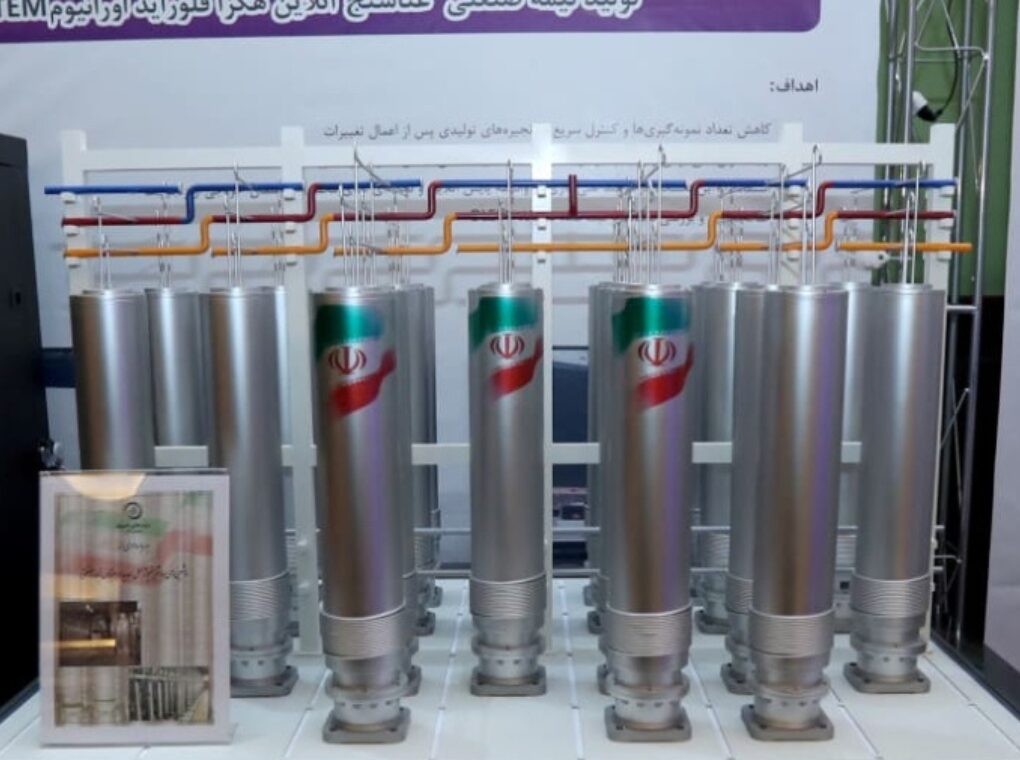
According to the report, Iranian officials are discussing the possibility of placing their enriched uranium—reportedly enriched up to 60%—under Chinese custody as negotiations continue with Washington. The idea is being explored as a safeguard mechanism to ensure that Iran retains a degree of strategic trust while addressing U.S. demands to significantly reduce or eliminate its weapons-usable nuclear material.
The uranium stockpile in question is believed to be stored in facilities that have been damaged or destabilized amid recent military tensions in the region, raising additional concerns about security and oversight.
Iran is also reportedly seeking broader guarantees from Beijing, potentially positioning China as a neutral guarantor or supervisory actor in any future nuclear arrangement.
Tehran signals progress, but no final deal in sight
Iranian Foreign Ministry spokesperson Esmaeil Baghaei recently stated that while discussions with Washington have seen progress on several technical and political issues, a final agreement remains distant.
“We have reached a conclusion on a large portion of the discussion topics. This is correct, but this does not mean that the signing of an agreement is imminent,” Baghaei said, underscoring the fragile and incomplete nature of the negotiations.
His remarks reflect the broader reality that although diplomatic channels remain active, major gaps persist between Tehran and Washington on core issues such as uranium enrichment levels, verification mechanisms, and sanctions relief.
Iran reaffirms nuclear position amid tensions
Iranian President Masoud Pezeshkian has reiterated that the country is not pursuing nuclear weapons, accusing regional adversaries of exacerbating instability. Tehran continues to argue that its nuclear program is strictly for civilian energy and research purposes.
“We will not compromise when it comes to our country’s dignity and sovereignty,” Pezeshkian said, signaling that Iran will resist any deal that it views as undermining national independence or technological capability.
This position remains a central sticking point in negotiations with the United States, which continues to insist on strict limitations and verification of Iran’s nuclear materials.
Trump’s warning and U.S. demands on uranium stockpile
On the U.S. side, Donald Trump has taken a hardline stance on Iran’s nuclear program. In recent remarks, Trump reiterated that Iran must either hand over its enriched uranium or destroy it under international supervision.
He referred to the material as “nuclear dust,” emphasizing that it should be eliminated under oversight mechanisms involving international atomic authorities.
“The enriched uranium will either be immediately turned over… or destroyed in place,” Trump said, adding that Iran must never be allowed to obtain a nuclear weapon.
The United States has long demanded the removal or dilution of Iran’s highly enriched uranium stockpile, viewing it as the most direct pathway toward preventing weaponization.
China’s diplomatic role under spotlight
Beijing has not confirmed any formal agreement regarding custody of Iranian uranium, but it has also not dismissed the possibility of playing a role in the broader diplomatic process.
Chinese President Xi Jinping has consistently advocated for peaceful resolution of global conflicts through negotiation and multilateral engagement. Chinese foreign ministry statements have emphasized support for dialogue and stability in the Middle East and Gulf region.
China has positioned itself as a potential mediator in several global disputes in recent years, and its involvement in Iran’s nuclear negotiations could significantly reshape the geopolitical balance surrounding the issue.
However, analysts note that transferring sensitive nuclear materials to China would raise complex questions about verification, transparency, and international oversight, particularly given the absence of established U.S.–China nuclear inspection frameworks.
Historical context: past uranium transfers and global concerns
The idea of relocating enriched uranium is not unprecedented. Under earlier nuclear arrangements, Iran previously transferred significant portions of its lower-grade enriched uranium abroad as part of confidence-building measures.
However, the current context is far more tense. Trust between global powers has deteriorated, and previous arms control frameworks between major nuclear states have weakened or collapsed in recent years. This has made any new agreement significantly more difficult to structure and enforce.
Geopolitical implications of a China-mediated solution
If China were to become the custodian or guarantor of Iran’s enriched uranium, it would mark a major shift in global nuclear diplomacy. Such a move could:
Strengthen China’s influence in Middle Eastern geopolitics
Reduce direct U.S. control over verification mechanisms
Introduce new complexities into non-proliferation enforcement
Potentially reshape future nuclear negotiation models
At the same time, skepticism remains high in Washington regarding whether such a transfer would provide sufficient guarantees of non-diversion or weaponization.
While no final agreement has been reached, the emergence of China as a potential custodian of Iran’s enriched uranium highlights the evolving dynamics of global nuclear diplomacy. As negotiations continue between Iran and the United States, the outcome may depend not only on technical nuclear issues but also on the broader geopolitical rivalry between Washington and Beijing.
For now, the proposal remains under discussion—signaling both the urgency of the negotiations and the deep mistrust that still defines them.