Europe’s security landscape may be entering its biggest transformation since the Cold War. Reports of a potential reduction in U.S. military support for NATO, combined with French President Emmanuel Macron’s push for a European nuclear umbrella and Germany’s rapid military expansion plans, are fueling debate over who will emerge as Europe’s dominant hard power.
A confidential NATO meeting in Brussels, reportedly cited by German outlet Der Spiegel, suggests the United States is preparing to significantly scale back parts of its rapid-response military support to Europe. If implemented, the move could fundamentally reshape Europe’s defense architecture and intensify competition between France and Germany to lead the continent’s security future.
US Plans Major NATO Military Reduction
According to reports, U.S. officials informed NATO allies that Washington plans to reduce military assets that would be quickly deployed in the event of a European crisis. These cuts could reportedly include fighter jets, strategic bombers, warships, submarines, refueling aircraft, and reconnaissance drones.
Under the proposed changes, American fighter jet support in Europe could reportedly be reduced by roughly one-third, while bomber availability may be cut by half. Naval commitments would also shrink, with submarines no longer included in Europe-focused crisis planning.
The reported shift comes amid increasing pressure from Washington for European nations to shoulder greater responsibility for their own defense. Former U.S. President Donald Trump and several American policymakers have repeatedly argued that Europe must stop depending heavily on American military protection and significantly increase defense spending.
For many European governments, the message is clear: the era of unquestioned American military backing may be changing.
Macron Pushes France as Europe’s Nuclear Shield
As concerns grow over long-term U.S. reliability, France is increasingly positioning itself as Europe’s strategic security anchor.
President Emmanuel Macron has accelerated efforts to present France as the continent’s leading military power capable of deterring Russia—even without direct American involvement.
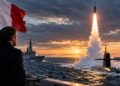
According to reports highlighted by The Telegraph, Macron is reportedly reconsidering decades of French nuclear doctrine to expand deterrence cooperation across Europe. France, which possesses approximately 290 nuclear warheads, has been openly discussing a broader European “nuclear umbrella” centered around French capabilities.
Macron recently declared that “to be free, we must be feared, and to be feared, we must be powerful,” signaling Paris’ intention to strengthen its strategic role in Europe.
Under France’s reported “forward deterrence” strategy, nuclear-capable French Rafale fighter jets could rotate through allied European bases. Countries including Poland, Germany, the Netherlands, Belgium, Sweden, Denmark, Greece, and reportedly the Czech Republic are being discussed as potential hosts for French aircraft capable of carrying tactical nuclear weapons.
This would represent a historic shift in Europe’s defense posture.
France’s air-based nuclear deterrent currently relies on Rafale fighter jets carrying ASMP-A nuclear missiles, while Paris is simultaneously developing the next-generation ASN4G hypersonic missile.
France is also expanding military procurement, reportedly ordering dozens of additional Rafale fighter jets while modernizing its submarine-based nuclear deterrent.
Germany’s Military Revival Gains Momentum
While France pushes nuclear leadership, Germany is aggressively rebuilding conventional military strength.
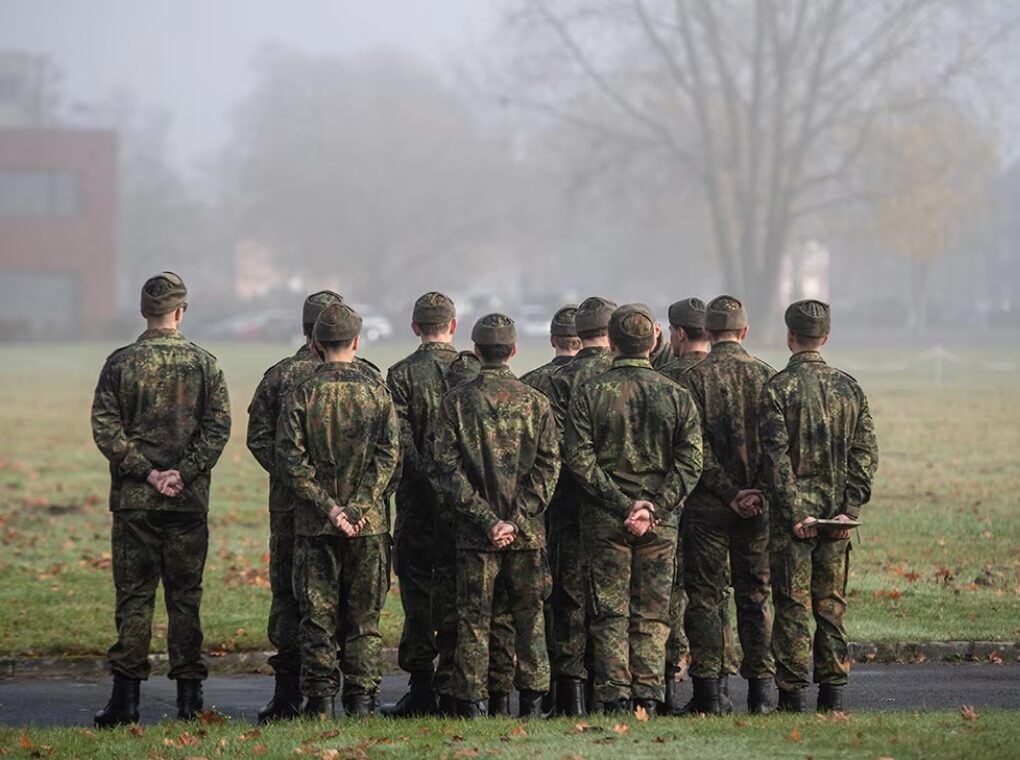
German Chancellor Friedrich Merz has made clear that Berlin intends to become one of the world’s leading military powers. Following years of criticism over underinvestment in defense, Germany is now dramatically increasing military spending, modernizing the Bundeswehr, and expanding weapons production.
Berlin’s growing ambitions align closely with Washington’s demands that Europe assume greater responsibility for regional security.
Germany’s transformation is particularly significant because of its economic power. Europe’s largest economy possesses the industrial capacity to rapidly scale military production and influence NATO’s future defense posture.
However, Germany still lacks nuclear weapons, which gives France an important strategic advantage in the race for European hard-power leadership.
France vs Germany: Who Leads Europe?
The emerging debate increasingly centers around two different visions of European power.
France argues that true geopolitical influence comes from nuclear deterrence and military independence. Paris sees itself as uniquely positioned because it possesses Europe’s strongest independent military and nuclear arsenal after Brexit reduced Britain’s direct role inside the European Union.
Germany, meanwhile, is emphasizing economic scale, industrial capacity, and conventional military rebuilding. Berlin’s enormous financial resources could eventually make it Europe’s dominant military spender.
This raises an important question: can Europe have two military leaders?
Some analysts believe France and Germany may eventually divide responsibilities—France leading nuclear deterrence while Germany dominates conventional military capabilities. Others warn that rivalry between Paris and Berlin could intensify as both seek influence over Europe’s future security architecture.
Russia’s Growing Confidence and European Anxiety
The timing of these developments is particularly sensitive.
Russia has grown increasingly assertive in its rhetoric toward Europe amid the ongoing Ukraine conflict. Many European policymakers fear that any perception of declining U.S. military commitment could embolden Moscow.
At the same time, NATO members on Europe’s eastern flank—including Poland and the Baltic states—are demanding stronger deterrence measures and permanent security guarantees.
For these countries, France’s willingness to discuss a wider nuclear umbrella is viewed as both reassuring and politically significant.
A Historic Turning Point for Europe
Europe may now be entering a post-American security era—or at least preparing for one.
If Washington follows through on plans to reduce NATO crisis support, Europe will likely face pressure to rapidly expand military spending, increase weapons production, and coordinate defense more independently.
France appears eager to lead through nuclear power and strategic influence. Germany is rising through industrial and conventional military strength.
The bigger question may no longer be whether Europe becomes militarily stronger—but who ultimately leads it.